
Adobe Patents On-Device AI That Personalizes Content Without Sending Your Data to a Server
Adobe is patenting a system where personalized content — think ads, banners, or creative assets — gets generated directly on your device, using local context that never has to leave your phone or laptop. The server tells your device *what kind* of content to make; your device figures out the personal details on its own.
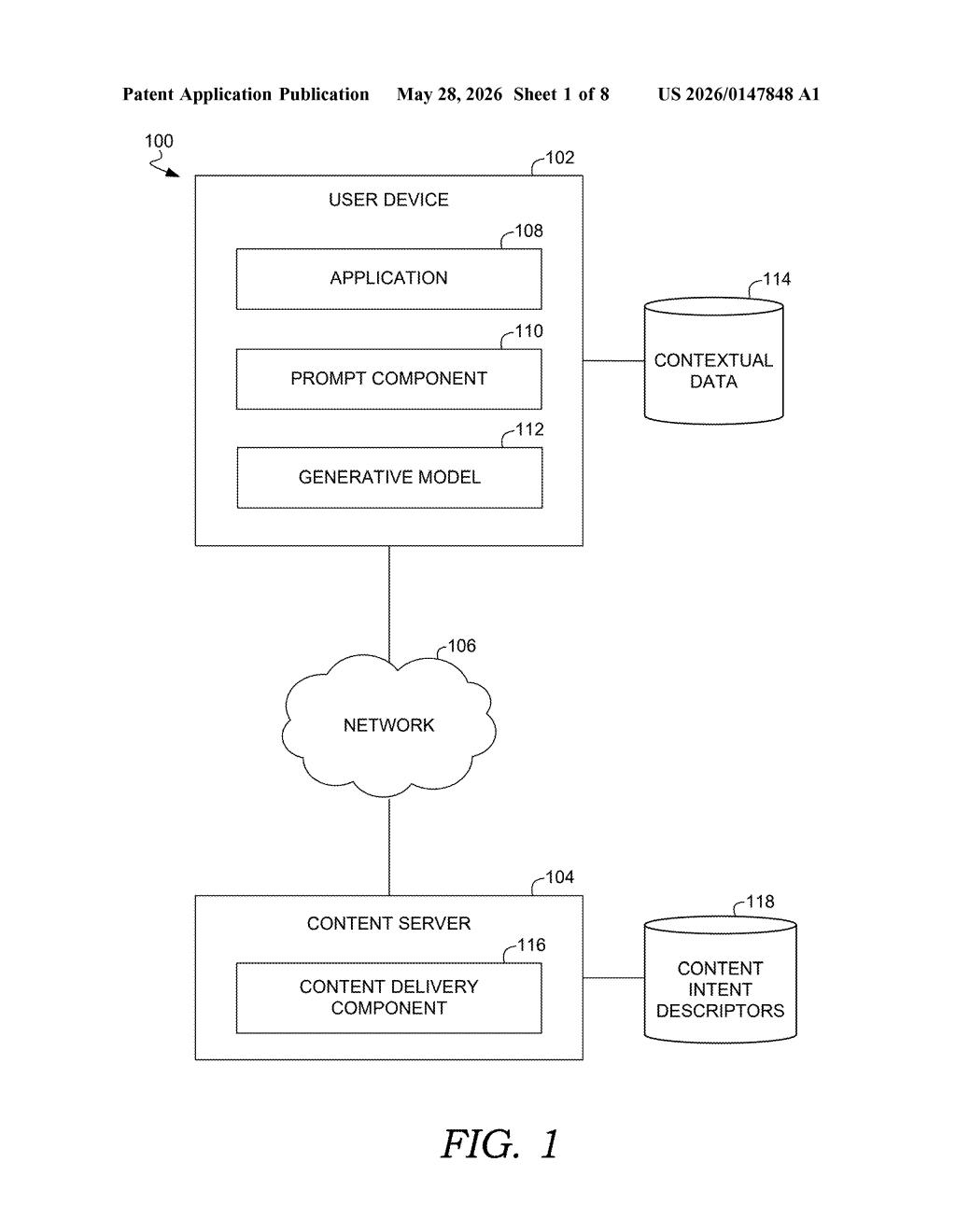
What Adobe's on-device content generation actually does
Imagine a website wants to show you a personalized ad for a travel deal. Normally, it would need to send a bunch of information about you — your location, your browsing habits, your preferences — back to a remote server, which then assembles something tailored to you. That's the model that's made privacy advocates nervous for years.
Adobe's patent flips that around. Instead of the server knowing everything about you, it only sends a lightweight "intent descriptor" — basically a description of the goal of the content, like "show a travel ad for a warm destination." Your device then uses its own local context (your location, time of day, past behavior stored only on-device) to generate the actual content using a generative AI model running locally.
The result: a personalized experience where the most sensitive data — your data — never leaves your device. The server knows what it wants to say; only your device knows how to make it personal.
How the intent descriptor and on-device context combine
The system has three main moving parts working together on and off your device.
First, a content server sends a content intent descriptor over the network — a structured payload that describes the intent or theme of the content to be created (e.g., "promote summer travel," "highlight product category X for budget-conscious users"). This descriptor is deliberately generic: it carries creative intent, not personal data.
Second, a prompt component on the user device combines that intent descriptor with on-device contextual data — information like location, device state, time, language, or behavioral signals that are stored and processed locally. The result is a rich, personalized prompt tailored to the specific user without any of that context needing to be transmitted off-device.
Third, a generative model component — an on-device AI model, likely a diffusion or language model — takes that prompt and produces the actual digital content item: an image, ad creative, text block, or other asset. That content is then displayed directly on the device.
The key architectural insight is the separation of creative intent (server-side) from personal context (device-side). This mirrors emerging privacy-preserving patterns like federated learning, where computation moves to the data rather than the other way around.
What this means for personalized ads and privacy
For everyday users, this architecture means more relevant content with less privacy exposure. Your device becomes the site of personalization, not a remote data broker's server. As regulations like GDPR and the deprecation of third-party cookies continue to squeeze traditional ad targeting, approaches that keep personal signals on-device become genuinely attractive to publishers and advertisers alike.
For Adobe, this fits squarely into its push to embed generative AI — think Firefly — deeper into content delivery pipelines. If Adobe can position itself as the middleware layer between content servers and on-device generative models, that's a meaningful platform play in the ad-tech and digital experience space. The patent also has implications beyond ads: think dynamically generated email content, personalized app UI elements, or localized creative assets — all generated on-device, on the fly.
This is a genuinely interesting patent because it addresses a real tension — personalization vs. privacy — with a technically credible architecture rather than hand-waving. The on-device generative model piece is the hard part (latency, model size, power consumption), and the patent doesn't fully solve those challenges, but the intent-descriptor abstraction is a clean design. Adobe is clearly thinking about where the ad and content delivery industry has to go as third-party data dries up.
Get our take in your Top Stories
Liked this breakdown? Add Patentlyze as a preferred source on Google, and our plain-English take shows up more often in your Top Stories the next time Adobe patent news breaks.
There are more where this came from
We read every patent application Big Tech publishes and send you the ones worth knowing. Plain English, free, every week.
Want this weekly breakdown for a company we don't cover? Patentlyze Pro →