
Sony Patents LLM-Powered NPCs That React to What You Actually Say
Sony is patenting a system where NPCs don't just hear you talk — they understand what you're asking for, act on it through the game engine, and then talk back with full awareness of what just happened.
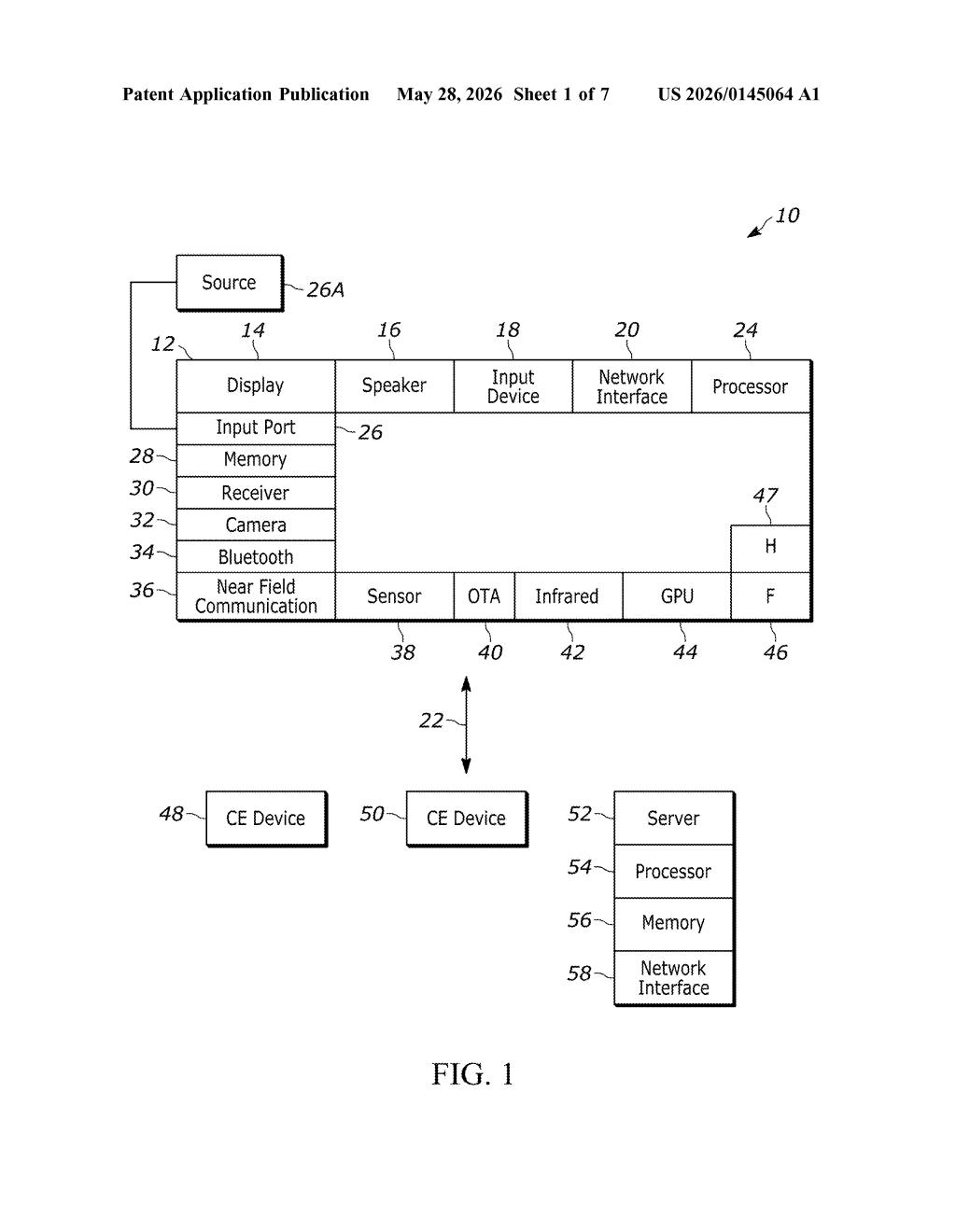
How Sony's speech-driven NPC system actually works
Imagine you're playing a game and you tell a shopkeeper NPC, "Give me your best sword and point me to the dungeon." Today, that NPC probably has a handful of canned responses. Sony's patent describes something much more flexible: the NPC actually processes what you said, using a large language model (LLM) — the same family of AI behind ChatGPT — to figure out a natural reply and decide what to do next.
The clever part is how it handles actions. If your request triggers something real in the game world — like transferring an item or opening a door — the game engine executes that, then feeds the result back into the NPC's "brain" so its follow-up dialog stays consistent. The NPC doesn't just say something random; it knows what actually happened.
This keeps the AI grounded. Imperative commands (do-this-thing requests) are handled by the game engine directly, while the LLM handles the talking. The two sides stay in sync so your NPC doesn't hand you a sword and then act like it still has it.
How player speech gets converted into NPC behavior
At its core, the patent describes an apparatus — likely a server or console-side processor — that receives speech data from a player and uses it to generate NPC dialog. That's the basic claim, but the abstract fills in a more interesting picture.
The system feeds player statements as context into a large language model (LLM), which generates the NPC's responses. This is distinct from keyword-matching or behavior trees — the LLM can handle novel phrasing and ambiguous requests in a way rule-based systems can't.
When the player's speech contains what the patent calls an imperative statement — a command like "open the chest" or "follow me" — the game engine executes it directly. The result of that execution, combined with the original player request, is then converted to a plain-text description and injected back into the NPC's dialog context. This feedback loop (sometimes called grounding) is what prevents the LLM from hallucinating or contradicting game state.
Key components the patent implies:
- Speech-to-text layer that converts player audio into structured input
- LLM inference engine (likely server-side) generating NPC responses
- Game engine integration that executes commands and returns state updates
- Context injection loop that keeps NPC dialog consistent with what actually occurred in-game
What this means for PlayStation game AI
Most NPC dialog systems today are elaborate decision trees — they feel reactive, but they're brittle. You say something slightly unexpected and the illusion breaks. An LLM-backed system like this could make NPCs feel genuinely conversational, which is a meaningful leap for open-world and narrative games where player agency is the whole point.
For Sony specifically, this fits neatly into PlayStation's ongoing investment in AI-assisted game development. If this ships in a future first-party title — or as part of a developer toolkit — it could set a new baseline expectation for how NPCs behave. The grounding mechanism (feeding engine results back into the LLM) is the real engineering insight here: it's the part that makes the system usable in a real game rather than just a demo.
This is one of the more thoughtful NPC AI patents to come out of a major console platform holder. The feedback loop between game engine execution and LLM context is a real solution to a real problem — keeping generative AI from going off-rails in a tightly controlled game world. Whether this stays a patent or becomes a PlayStation developer SDK feature is worth watching.
Get our take in your Top Stories
Liked this breakdown? Add Patentlyze as a preferred source on Google, and our plain-English take shows up more often in your Top Stories the next time Sony patent news breaks.
There are more where this came from
We read every patent application Big Tech publishes and send you the ones worth knowing. Plain English, free, every week.
Want this weekly breakdown for a company we don't cover? Patentlyze Pro →