
Nvidia Patents a Multi-Layer Video Captioning System That Can Move Robots
What if a robot could watch a video and then physically act on what it saw? Nvidia has filed a patent that chains multiple AI captioning models together — and then feeds that combined understanding directly to a device to make it move.
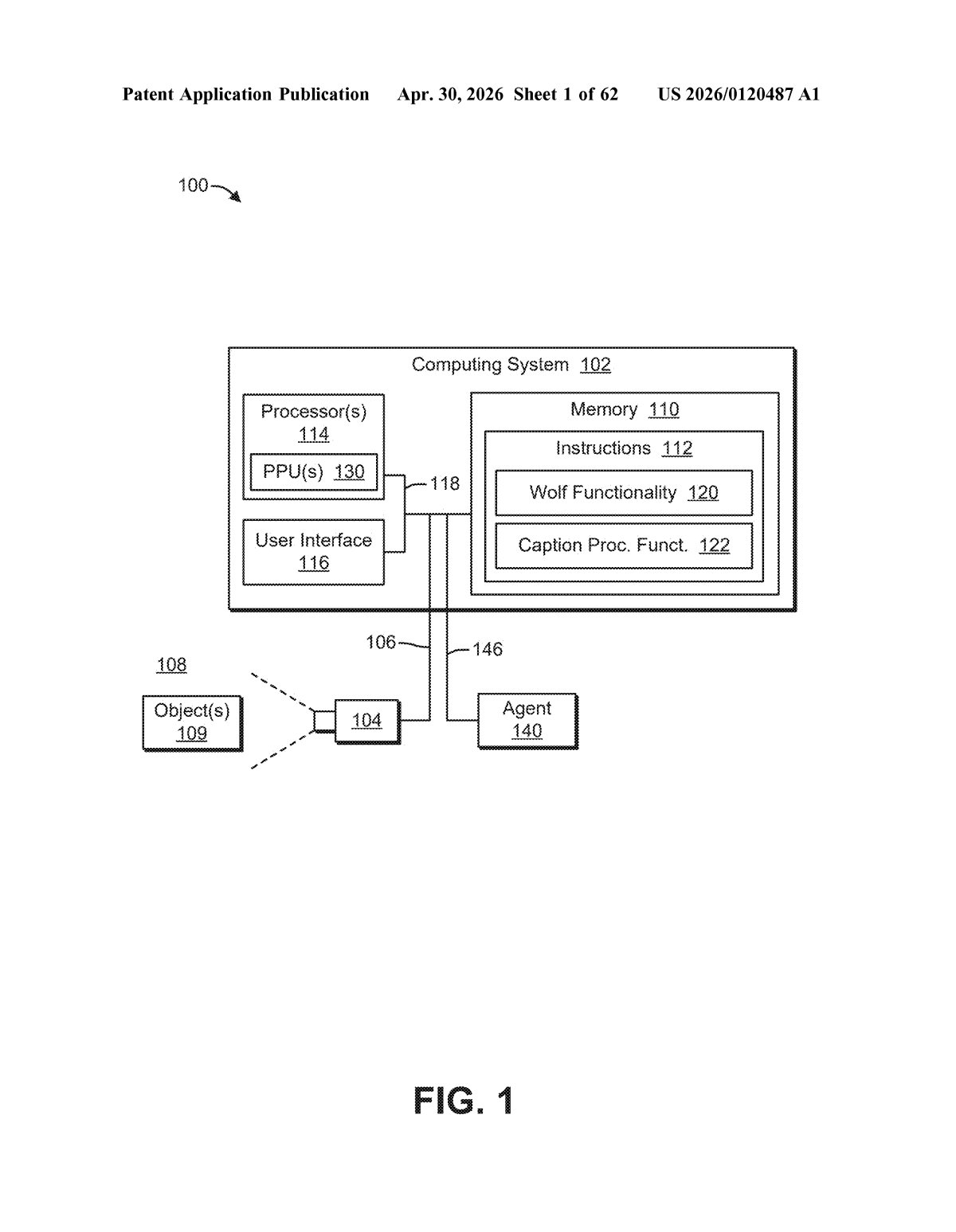
How Nvidia turns video into robot instructions
Imagine you hand a robot a short clip of someone opening a cabinet door. The robot needs to understand not just what's in the frame, but the motion, the sequence, and the meaning — before it can replicate the task. That's a hard problem, and a single AI model usually doesn't nail all three.
Nvidia's patent describes a system that attacks this with layers. One AI watches the video as a whole and writes a caption about it. A second AI pulls out individual frames and captions those. A third AI reads both captions and synthesizes a final, richer description — called an output caption — that captures both the still details and the motion.
The twist: that final caption isn't just for humans to read. The system uses it to physically move a device — a robot arm, a vehicle, or any actuated machine — from one position to another. It's a pipeline where language becomes action.
How three neural networks collaborate to caption a video
The patent describes a three-stage neural network pipeline for generating video captions, with the end goal of issuing motion commands to a physical device.
- First neural network (video-level captioning): Takes the entire video as input and generates a caption describing what's happening across the whole clip — motion, events, and temporal context (i.e., how things change over time).
- Second neural network (image-level captioning): Samples individual frames from the video and generates captions for each. This captures fine-grained visual detail — object identities, spatial relationships — that a video-level model might blur over.
- Third neural network (synthesis / summarization): Ingests both sets of captions and infers a single output caption that merges the temporal and spatial understanding. The patent notes this step can use a large language model (LLM) for summarization.
Critically, the claim explicitly ties this caption pipeline to actuation: the system causes "at least a portion of a device to move from a first position to a second position" based on the output caption. That bridges the gap between video understanding and physical control — a key requirement in robotics and autonomous driving. The patent also references motion captions as an optional additional input, suggesting the system could incorporate dedicated optical-flow or pose-estimation models to further enrich the description.
What this means for Nvidia's robotics and autonomous vehicle ambitions
Nvidia is not a robotics company in the traditional sense — but it's clearly trying to become the AI backbone of one. Systems like Isaac and DRIVE depend on machines understanding visual scenes and converting that understanding into physical actions. A captioning layer that fuses frame-level detail with video-level narrative gives downstream motion planners richer, more reliable context to work with.
For you as a user or developer, the practical upshot is robots that are better at learning from demonstration videos — watch a human do a task once, and the system generates an actionable description it can execute. That's a meaningful step toward robots you could actually train by showing, not programming.
This patent is doing something genuinely interesting: it treats language as the interface between perception and action, rather than trying to route raw video pixels directly into a motion controller. The three-network fusion architecture is smart engineering, not a gimmick. Whether it ships in Isaac Lab or DRIVE first, this approach reflects Nvidia's broader bet that LLMs aren't just chatbots — they're the control plane for physical machines.
There are more where this came from
We read every patent application Big Tech publishes and send you the ones worth knowing. Plain English, free, every week.
Want this weekly breakdown for a company we don't cover? Patentlyze Pro →