
Apple's New Patent Lets Vision Pro Blur the World to Keep Up With You
Apple's latest patent describes an AR headset that can dynamically swap between crisp-but-slow and blurry-but-fast views of the real world — depending on what the situation demands. It's a direct look at the kind of perceptual engineering that makes passthrough headsets feel real.
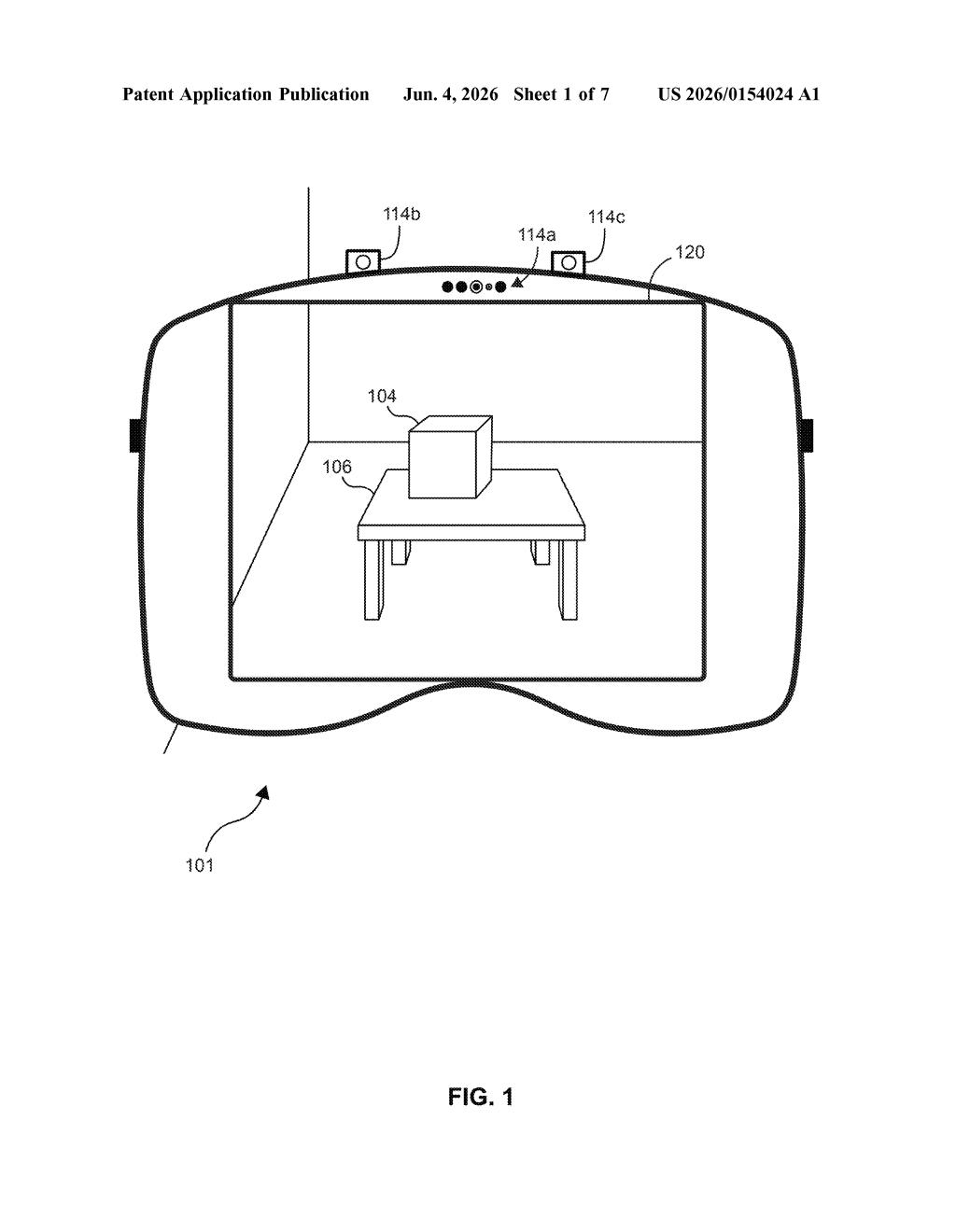
What Apple's adaptive AR passthrough vision actually does
Imagine you're wearing an AR headset — like the Apple Vision Pro — and you're looking at the world through its cameras instead of directly with your eyes. Most of the time, that passthrough view looks sharp and detailed. But what if something moves fast, or you turn your head quickly? A laggy, high-fidelity image can feel worse than a blurrier but smoother one.
This patent describes a system that watches for specific conditions and then automatically chooses between two modes: a high-fidelity, lower frame rate view for when sharpness matters most, and a lower-fidelity, higher frame rate view for when keeping up with fast motion matters more. Think of it like your phone camera automatically switching between portrait mode and sports mode based on what it detects.
You wouldn't manually trigger this — the device handles it invisibly. The goal is to make the AR view of your surroundings feel more natural and less disorienting across a wider range of real-world situations.
How the fidelity-vs-frame-rate tradeoff gets triggered
The patent describes a method for an electronic device — almost certainly a headset like Vision Pro — to display what Apple calls a "simulated vision" overlay: a camera-captured image of the physical environment shown on top of the wearer's view of that same environment.
The core mechanism is a three-tier criteria system. First, a set of "first criteria" determines whether to show the enhanced image at all. If those are met, then two separate branches decide how to show it:
- Second criteria satisfied: display the image with high fidelity and a lower frame rate — more detail, but potentially slower to update.
- Third criteria satisfied: display the image with lower fidelity but a higher frame rate — less sharp, but much smoother and more responsive to motion.
The patent doesn't specify exactly what those criteria are — they're kept broad deliberately — but likely candidates include head movement speed, object proximity, detected motion in the scene, or user task context (reading vs. walking, for instance).
This is essentially a perceptual quality-of-service layer for passthrough AR: the system dynamically allocates rendering resources based on what will feel best to the human wearing the headset, rather than always rendering at a fixed quality level.
What this means for Vision Pro's real-world usability
Passthrough AR on current headsets is a hard engineering problem: cameras capture the world, process it, and display it — and any lag in that pipeline makes the virtual world feel unmoored from reality. The tradeoff between resolution and frame rate is real and painful, and right now it's mostly handled with fixed settings.
This patent points toward Vision Pro (or its successors) getting meaningfully better at feeling like transparent glass rather than a screen showing you a video feed. For you as a wearer, this would mean fewer moments of motion blur or disorienting lag when you move your head or reach for something nearby — the headset would adapt rather than compromise.
This is solid, unsexy perceptual engineering — the kind of work that separates a headset that feels magical from one that feels like you're watching a YouTube stream of your own living room. The criteria-branching architecture is flexible enough to cover a wide range of real-world triggers, and it signals that Apple is actively working on the passthrough experience rather than treating it as a solved problem. Worth paying attention to if you follow Vision Pro's development.
There are more where this came from
We read every patent application Big Tech publishes and send you the ones worth knowing. Plain English, free, every week.
Want this weekly breakdown for a company we don't cover? Patentlyze Pro →