
Apple Patents a Two-Device System for Tracking Your Head to Control a 3D Display
Apple is exploring a way to make a regular flat screen behave more like a 3D window by tracking your head position using sensors in two wearable devices simultaneously. No headset required.
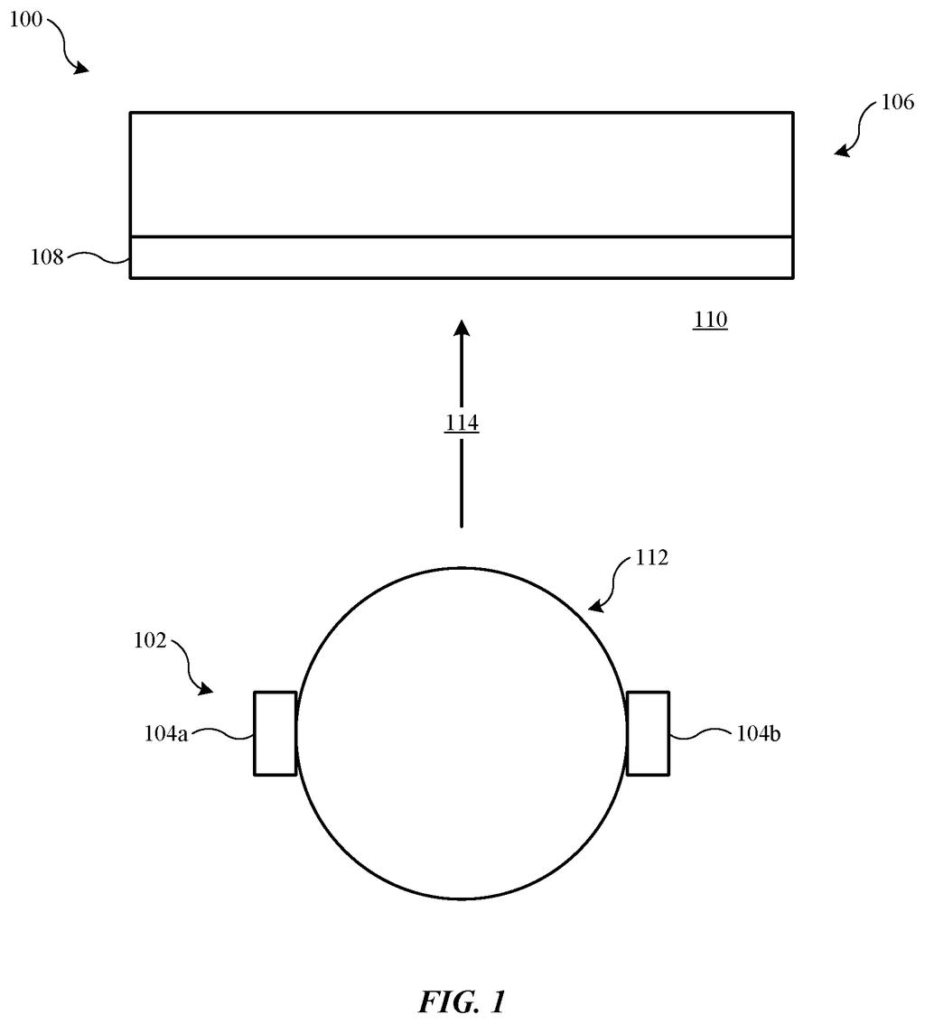
What Apple's two-sensor head-tracking display actually does
Imagine looking at a flat TV screen and having the image subtly shift as you tilt or turn your head, so a scene always looks like it has real depth, as if you were peering through a window rather than at a painting. That's the core idea here.
Apple's patent describes a system where you wear two devices (think a watch on your wrist and an AirPod in your ear, or any two wearable gadgets with motion sensors) and the combination of their movement readings tells the system exactly where your head is and which way it's facing. The display then adjusts the 3D scene in real time to match.
The clever part is using two sensors on different parts of your body instead of one. A single sensor can get confused about whether you moved your whole body or just your head. Two sensors, in two locations, give the system enough information to work out your head's orientation much more reliably.
How the two acceleration signals map your head in space
The patent describes a rendering pipeline that takes live accelerometer data from two separate wearable devices and combines them to calculate head orientation (meaning the direction and angle your head is pointing relative to the screen).
Each wearable contains an acceleration sensor (a chip that measures how fast it's moving and in which direction). On their own, a single sensor can't reliably separate head rotation from full-body movement. By fusing readings from two devices worn on different body parts, the system can isolate the head's specific orientation with much greater accuracy.
Once the system knows where your head is pointing, it feeds that data into a 3D scene renderer, which adjusts the virtual camera's perspective in real time. The result is a parallax effect: objects in the scene appear to shift correctly as you move your head, creating the illusion of depth on a flat screen.
Key components described in the patent:
- First wearable device with an acceleration sensor
- Second wearable device with its own acceleration sensor
- A processing step that fuses both signals into a single head-orientation estimate
- A rendering engine that redraws the 3D scene based on that estimate
- A display that outputs the adjusted scene
What this means for Apple's spatial display ambitions
Flat-screen 3D without a headset is an idea that has never quite landed, but the tracking accuracy problem has always been the weak link. Using two wearables that many users already own (like an Apple Watch and AirPods) to get a more reliable head-orientation signal is a practical approach that doesn't require you to buy new hardware.
This patent could relate to how Apple thinks about bringing spatial or 3D content to displays beyond the Vision Pro headset. If your iPhone or Mac display could respond to head movement using sensors already on your body, you'd get a taste of spatial computing without wearing anything on your face. That's a meaningful step toward making 3D content feel natural for everyday use.
This is a thoughtful piece of engineering on a genuinely hard problem. Using two already-carried devices to solve the single-sensor accuracy gap is the kind of practical systems thinking Apple does well. It's not a flashy announcement, but if it ships inside an existing Apple product combination, the effect on how a flat display feels could be surprisingly compelling.
There are more where this came from
We read every patent application Big Tech publishes and send you the ones worth knowing. Plain English, free, every week.
The drawings
6 drawing sheets from US 2026/0222531 A1 · click any drawing to enlarge


Want this weekly breakdown for a company we don't cover? Patentlyze Pro →