
Waymo Patents a Way for Its Robotaxis to Feel the Fog, Rain, and Haze Around Them
Waymo is patenting a way for its vehicles to measure how foggy, rainy, or hazy the air actually is — not just by looking at the sky, but by analyzing the interplay between what its cameras see and what its lidar measures.
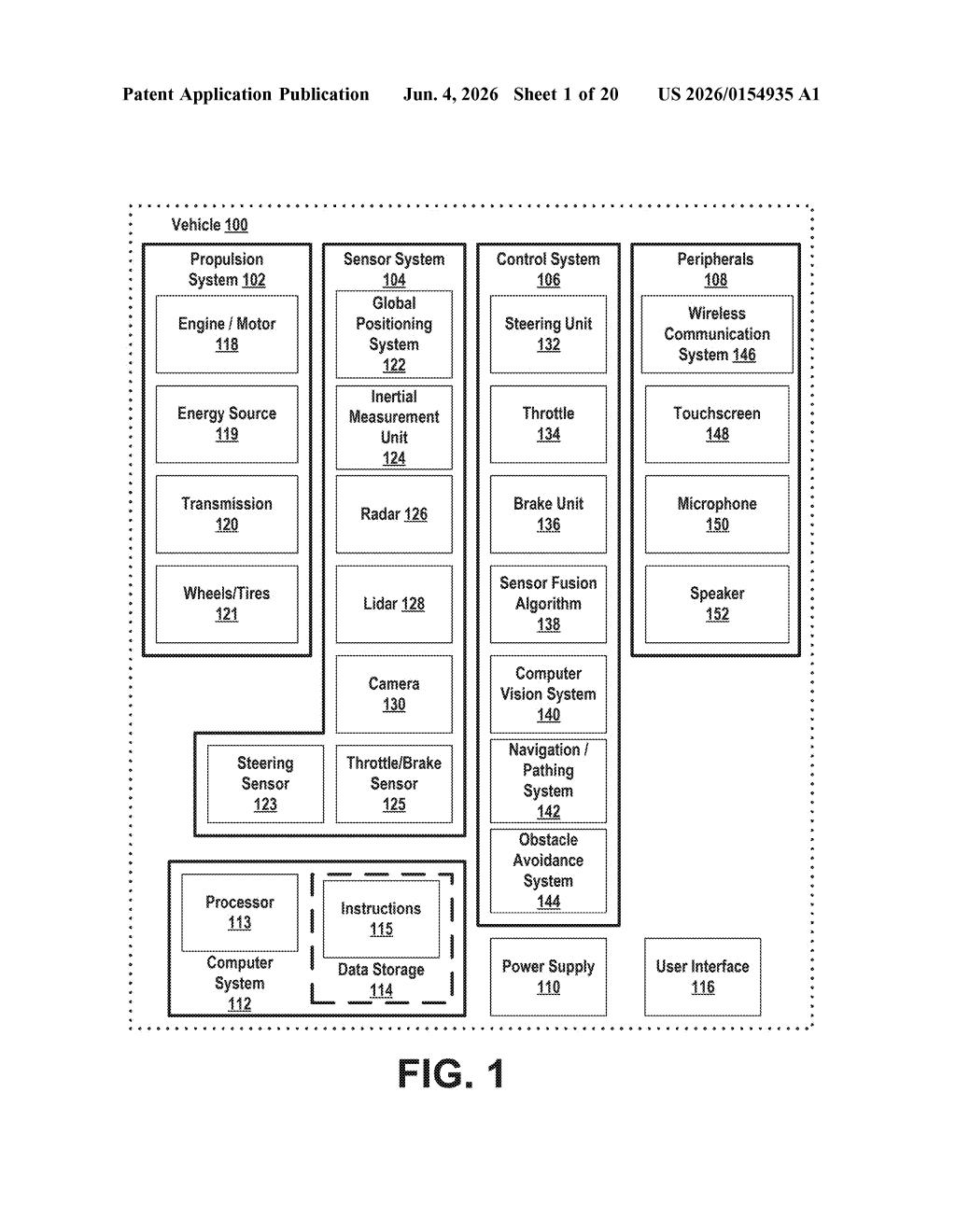
What Waymo's dual-sensor weather detection actually does
Imagine driving through a light drizzle and noticing that streetlights look hazier than usual. Your brain is picking up on subtle cues — brightness, contrast, distance — to decide how careful to be. Waymo wants its self-driving vehicles to do something similar, but with math.
The system described in this patent uses two sensors together: a camera that captures regular images and a lidar device that bounces laser pulses off nearby objects to measure distance. By comparing how bright certain parts of the image look against how far away those objects actually are, the car can estimate what the air between it and the world is doing — whether it's clean and clear or thick with fog, rain, or dust.
The result is a pair of weather quality scores — called figures of merit — that the vehicle can use to adjust its behavior. Think of them as a real-time weather report generated from the car's own sensors, updated constantly as it drives.
How camera intensity and lidar distance are combined
The patent describes a two-step process for generating weather estimates from fused sensor data.
Step one focuses on bright spots in the camera image — think headlights, reflective road signs, or lit storefronts. The intensity values in those high-brightness regions are used to calculate a first figure of merit, essentially a baseline measure of atmospheric clarity. Bright sources of light scatter differently depending on how much particulate matter (water droplets, fog, dust) is in the air, so their apparent intensity carries weather information.
Step two targets the darker, lower-intensity parts of the image — shadowed areas, distant terrain, the road surface itself. Here, the system performs a statistical fit (think curve-fitting — finding the mathematical formula that best matches a set of data points) that combines three inputs:
- The brightness values of those low-intensity image regions
- Distance measurements from the lidar point cloud for the same regions
- The first figure of merit calculated in step one
The output is a second figure of merit that characterizes overall environmental conditions with more precision, because it cross-references what the camera sees with confirmed physical distances from lidar. The system first aligns the camera image with the lidar point cloud spatially — matching pixels to 3D points — so the two data streams refer to exactly the same real-world locations.
What sharper weather sensing means for robotaxi safety
Self-driving systems already struggle in bad weather — rain, fog, and snow degrade both cameras and lidar in ways that are hard to compensate for. A vehicle that can quantify atmospheric degradation in real time, rather than just flagging that conditions are bad, could modulate its speed, following distance, or sensor fusion weights dynamically. That's a meaningful operational improvement.
For Waymo specifically, this kind of fine-grained environmental awareness could also inform when its robotaxis choose to pull over or refuse a trip — decisions that directly affect passenger safety and public trust in the technology. If your robotaxi can prove it knew exactly how foggy the road was and adjusted accordingly, that's both a safety feature and a liability argument.
This is genuinely useful engineering work, not headline bait. Fusing camera and lidar data to produce a continuous weather quality signal is the kind of low-level infrastructure that makes higher-level autonomous driving decisions more reliable — and it's exactly the type of problem that separates companies doing rigorous AV engineering from those cutting corners. Worth paying attention to.
There are more where this came from
We read every patent application Big Tech publishes and send you the ones worth knowing. Plain English, free, every week.
Want this weekly breakdown for a company we don't cover? Patentlyze Pro →