
Nvidia Patents a Way to Hide the Seams in AI-Generated Images
When a neural network generates multiple image tiles or frames, the seams where they meet can look jarring. Nvidia's new patent describes a way to find the zones where pixel colors naturally agree across images and use those zones as the blending anchor — making the join nearly invisible.
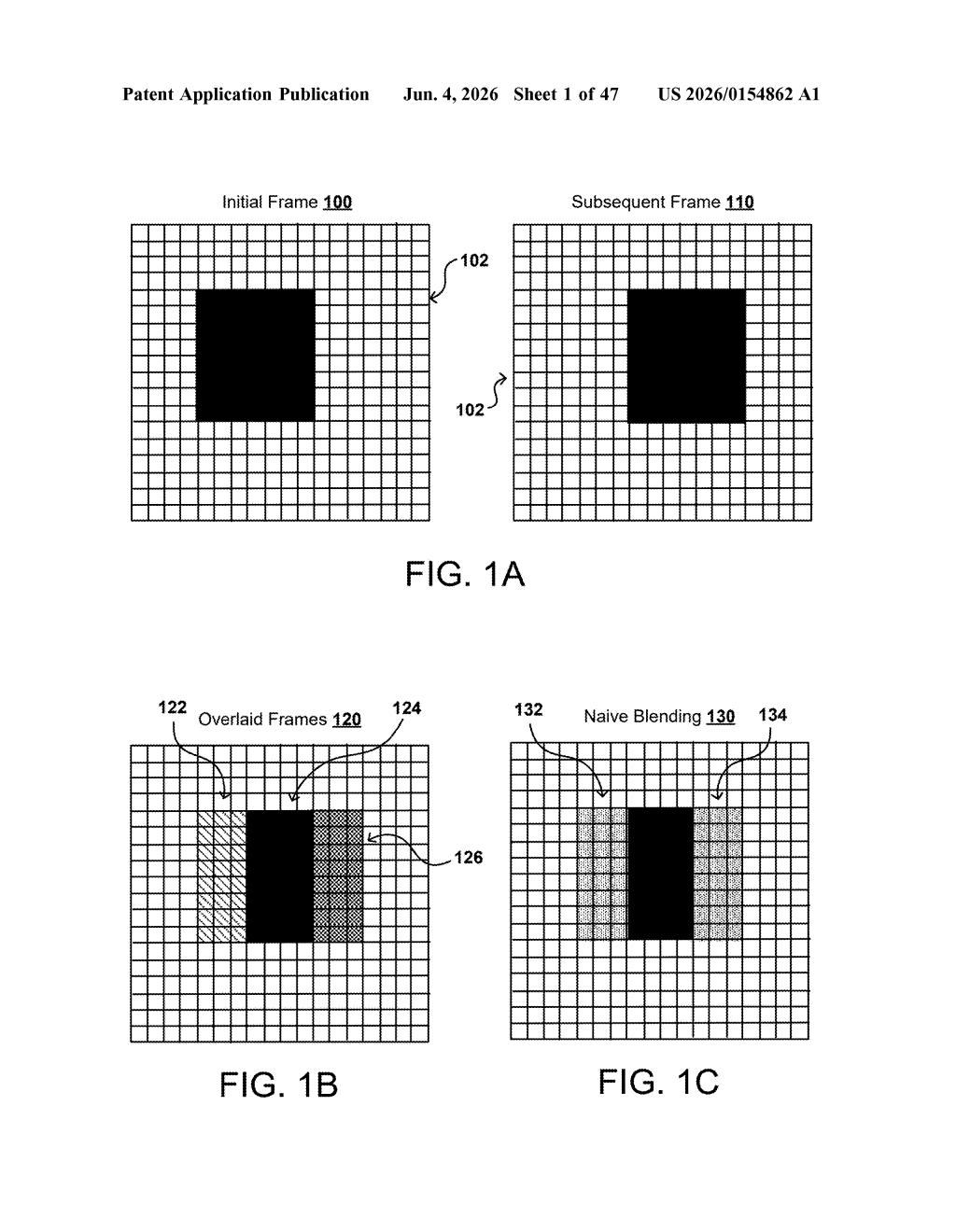
How Nvidia's AI image stitching actually works
Imagine you're printing a large poster in two halves, then taping them together. If the colors don't line up at the seam, the join is obvious. AI image generators face the exact same problem when they produce images in pieces — neighboring tiles or frames can have slightly different shading, color, or brightness right at the edges.
Nvidia's patent describes a system that looks for regions where the pixels in two images are already nearly the same color, then uses those naturally-matching zones as the anchor point for blending. Instead of forcing a hard cut or an arbitrary crossfade, it finds where the images already agree and works outward from there.
The result should be smoother, more seamless composite images — useful anywhere a neural network generates visuals in chunks, whether that's video rendering, game environments, or large-scale AI image synthesis.
How the blending algorithm finds matching color zones
The core idea is distance-based pixel blending guided by color similarity. The system takes two or more images (or image tiles) and identifies a region of color similarity — a zone where the pixel colors across the different images are substantially close to one another. This becomes the blending seam.
From there, each pixel's blend weight is determined by its distance from that similarity region. Pixels far from the zone on one side lean heavily toward their source image; pixels right at the boundary get an equal mix. The further a pixel is from the natural match zone, the more it belongs to one image alone — which is exactly the behavior you want to avoid harsh edges.
- Identify a region where pixel colors are substantially similar across two images
- Compute each pixel's distance from that region
- Apply a blending weight proportional to distance, smoothly transitioning between the two sources
The patent covers both the hardware apparatus and the software/algorithmic side, suggesting Nvidia intends this to run on GPU pipelines. The technique is framed broadly enough to apply to image generation, video frame synthesis, or any multi-tile rendering workflow driven by a neural network.
What this means for AI-rendered graphics and video
For AI-generated video and real-time rendering, seam artifacts are one of the most common quality complaints. If Nvidia can bake this into its GPU-level image generation pipeline, it reduces the post-processing burden on developers and content creators who currently have to manually blend or mask tile boundaries.
This is also relevant to Nvidia's growing generative AI infrastructure work — tools like its DLSS frame generation and AI-upscaling pipelines deal with exactly this class of artifact. A principled, hardware-accelerated blending approach could quietly improve output quality across a wide range of applications without the user ever knowing it's there.
The claims being canceled (a common occurrence during prosecution, not necessarily a death knell for the broader patent) means we're looking at a published application in flux, so the scope is genuinely unclear. The underlying idea — anchor your blend at a zone of natural color agreement rather than an arbitrary edge — is elegant and practically useful. It's not headline-grabbing, but if it makes it into Nvidia's rendering stack it's the kind of invisible quality improvement that actually ships.
There are more where this came from
We read every patent application Big Tech publishes and send you the ones worth knowing. Plain English, free, every week.
Want this weekly breakdown for a company we don't cover? Patentlyze Pro →