
Samsung Patents a Depth-Map System That Sharpens How Images Appear on Display
Samsung is patenting a way to make images look better on-screen by figuring out which objects in a scene are closest to the camera — then using that depth information to process and enhance the whole picture.
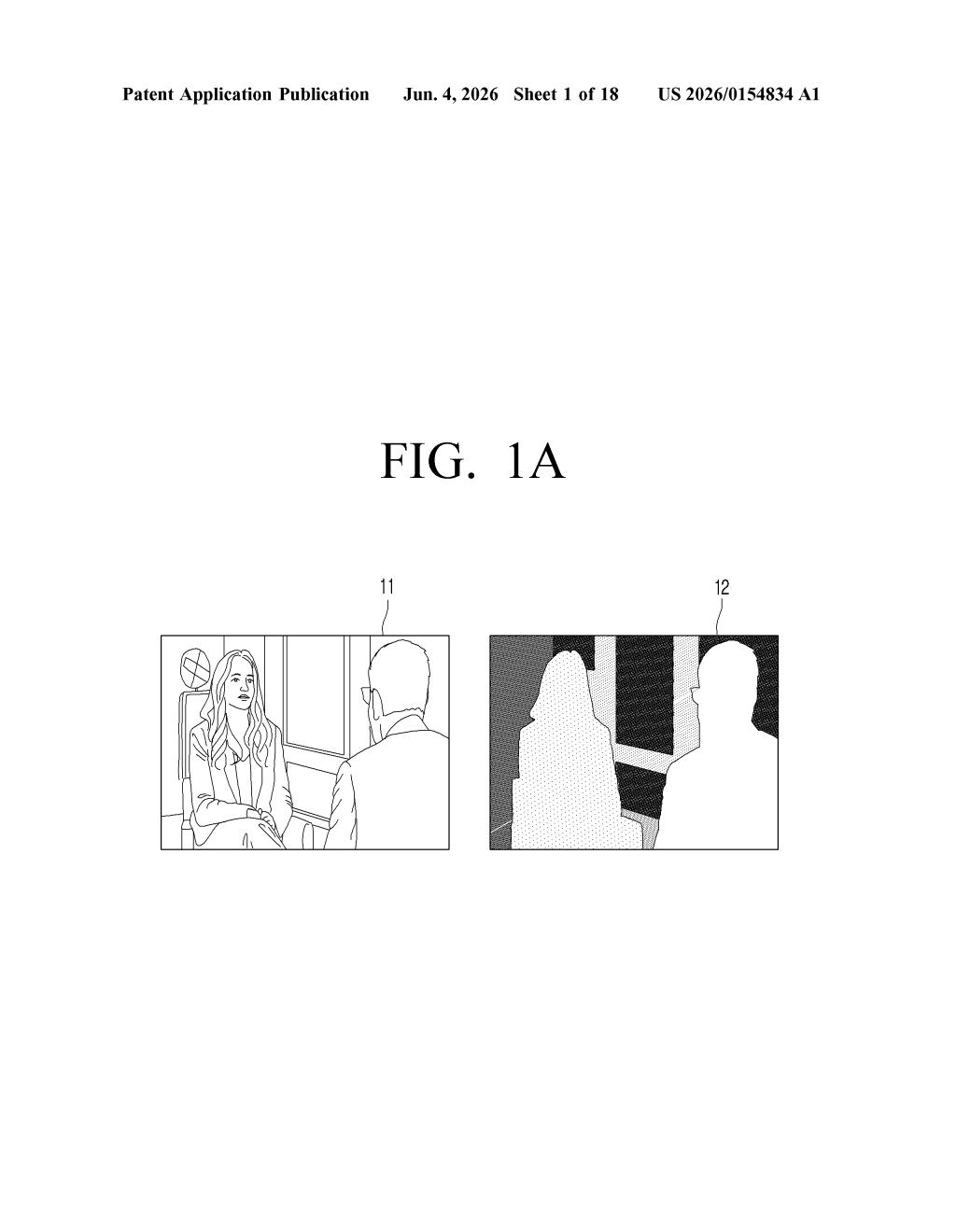
What Samsung's depth-based image sharpening actually does
Imagine you take a photo of a crowded table: a coffee cup up front, your friend's face in the middle, a bookshelf in the back. Your eye naturally focuses on what's closest. This patent describes a system that does the same thing — it scans an image, finds all the interesting objects, and figures out which one is nearest to the camera.
Once it has that anchor point, it uses the distances of every other object relative to that nearest one to build a kind of depth map — a layer that describes how far away everything is. That depth map then drives how the display processes and renders the whole image.
The goal is a more visually coherent result: instead of applying the same flat enhancement to every pixel, Samsung's system tailors the image processing to the actual 3D structure of the scene. You get a picture that looks more like how your eyes would actually perceive it.
How Samsung normalizes depth values to process the image
The system starts by identifying multiple objects-of-interest within an input image — specific regions the device has flagged as meaningful (faces, foreground objects, etc.).
From those regions, it picks the one with the minimum depth value — meaning the object physically closest to the camera. That closest object becomes the reference point. All other depth values across the image are then normalized relative to that anchor (normalization here means rescaling all depth readings so they're expressed as proportional distances from the nearest object, not arbitrary raw numbers).
The result is a normalized depth map — essentially a grayscale layer where pixel brightness encodes relative distance from the camera. This map is then fed into an image-processing pipeline that modifies the input image based on that spatial data, producing an enhanced output image displayed on screen.
- Identify objects-of-interest in the input image
- Find the nearest object and use its depth as a baseline
- Normalize all other depth values against that baseline
- Build a depth map and apply it to image processing
- Render the enhanced output image on the display
What this means for Samsung display and camera quality
Depth-aware image processing is already common in computational photography on smartphones, but this patent applies the logic to the display rendering side — meaning the enhancement could happen at the point of display, not just capture. That's relevant for Samsung devices that show content from any source, not just their own camera.
For Samsung Galaxy phones, tablets, and potentially TVs, this kind of processing could improve how any image — a downloaded photo, a streamed video frame, a scanned document — looks on screen. The approach of anchoring normalization to the nearest object is a specific design choice that could make foreground subjects appear more vivid and spatially distinct without over-processing background areas.
This is a solid but incremental display-enhancement patent — it's a thoughtful twist on depth normalization, but the core idea of using depth maps for image processing is well-established territory. The interesting wrinkle is anchoring to the nearest object rather than an average or global value, which is a defensible but narrow technical claim. Don't expect a press release about it.
There are more where this came from
We read every patent application Big Tech publishes and send you the ones worth knowing. Plain English, free, every week.
Want this weekly breakdown for a company we don't cover? Patentlyze Pro →