
Samsung Display Patents a Way to Read Touch Input With Fewer Wires Inside a Screen
Getting a touchscreen to know exactly where your finger is requires a dense web of wiring inside the panel. Samsung Display is filing patents on a way to cut that wiring down by making one output wire do the job of four.
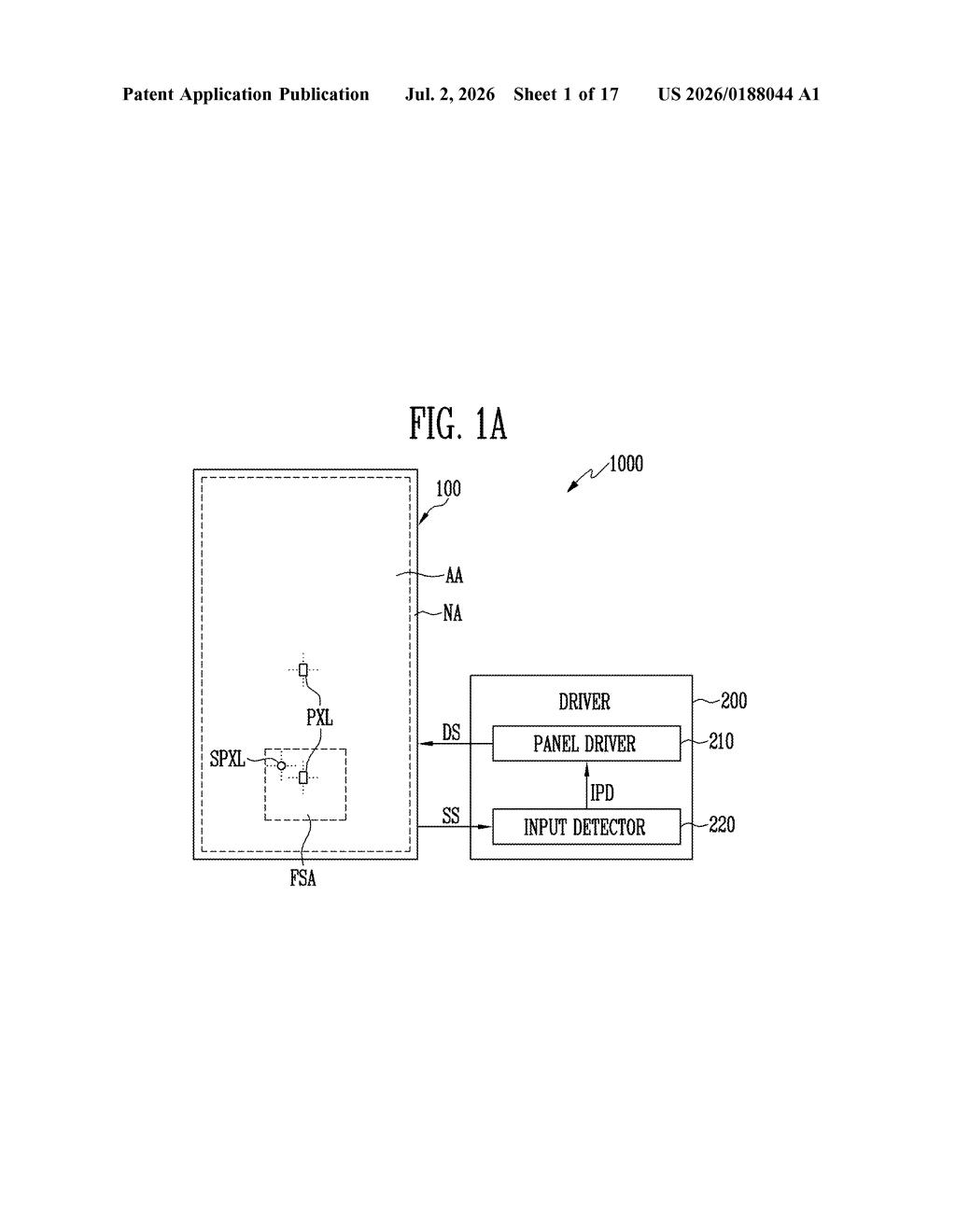
How Samsung's touch sensor shares one wire across four rows
Imagine a touchscreen as a grid of tiny pressure sensors, each one waiting to report back whether a finger is nearby. Normally each row of sensors needs its own dedicated wire running to the chip that reads the data. That adds up fast, especially in a large or high-resolution display.
What Samsung's patent describes is a system where four rows of sensors share a single output wire. A small switching circuit called a multiplexer takes turns connecting each row to that wire, one at a time, in rapid sequence. The driving chip pulses each row four separate times per frame rather than once, so every row still gets its moment to report in.
The practical payoff is a display that needs far fewer readout wires running through the panel. Fewer wires can mean a thinner border around the screen, more room for the display itself, or simpler manufacturing. It is incremental engineering, but the kind that shapes how the next generation of screens gets built.
How the multiplexer sequences four gate pulses per frame
The patent describes an input sensing device built into a display panel. Each sensor pixel sits at the intersection of a horizontal driving line (which carries the activation pulse) and a signal input line (which carries the sensor's response back to the reader chip).
The key addition is a multiplexer, a switching circuit that connects several signal input lines to a single output line one at a time. In the patent's specific example, four sensor pixels share one output line. During each display frame, there is a dedicated sensing period in which the multiplexer cycles through all four lines sequentially:
- The horizontal driving line fires a gate-on pulse to activate the first sensor pixel; the multiplexer routes only that pixel's signal to the output line.
- The pulse fires a second time; the multiplexer switches to the second pixel's line.
- This repeats for the third and fourth pixels in the same fashion.
- Between each pulse the driving line returns to a gate-off state, preventing crosstalk between readings.
The vertical driver (the chip that actually reads the data) sees all four sensor signals arriving over the same wire, but in time-separated slots, so it can tell them apart. The net result is that the number of physical readout wires running through the panel can be reduced by a factor of four in this configuration.
What fewer readout lines means for thin, high-res displays
Displays are in a constant war for space. Every wire that runs through a panel to carry touch data competes with wiring for pixels, power, and refresh signals. A multiplexed sensing architecture like this lets engineers either shrink the border around the screen, increase the resolution of the touch grid without adding more output wires, or reduce the pin count on the driver chip, which can lower cost and complexity.
For Samsung Display, which supplies panels to Samsung's own Galaxy devices as well as other manufacturers, tighter touch-sensing wiring is directly relevant to foldable and rollable screen designs where the panel border is already under extreme physical stress. This patent does not introduce a completely new concept, but it formalizes a specific four-to-one multiplexing scheme that could show up in future panel generations.
This is unglamorous but real display engineering. Multiplexing readout lines is a known technique, and Samsung Display is essentially patenting a specific implementation of it with four sensor pixels per output wire. It is not a patent that will make headlines, but the kind that lowers the cost and complexity of future panels.
Get our take in your Top Stories
Liked this breakdown? Add Patentlyze as a preferred source on Google, and our plain-English take shows up more often in your Top Stories the next time Samsung patent news breaks.
There are more where this came from
We read every patent application Big Tech publishes and send you the ones worth knowing. Plain English, free, every week.
Want this weekly breakdown for a company we don't cover? Patentlyze Pro →