
Samsung Patents a Multi-Level Battery Short Circuit Detection System
A short circuit inside a phone or laptop battery doesn't always announce itself dramatically — it can smolder quietly for a long time before becoming dangerous. Samsung's new patent describes a system that catches those slow-burn failures early by combining live battery measurements with a simulated model of what the battery *should* be doing.
What Samsung's battery short-circuit scoring actually does
Imagine your phone's battery is quietly developing a tiny internal short circuit — not the kind that causes an immediate explosion, but the kind that slowly drains capacity, generates heat, or builds toward a bigger failure. Right now, most devices don't catch this until it's already a problem.
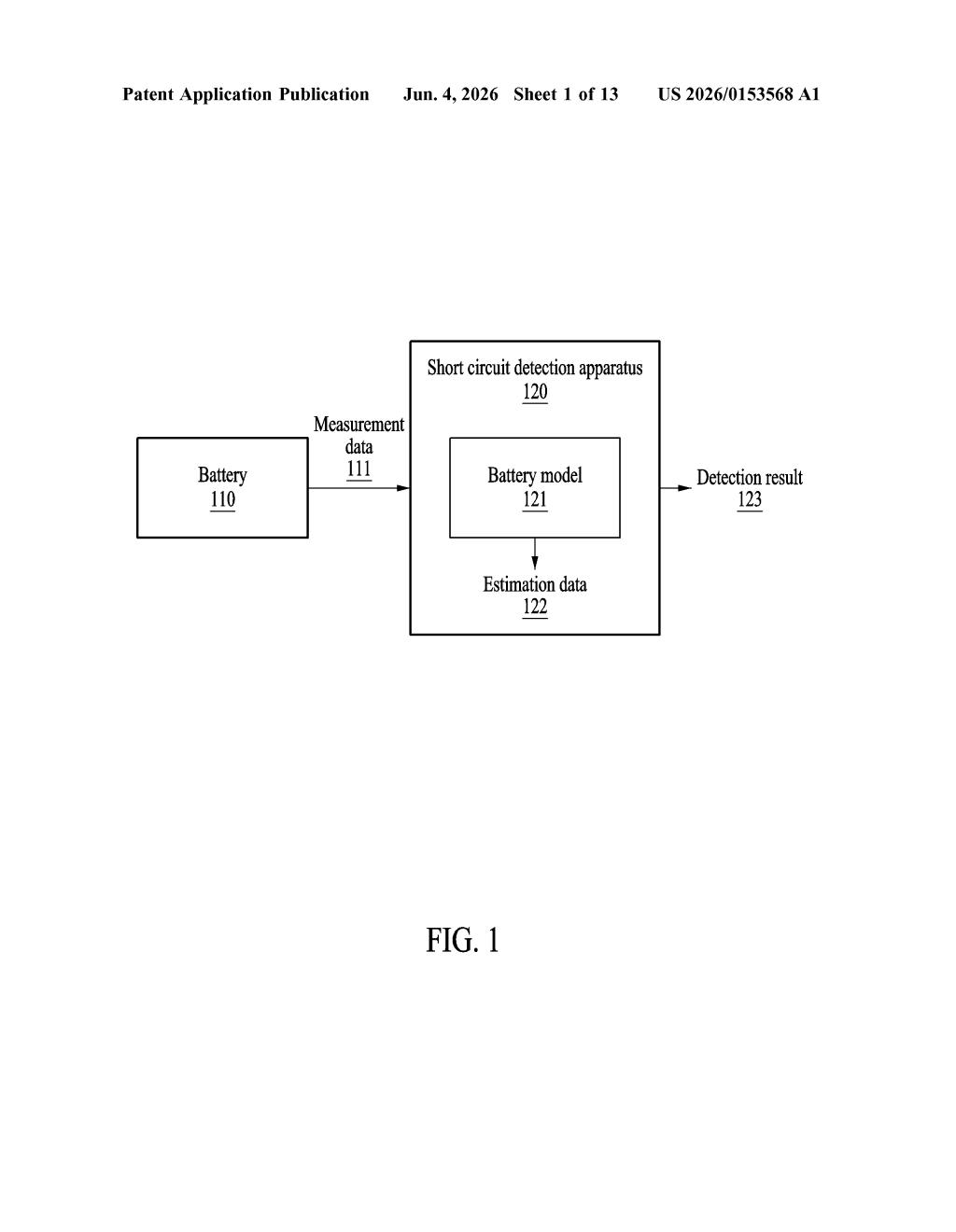
Samsung's patent describes a system that watches your battery from two angles at once: it takes real-time measurements of what the battery is actually doing, and it runs a simulated model of what a healthy battery should be doing under the same conditions. By comparing the two, it can spot the telltale signs of a short circuit forming.
What makes this interesting is that it doesn't just flag a binary yes/no. Instead, it assigns weighted scores to different warning signals and maps them to multiple predefined severity levels — think of it like a credit score for battery health. That graduated response means a device could alert you (or take protective action) much earlier, before a minor fault becomes a serious one.
How the battery model and detection scores work together
The system operates in a pipeline with several distinct stages. First, it pulls measurement data directly from the battery — voltage, current, temperature, and similar real-world readings. In parallel, it runs a battery model (a mathematical simulation of how the battery should behave) to generate estimation data — the expected values under normal, healthy conditions.
The gap between those two streams — real vs. expected — feeds into detection parameters, essentially thresholds and signals calibrated to surface anomalies consistent with a short circuit. The system then identifies short circuit feature signals: specific patterns in the data that are characteristic of internal faults.
Here's where the scoring layer comes in. Each detected feature signal gets a detection score, and those scores are weighted by type — not all anomaly signals are equally alarming, so the system processes them differently depending on what kind of fault they suggest. The weighted scores are combined into a single processed score.
Finally, that processed score is mapped to one of several predefined short circuit levels — a graduated severity scale rather than a simple pass/fail. This lets downstream logic (firmware, safety systems, user alerts) respond proportionally to how serious the detected fault actually is.
What this means for battery safety in Samsung devices
Battery safety is one of the harder unsolved problems in consumer electronics — Samsung knows this better than most, given the Galaxy Note 7 recall in 2016. A system that can catch a developing internal short circuit at an early severity level, rather than waiting for a hard failure threshold, could meaningfully reduce both device damage and safety incidents.
For you as a user, the practical upside would be earlier warnings — your phone or tablet flagging a degrading battery before it starts bulging or overheating rather than after. For Samsung, it's also a potential differentiator in devices where battery longevity and safety are selling points, including Galaxy phones, tablets, and wearables.
This is solid, practical battery-safety engineering — not flashy AI, but the kind of careful fault-detection work that actually prevents devices from catching fire. The graduated severity scoring is the genuinely interesting part: it moves beyond a simple fault flag toward something more like continuous battery health monitoring. Whether this ends up in Galaxy firmware or stays as a patent hedge, it's worth watching.
There are more where this came from
We read every patent application Big Tech publishes and send you the ones worth knowing. Plain English, free, every week.
Want this weekly breakdown for a company we don't cover? Patentlyze Pro →