
IBM Patents a Time-Expiring Certificate System for Locking Down Secure VM Traffic
IBM's new patent tackles a real headache in confidential computing: how do you make sure two secure virtual machines are actually allowed to talk to each other — and that the window for that conversation automatically closes?
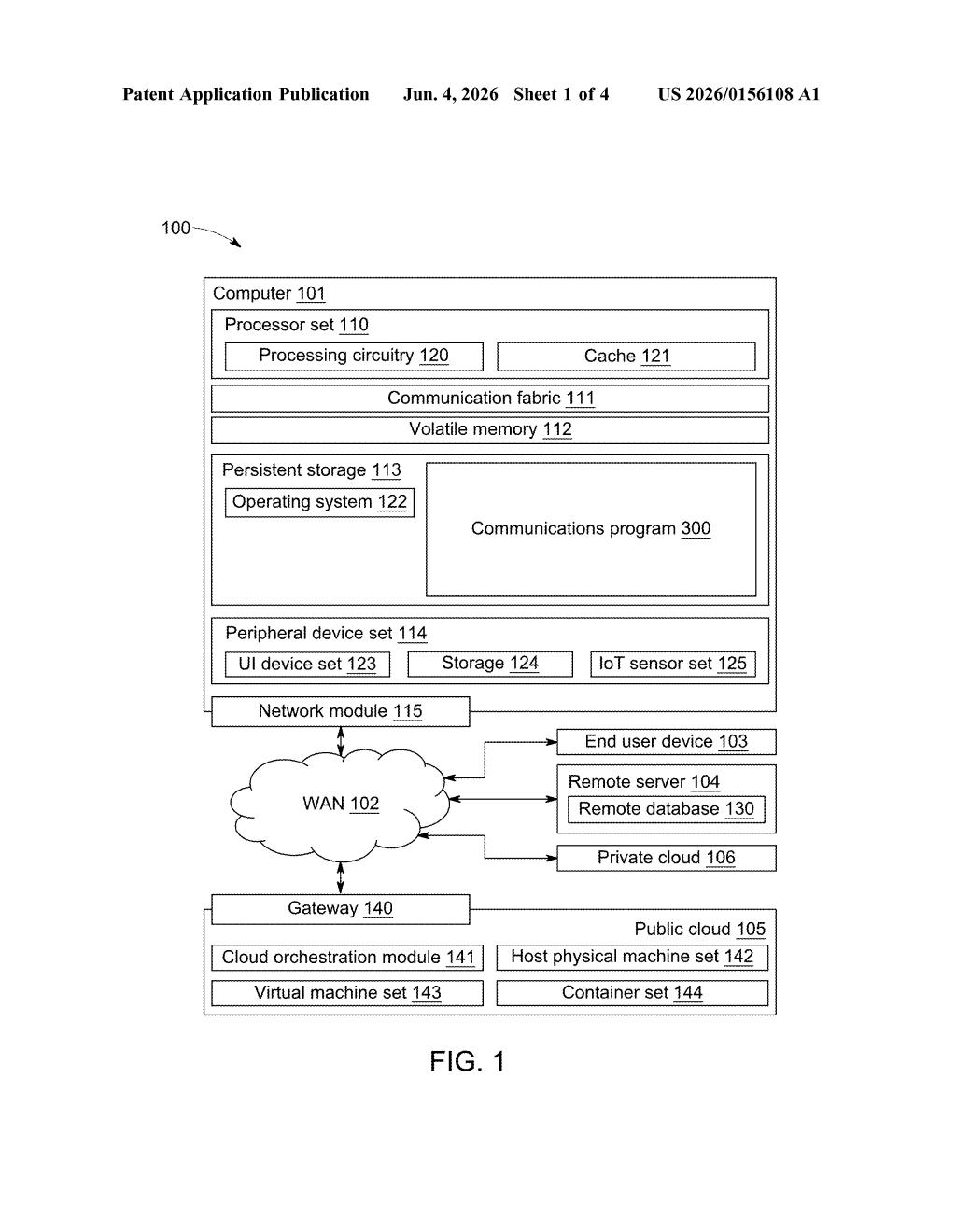
How IBM's expiring certificates police VM-to-VM traffic
Imagine you're running sensitive financial calculations inside a locked vault on a cloud server. Another program wants to send data into your vault to get processed. How do you know that other program is who it claims to be — and that it's not going to keep piping data in forever after it should have stopped?
IBM's patent proposes a system where a trusted certificate issuer lives inside its own secure compartment on the server. Before any two secure virtual machines can communicate, they each have to prove their identity to this issuer — a process called attestation. Only then does the issuer hand out a time-expiring certificate, like a visitor badge that dissolves after a few hours.
Once that certificate expires, the communication channel closes automatically. No certificate, no connection. This means even if something goes wrong — a workload gets compromised, a job runs longer than expected — the damage window is capped by design, not by someone remembering to revoke access manually.
How the mTLS attestation and cert-issuance chain works
The patent describes a three-party authentication dance involving trusted execution environments (TEEs) — hardware-enforced secure enclaves that even the cloud provider's own staff can't peek inside.
Here's how the flow works:
- A secure VM running an mTLS certificate issuer (think of it as a specialized notary) first submits an attestation request to the TEE platform — essentially asking the hardware to vouch for it.
- Once the hardware confirms the notary is legitimate and unmodified, a workload VM (the machine that wants to do the actual computing job) sends its own attestation request back to that notary.
- If the notary approves, it issues a time-expiring mutual TLS certificate (mTLS — a flavor of TLS where both sides prove their identity, not just the server). That certificate is scoped to the specific workload and expires on a schedule.
Mutual TLS is the key upgrade over regular HTTPS-style TLS: instead of only the server proving who it is, both communicating parties present cryptographic proof of their identity. Layering in automatic expiration means certificates can't be silently reused or stolen for long-term access. Workloads are also configured to refuse any certificate not issued by an approved mTLS issuer, which prevents an attacker from substituting their own.
What this means for confidential cloud workload security
Confidential computing — running workloads inside hardware-protected enclaves — is one of the fastest-growing areas of enterprise cloud security, used for everything from medical record processing to AI model training on sensitive data. But the hardest problem isn't protecting data inside a secure VM; it's controlling what flows between them. This patent directly addresses that gap by embedding access control and time-bounding into the certificate layer itself.
For you as a cloud architect or security engineer, this kind of system reduces the blast radius of a compromised workload: even if an attacker gets inside one VM, they inherit a credential that expires soon and only authorizes specific tasks. IBM has deep roots in mainframe and enterprise security, and this filing fits squarely into their confidential computing platform strategy.
This is a solid, practical patent — not flashy, but exactly the kind of infrastructure work that matters in regulated industries like finance and healthcare where multi-tenant cloud workloads need ironclad isolation. The time-expiry angle is the genuinely interesting piece; it operationalizes the 'least privilege, least duration' principle at the certificate layer without requiring manual revocation workflows. Worth watching if you follow IBM's hybrid cloud or confidential computing portfolio.
There are more where this came from
We read every patent application Big Tech publishes and send you the ones worth knowing. Plain English, free, every week.
Want this weekly breakdown for a company we don't cover? Patentlyze Pro →