
Samsung Patents an AI System That Cleans Up Distorted 5G Transmitter Signals
Every power amplifier in a 5G transmitter introduces distortion — and Samsung thinks a hybrid AI approach can correct it more precisely than traditional math alone.
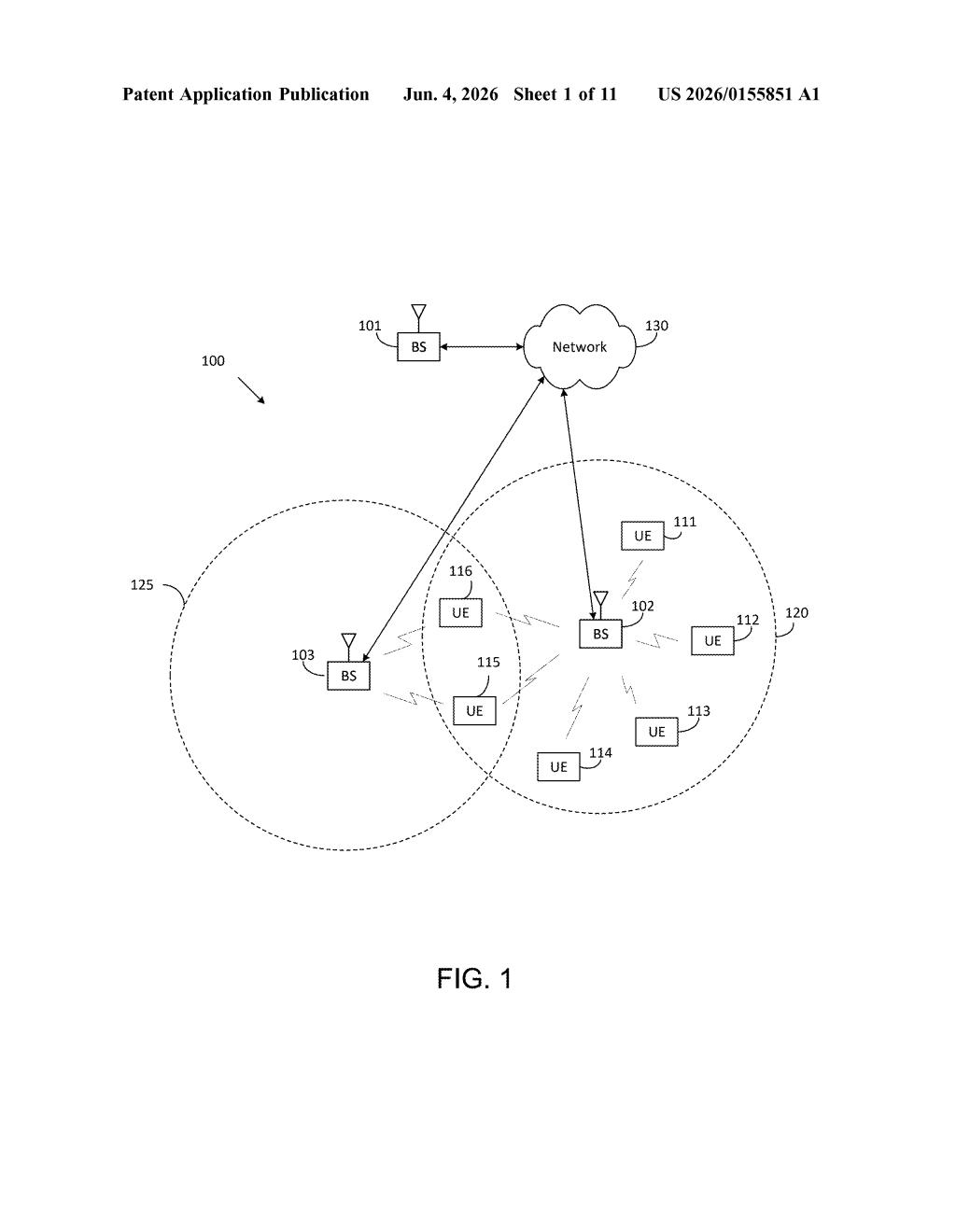
What Samsung's AI signal-correction system actually does
Imagine a speaker that subtly warps the audio as it gets louder. To compensate, a sound engineer might pre-warp the signal going in, so the output comes out clean. Radio transmitters face the same problem: the power amplifiers that boost signals before they're broadcast introduce distortion, especially as they work harder. The standard fix is called digital pre-distortion — deliberately tweaking the signal before it enters the amplifier so the distortion cancels out.
Samsung's new approach layers an AI model on top of the traditional mathematical correction. A well-understood formula handles the baseline compensation, then a neural network catches the leftover nonlinearities the math misses. The system also pays attention to what the amplifier's power supply is doing in real time — a technique called envelope tracking — because the supply voltage itself shifts the amplifier's behavior.
The practical upshot: cleaner signals, potentially at lower power, which matters a lot in dense 5G base stations running hot around the clock.
How the GMP model and neural network split the correction work
The patent describes a two-stage correction pipeline inside a digital predistortion (DPD) module designed specifically for digital envelope tracking (DET) power amplifiers — amplifiers whose supply voltage is dynamically adjusted to match the signal's instantaneous power level (which improves efficiency but makes the nonlinearity harder to model).
- First, the system measures the digital envelope — essentially a real-time snapshot of the signal's power envelope — and feeds it alongside the raw transmit signal into a Generalized Memory Polynomial (GMP) model. GMP is a well-established mathematical framework that captures how a power amplifier distorts signals with memory effects (meaning the distortion at any moment depends on slightly earlier moments, not just right now).
- The GMP produces a pre-distorted version of the signal. That output is then passed through a neural network (NN) AI model, which applies a second correction layer to handle nonlinearities the polynomial math can't capture cleanly — particularly the complex interactions introduced by the fluctuating supply voltage in envelope tracking.
- The final adjusted signal drives the power amplifier, and the output is a cleaner, more linear transmission.
The key design choice is keeping the GMP as a first-pass filter rather than replacing it with AI entirely. That hybrid structure means the neural network only has to correct the residual error, which is a smaller and more tractable learning problem.
What this means for 5G base station efficiency
Power amplifier linearity is one of the unglamorous bottlenecks in 5G infrastructure. Distorted signals mean spectral regrowth — energy spilling into adjacent frequency bands, which regulators strictly limit and carriers hate. Envelope tracking is already widely used to cut amplifier power consumption, but it makes the nonlinearity profile more complex and harder to compensate with a fixed math model.
If Samsung's hybrid AI-DPD approach holds up in silicon, it could let base stations run envelope-tracking amplifiers more aggressively — saving power — without sacrificing signal quality. For a company that supplies both consumer devices and network infrastructure components, tighter amplifier control is a meaningful competitive lever.
This is deep RF plumbing — the kind of work that doesn't make press releases but quietly determines whether a 5G radio is competitive on efficiency and spec compliance. The hybrid GMP-plus-neural-network structure is a sensible engineering choice, not a flashy AI rebrand of a solved problem. Samsung has real skin in the game here between its semiconductor and network equipment divisions, so this filing is worth tracking.
There are more where this came from
We read every patent application Big Tech publishes and send you the ones worth knowing. Plain English, free, every week.
Want this weekly breakdown for a company we don't cover? Patentlyze Pro →