
Sony Patents a System That Auto-Tunes Camera Settings During 3D Scanning
Getting a clean 3D scan of a real-world object is surprisingly hard — bad exposure, wrong angle, or tricky lighting can ruin the whole model. Sony's new patent describes a system that reads where the camera is pointed and what the light is doing, then automatically adjusts camera settings on the fly to produce better scans.
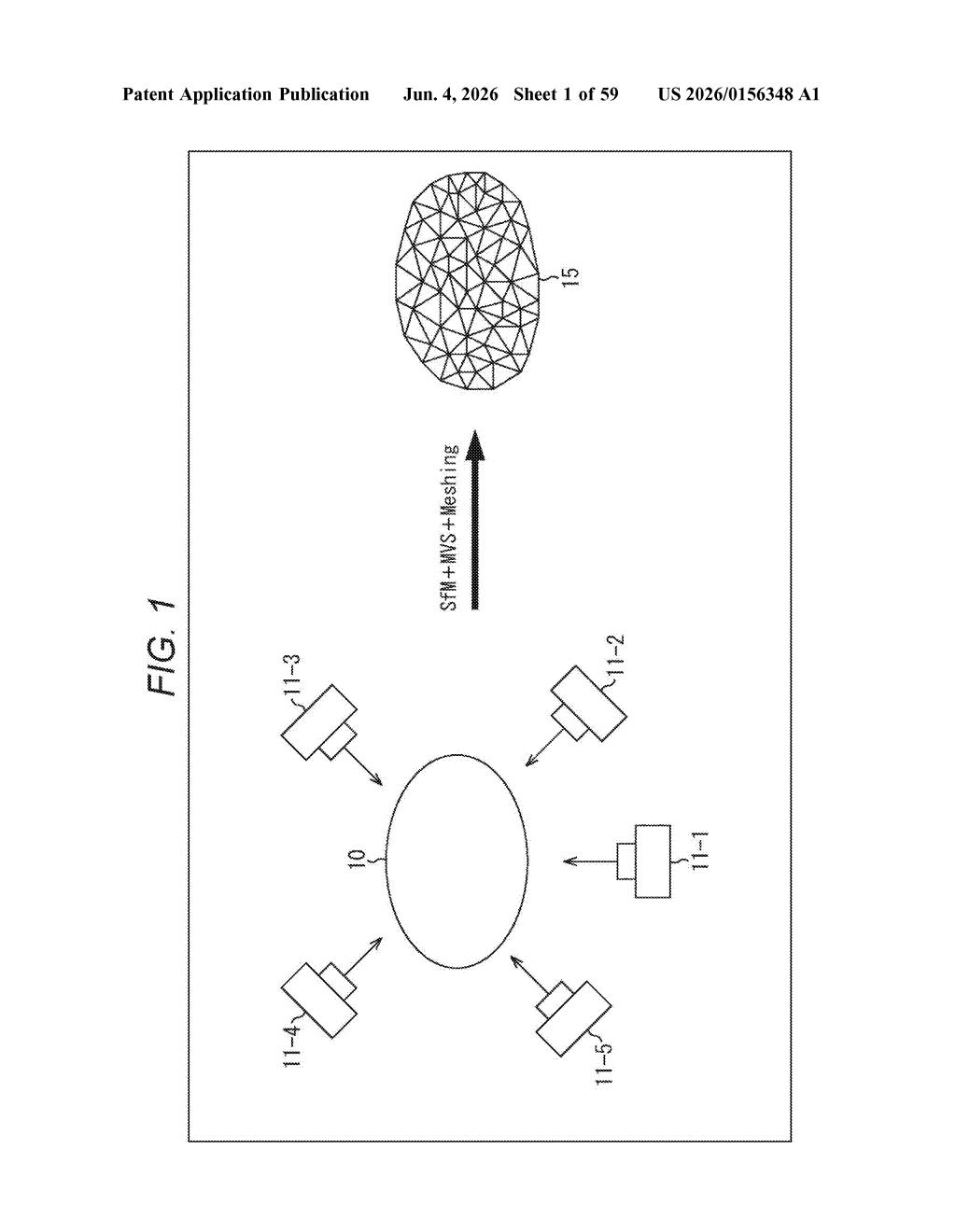
What Sony's adaptive 3D scanning system actually does
Imagine you're trying to create a detailed 3D model of a sculpture or a product for an online store. You walk around it with a camera, taking dozens of shots from different angles — but if your camera settings stay fixed, some shots come out overexposed, others too dark, and the final 3D model ends up full of gaps and artifacts.
Sony's patent describes a system that solves this by using a rough first-pass 3D scan plus the camera's current position and orientation to automatically adjust camera settings — things like exposure and focus — before each new shot. It's like having an assistant who looks at where you're standing relative to the object and what the lighting is doing, then hands you the right camera dial settings every time.
The system also logs the lighting conditions of the environment alongside each captured image, so the 3D reconstruction software downstream has more context to work with. The end goal is a cleaner, more complete 3D model with less manual fiddling.
How position data drives Sony's imaging parameter control
The patent describes an imaging parameter control unit — essentially software that sits between the camera and the 3D reconstruction pipeline and actively manages shooting settings.
Here's the basic loop the system runs:
- A first round of imaging produces first three-dimensional shape information — a rough 3D representation of the object, generated from initial captures plus the camera's tracked position and orientation (think: where in space the lens is pointing).
- The system uses that rough 3D model, combined with live position/orientation data, to calculate optimal imaging parameters (exposure, white balance, focus distance, and similar settings) for subsequent capture passes.
- Images taken with those tuned settings feed into a second, higher-quality 3D reconstruction — the second three-dimensional shape information.
The patent also covers illumination environment detection — identifying the lighting conditions of the space where scanning takes place and tagging each captured image with that data. This metadata can help 3D reconstruction algorithms distinguish actual surface detail from lighting artifacts, which is one of the trickiest problems in photogrammetry (the technique of building 3D models from photographs).
The inventor is listed as a single Sony engineer, and the filing covers a broad range of potential applications: standalone imaging devices, communication-enabled cameras, and general electronic equipment.
What this means for 3D capture and digital twin workflows
For anyone doing photogrammetry or 3D scanning — product photographers, game asset creators, industrial inspection teams, or researchers building digital twins — inconsistent camera settings across a shot sequence are a persistent headache. Current workflows often require manual bracketing or post-processing to compensate. A system that closes the loop between the existing rough model and live camera control could meaningfully reduce the number of re-scans needed.
The lighting-tagging component is also worth noting. As neural radiance fields (NeRF) and similar AI-driven 3D reconstruction methods become more common, having per-image lighting metadata baked in could improve how well those models separate geometry from illumination — which affects everything from AR object placement to product visualization.
This is a practical, workmanlike patent rather than a headline-grabbing concept. Sony is clearly thinking about the full 3D capture pipeline — not just the sensor, but the feedback loop between a rough first scan and the camera settings used to refine it. For a company that makes both professional cameras and consumer imaging hardware, filing this kind of foundational IP around autonomous scan optimization makes sense, even if the application is narrow.
There are more where this came from
We read every patent application Big Tech publishes and send you the ones worth knowing. Plain English, free, every week.
Want this weekly breakdown for a company we don't cover? Patentlyze Pro →