
Google Patents a Compact Camera Lens Built to Capture Broad Scenes
Google has patented a specific wide-angle lens arrangement that keeps the front element unusually small relative to the overall lens length, a design choice that affects how compact the whole optical stack can be.
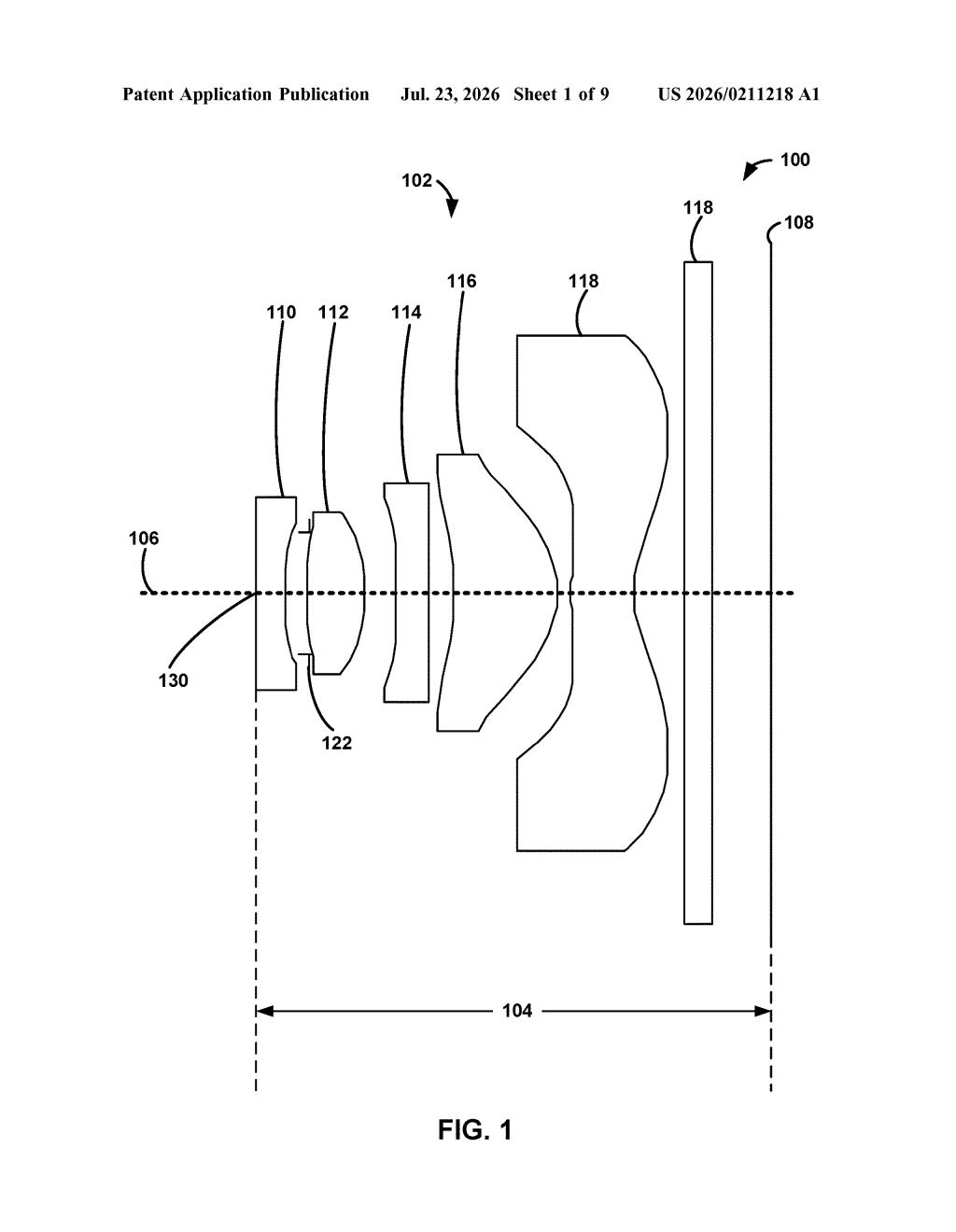
What Google's five-element lens design actually does
Imagine the camera on your phone is basically a tiny stack of glass or plastic discs, each one bending light in a slightly different way until an image forms on the sensor. The order and size of those discs matters a lot for image quality and how thin the whole camera bump can be.
Google's patent describes a five-element lens where the very first piece of glass the light hits is kept quite small, less than half the total length of the lens assembly. That constraint shapes the entire optical design and is the central engineering claim here.
This is a fairly specific optical geometry filing, the kind that camera module makers use to protect a particular arrangement before it ships in a product.
How the five optical elements are arranged
The patent covers a lens made of five refractive elements (meaning curved glass or plastic pieces that bend light by refraction, not reflection) arranged in a fixed order along a single optical axis.
The order from the front of the lens (object side, where the scene is) to the back (image side, where the sensor sits) is:
- First refractive lens element
- Aperture stop (the physical opening that controls how much light enters)
- Second, third, fourth, and fifth refractive lens elements
The key constraint is dimensional: the diameter of that first front element must be less than 50% of the lens's total track length (total track length is the distance from the front of the first element to the image sensor plane). Keeping the front element small relative to overall length is a known optical design strategy for controlling how wide an angle the lens can capture while managing distortion and aberration.
Beyond the main claim, the specific curvatures, refractive indices, and spacings of each element would be where the real optical engineering sits, but those details are embedded in dependent claims not provided here.
What this means for Google's camera hardware
Wide-angle lenses are standard on modern smartphones, and every camera module maker files patents on specific lens geometries to protect their designs. Google shipping Pixel phones with custom-tuned camera optics makes this the kind of routine but real filing that could correspond to a future Pixel camera module.
That said, this is a narrow optical engineering patent covering one specific arrangement. It does not describe AI processing, sensor technology, or any software layer. Its practical scope is limited to the physical lens geometry itself, which makes it relevant to hardware engineers but not particularly telling about Google's broader camera strategy.
This is a routine optics patent, the kind that camera module suppliers and phone makers file regularly to protect specific lens geometries. There is nothing here that hints at a surprising new direction. If you are not an optical engineer or a patent watcher tracking Google's camera supply chain, you can safely skip this one.
There are more where this came from
We read every patent application Big Tech publishes and send you the ones worth knowing. Plain English, free, every week.
The drawings
9 drawing sheets from US 2026/0211218 A1 · click any drawing to enlarge


Want this weekly breakdown for a company we don't cover? Patentlyze Pro →