
Intel Patents a Real-Time System for Scoring How Good Encoded Video Actually Looks
Encoding video fast is one thing — knowing whether the result actually looks good to a human eye, in real time, is another problem entirely. Intel's latest patent takes a swing at solving the second one.
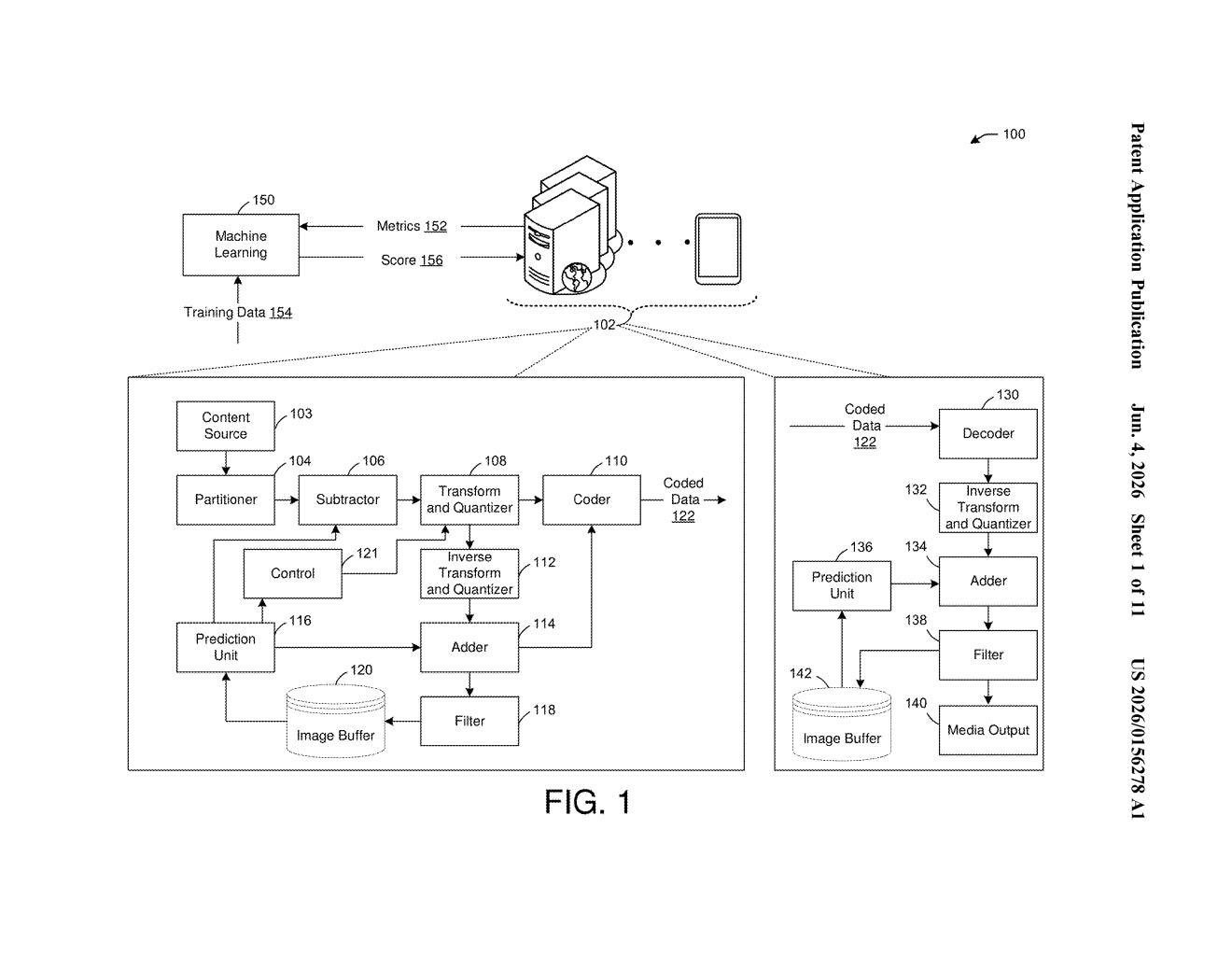
What Intel's perceptual video quality scorer actually does
Imagine you're watching a live stream and the video suddenly looks blocky or washed out. The encoder that compressed the video made tradeoffs — and had no reliable way to know, in the moment, whether those tradeoffs were hurting what you actually see.
Intel's patent describes a system that generates a human visual score for each encoded video frame as it's being processed. It does this by combining two types of quality measurements: one that looks at small blocks of pixels in detail, and one that evaluates the whole frame at once. Each measurement gets its own weight, and the two are blended into a single number that approximates how a person would perceive the quality of that frame.
The goal is to give encoders a fast, accurate feedback signal — so decisions about compression, bitrate, and quality tradeoffs can be made with real perceptual data rather than rough approximations.
How Intel blends pixel and frame scores into one quality number
The patent describes a pipeline with four key steps:
- Pixel block-level quality metrics: The system analyzes small blocks of pixels within an encoded frame and generates a quality score for each. This catches localized artifacts — like blocky compression in a fast-moving scene — that a whole-frame average might miss.
- Frame-level quality metrics: Separately, the system evaluates the entire frame to capture broader perceptual characteristics, like overall brightness consistency or large-area blurring.
- Adaptive weighting: Rather than treating both measurements equally, the system assigns a pixel block-based weight to the local scores and a frame-based weight to the global scores. This lets the system tune how much each perspective contributes depending on content.
- Human visual score: The weighted combination produces a single human visual score — a perceptual quality estimate modeled on how the human visual system (HVS) prioritizes certain regions and features over others.
The framing of both metrics as "indicative of estimated human perceptions" signals this is designed to correlate with subjective quality ratings, not just technical signal fidelity measures like PSNR (peak signal-to-noise ratio, a common but notoriously imperfect video quality metric).
What this means for streaming and video encoding pipelines
Video encoders — whether in streaming infrastructure, video conferencing, or hardware encoder chips — constantly make tradeoffs between compression efficiency and visual quality. Right now, most of those decisions rely on metrics like PSNR or SSIM that don't always match what you actually notice when something looks bad. A real-time perceptual score would let encoders make smarter decisions on the fly, potentially improving quality at the same bitrate.
For Intel specifically, this fits squarely into its media encoder hardware business — the Quick Sync video engine inside Intel CPUs is used in everything from video production tools to cloud transcoding services. A built-in perceptual quality feedback loop could differentiate Intel's encoder silicon from competitors at the hardware level.
This is solid, unglamorous encoder infrastructure work. The idea of combining local and global perceptual metrics with adaptive weighting isn't conceptually wild, but getting it to run in real time at encoding speed is genuinely hard. If Intel can bake this into Quick Sync or a future discrete media accelerator, it's the kind of quality-of-life improvement that content platforms and video conferencing vendors would actually pay attention to.
There are more where this came from
We read every patent application Big Tech publishes and send you the ones worth knowing. Plain English, free, every week.
Want this weekly breakdown for a company we don't cover? Patentlyze Pro →