
Apple Patents a System for iPhones to Self-Report Signal Measurement Complexity
Your iPhone already measures signal quality — but this patent lets it tell the network exactly how hard that measurement was to compute, so the network can schedule smarter and your phone isn't overwhelmed.
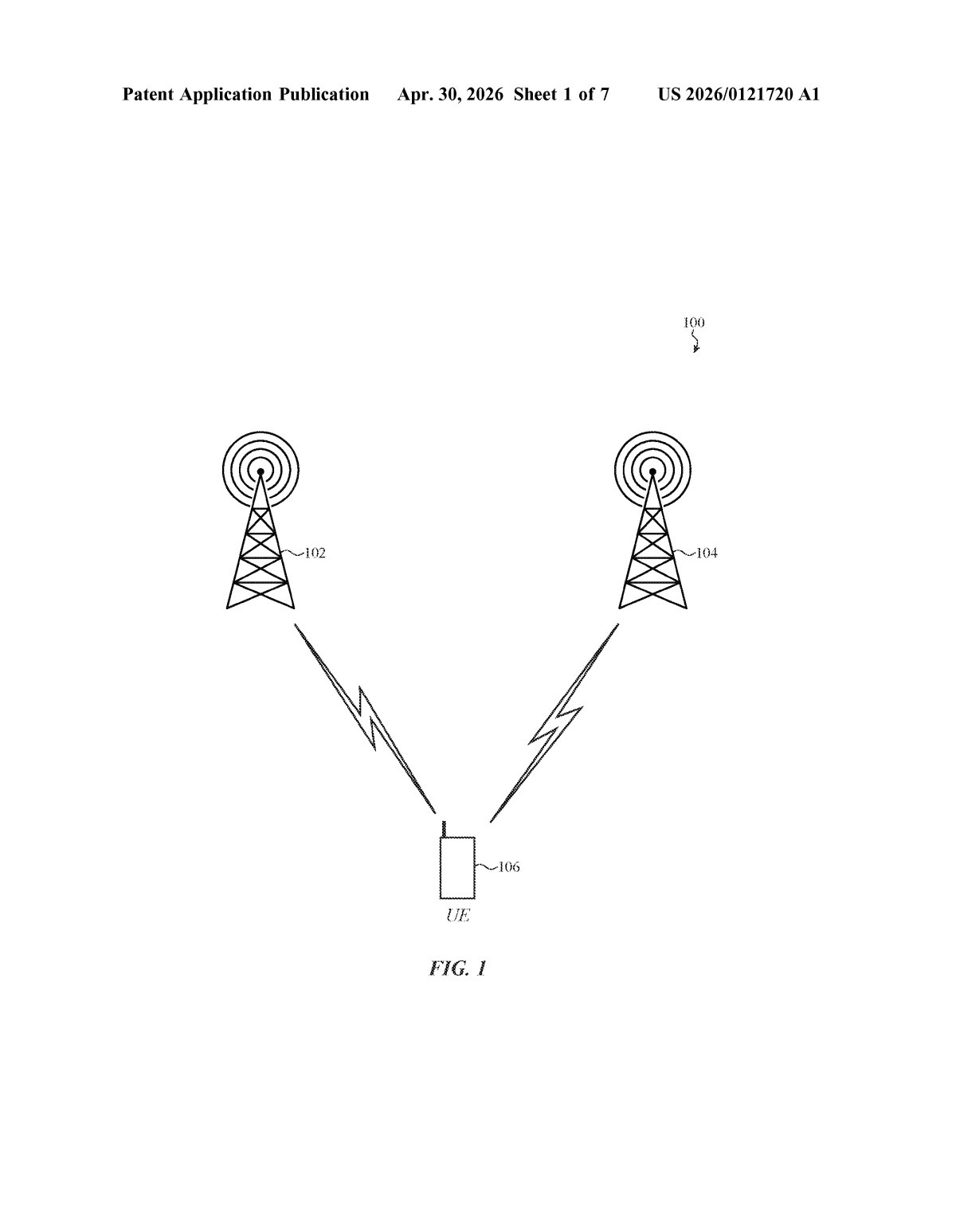
What Apple's signal self-reporting actually does for your iPhone
Imagine your phone is in a crowded stadium trying to lock onto a 5G signal. The network keeps asking for detailed signal reports, not knowing whether those reports take your phone a millisecond or a full second to generate. That mismatch can quietly cause delays, dropped data, and extra battery drain.
Apple's patent gives the iPhone a voice in that conversation. Instead of just silently crunching numbers and sending back a report, the phone can now tell the network: "hey, this measurement took X processing units to complete." The network can then use that information to schedule future measurement requests more sensibly — not piling on when the phone is already working hard.
It's a small but practical coordination upgrade. Think of it like a barista telling you there's a 10-minute wait before you order, rather than making you wonder why your coffee is late. The iPhone gets a say in its own workload, and the network gets better data to manage traffic fairly.
How the iPhone calculates and reports its CSI processing load
The patent centers on a specific 5G mechanism called Time Domain Channel Properties (TDCP) — a type of signal report that describes how a wireless channel is changing over time. To generate a TDCP report, an iPhone first has to measure a Tracking Reference Signal (TRS), which is a known pilot signal the base station periodically broadcasts so devices can track channel conditions.
What's new here is what the iPhone sends alongside that report. The patent describes transmitting the number of CSI Processing Units (CPUs) — essentially a standardized count of how many computational steps were needed to produce the TDCP report. In some versions, it can also report the raw processing time required.
The flow looks roughly like this:
- The network sends the iPhone a configuration asking for TDCP reports based on TRS measurements.
- The iPhone measures the TRS and computes the channel properties.
- Before or alongside submitting the CSI report, the iPhone tells the network how many processing units that computation required.
- The network can use that feedback to calibrate future measurement requests — spacing them out, reducing complexity, or adjusting timing.
This is essentially a feedback loop for feedback loops. Channel state reporting already exists to help the network optimize transmission; this patent makes the reporting process itself more transparent and manageable for the device doing it.
What this means for 5G scheduling and iPhone battery life
5G networks are increasingly aggressive about requesting detailed channel measurements, especially as beamforming and multi-antenna configurations (like Massive MIMO) become standard. Without any signal from the device about its computational load, the Radio Access Network (RAN) is flying blind — it doesn't know whether its measurement requests are trivial or taxing for a given phone.
For you as a user, this could translate into more consistent performance in dense environments — stadiums, transit hubs, office buildings — where your phone is already juggling multiple tasks. It also has implications for battery efficiency: a network that knows when your phone is struggling to keep up can back off, rather than hammering it with requests that heat up the processor and drain the battery faster.
This is unglamorous but genuinely useful cellular plumbing. The gap between what a network assumes a device can do and what it actually can do is a real source of inefficiency in 5G, and Apple is filing on a clean solution: just have the device report its own cost. It's the kind of infrastructure patent that quietly makes things work better without anyone noticing — which is exactly how the best wireless improvements tend to land.
There are more where this came from
We read every patent application Big Tech publishes and send you the ones worth knowing. Plain English, free, every week.
Want this weekly breakdown for a company we don't cover? Patentlyze Pro →