
Apple Patents a Road-by-Road Wireless Quality Map for Self-Driving Cars
A self-driving car that loses its data connection at the wrong moment is a safety problem, not just an inconvenience. Apple's new patent tackles that by building real-time maps of where wireless coverage is weak — before the car gets there.
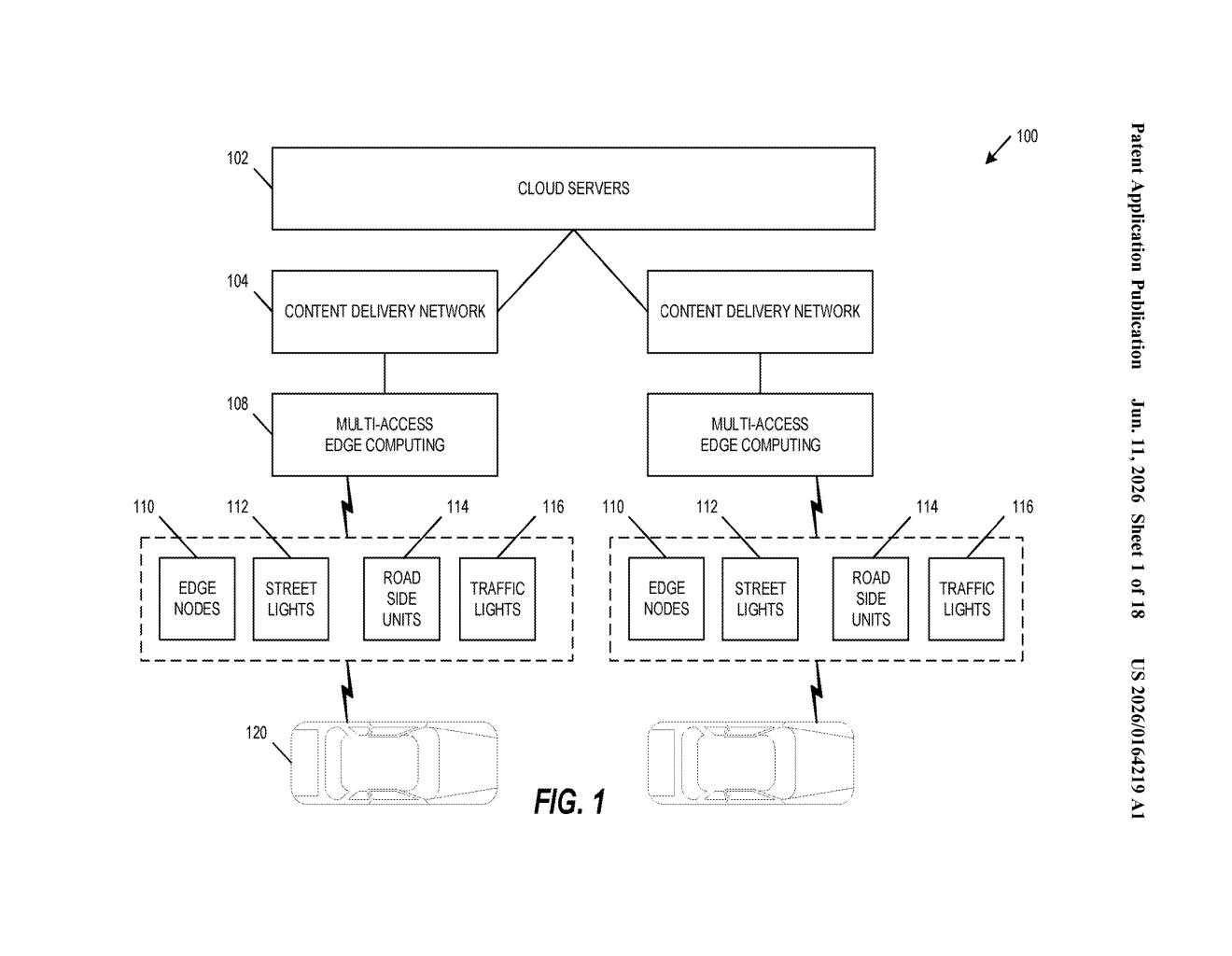
What Apple's self-driving connection map actually does
Imagine your GPS rerouting you around a traffic jam, but instead of traffic, it's bad cell signal. Apple's patent describes a system that does exactly that for self-driving vehicles — continuously tracking where wireless coverage is strong, weak, or congested along a route, and sharing that information with the car ahead of time.
The core idea is a quality-of-service map: a picture of the road built from signal reports collected from vehicles, roadside antennas, and other sources. Your car can look ahead at the map and prepare — caching data it'll need, switching networks, or slowing a risky maneuver — rather than being caught off guard by a dropped connection.
The patent also describes using light-based wireless communication (think of a very fast, short-range data beam using infrared or visible light) as a backup or supplement when radio signals are too crowded. It's a layered approach to keeping autonomous vehicles online when it matters most.
How the QoS map predicts and shares coverage data
The patent covers three interlocking ideas for keeping autonomous vehicles reliably connected.
First, the QoS map. The system collects quality-of-service (QoS) information — basically, how good the wireless connection is at specific locations — from roadside hardware and other vehicles. It combines that with the available network bandwidth (how much data capacity is allocated) to generate a geographic map showing coverage quality zone by zone. A car approaching a tunnel, a stadium, or a rural gap can consult the map and take action before the signal drops.
Second, heterogeneous roadside infrastructure. Rather than relying on a single type of network (say, 5G cellular alone), the system can hand off between different connection types — cellular towers, Wi-Fi access points, dedicated short-range roadside units — to reduce cost and latency (the delay between sending and receiving data).
Third, optical wireless communication (OWC). For very short-range, high-speed data transfers — like downloading a detailed map segment from a roadside kiosk — the system proposes using light-based wireless rather than radio. OWC can push large amounts of data quickly without adding congestion to the radio spectrum, which is useful when many vehicles are in the same area.
What this means for self-driving car reliability
Self-driving vehicles depend on a constant stream of data — maps, sensor updates, traffic signals, cloud-processed decisions. A dropped connection isn't just an annoyance; depending on how the system is designed, it could force a vehicle into a slower, more conservative mode or trigger a pull-over. A proactive coverage map turns a reactive problem into something the car can plan around.
For Apple, this filing sits squarely in the decade-long orbit of its autonomous driving research program. Whether or not an Apple car ever ships, the underlying communication infrastructure patents have value — as licensing assets, as components of CarPlay or future vehicle software platforms, or as building blocks for any partner hardware that runs Apple software.
This is solid, unglamorous infrastructure work — the kind of thing that never makes a product keynote but quietly determines whether a self-driving system is actually usable. The QoS map concept is the most practical piece here; light-based wireless for moving vehicles is genuinely interesting but faces real-world deployment hurdles that the patent doesn't address. Worth tracking as part of Apple's broader autonomous vehicle communication portfolio.
There are more where this came from
We read every patent application Big Tech publishes and send you the ones worth knowing. Plain English, free, every week.
Want this weekly breakdown for a company we don't cover? Patentlyze Pro →