
Apple Patents a Way for Your iPhone to Grade Its Own 5G AI Predictions
Your phone's AI is already guessing which 5G antenna direction will give you the best signal. Apple now wants the phone to also check whether those guesses are right, and report back to the network when they're not.
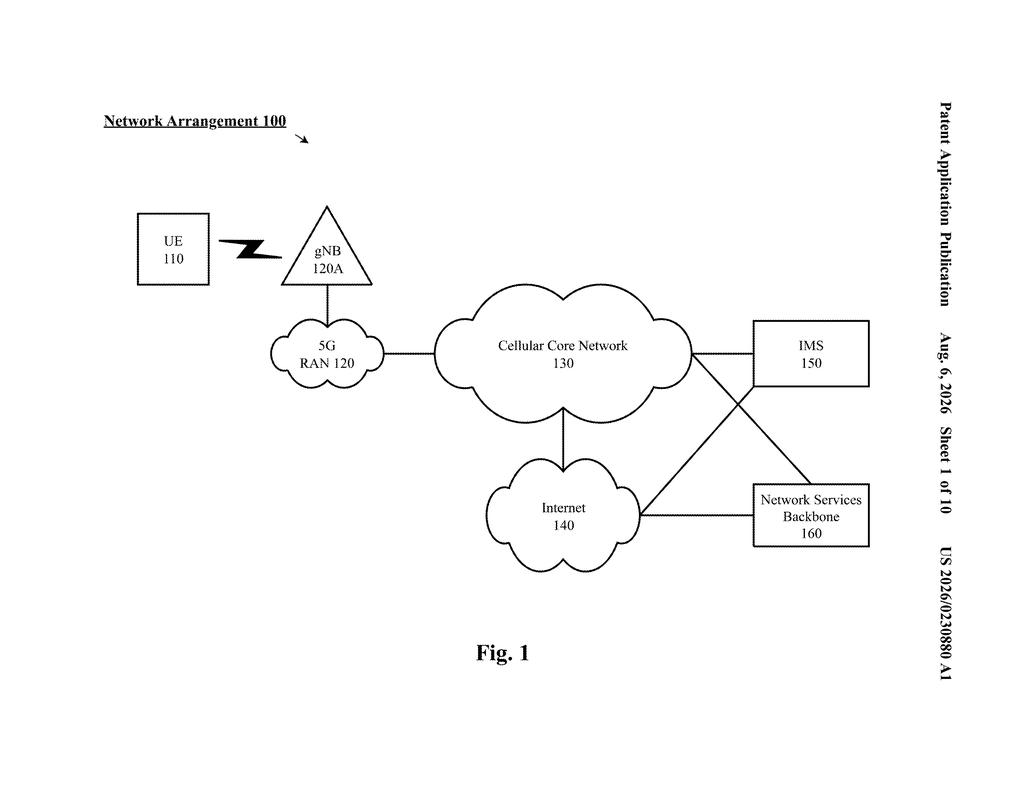
How Apple's beam-checking system works on your phone
Imagine your phone as a student who not only takes a test but also grades their own answers and tells the teacher when something went wrong. That's roughly what this patent describes for 5G connections.
Modern 5G networks use dozens of narrow antenna beams to aim a signal directly at your phone. Apple has been working on AI systems that predict which beam will work best, so your phone doesn't waste time scanning all of them. But AI models can drift, get confused by new environments, or just be wrong. This patent adds a self-checking layer: the phone periodically takes its own independent signal measurements and compares them against what the AI predicted.
If the AI's predictions and the real-world measurements don't match, your phone generates a short report and sends it back to the cell tower. The tower can then decide whether to update or replace the AI model. It's quality control, built directly into the device.
… compare the first set of beam measurements to predicted beam results, the predicted beam results obtained by inputting a second set of beam measurements into one or more AI/ML models used for the AI/ML based beam management …
Translation: The device checks its actual 5G signal findings against what its artificial intelligence previously guessed would happen.
How the phone compares AI predictions to real beam measurements
The patent describes a protocol where a phone (user equipment, or UE) runs two parallel measurement tracks for 5G beam management.
Track one is the normal AI-driven flow: the phone feeds frequent signal samples (the "second set of beam measurements") into an on-device AI/ML model, which outputs predictions about which antenna beam direction is best.
Track two is the verification layer: at a slower, less frequent interval, the phone takes a separate, independent set of real measurements (the "first set of beam measurements") and directly compares them to what the AI predicted. The key design detail is that the first track's measurement period must be a whole-number multiple of the second track's period, so the two clocks stay in sync and the comparison is mathematically fair.
When the comparison reveals a meaningful gap, the phone packages the discrepancy into a monitoring report and transmits it to the base station. The base station can use this feedback to decide whether the AI model on the phone needs to be recalibrated, replaced, or left alone.
This fits into a broader 3GPP standards effort (the body that defines how 5G works globally) to define how AI models embedded in phones can be supervised and managed over the air.
… generate, for transmission to the base station, a monitoring report relating to the performance of the models.
Translation: The phone sends a report card back to the network tower detailing how accurately its artificial intelligence performed.
What self-monitoring AI beams mean for 5G reliability
5G performance in the real world is messier than in a lab. Buildings, crowds, and even weather change how signals behave, which means an AI model trained on one environment can degrade in another. Without a feedback loop, the network has no way to know the phone's AI is making bad beam choices, and you just experience slower speeds or dropped calls with no explanation.
This patent gives the network a structured way to catch that problem early. If Apple builds this into future iPhones and it gets adopted in 5G standards, carriers could automatically push updated AI models to phones that are underperforming, rather than waiting for users to complain or for engineers to spot the problem in aggregate data.
This is deep standards-layer work, not a consumer feature anyone will ever see in a settings menu. But it matters because AI-driven 5G beam management only works long-term if there's a way to catch when the AI goes wrong. Apple filing this suggests they're serious about owning the full stack of on-device 5G AI, not just the inference side.
There are more where this came from
We read every patent application Big Tech publishes and send you the ones worth knowing. Plain English, free, every week.
The drawings
10 drawing sheets from US 2026/0230880 A1 · click any drawing to enlarge


Want this weekly breakdown for a company we don't cover? Patentlyze Pro →
Be the first to weigh in