
Google Patents a Navigation System That Learns From Your Past Routes
What if your navigation app remembered everywhere you've been — and used that history to give you better directions the next time you head somewhere similar? That's the core idea behind a new Google patent.
What Google's trip-memory navigation actually does
Imagine you drove to a new doctor's office last month and your phone's map app guided you there. Now imagine that same app, weeks later, using the memory of that trip to help route you to a different clinic across town — because it knows the kind of roads you prefer, or the stops you made along the way.
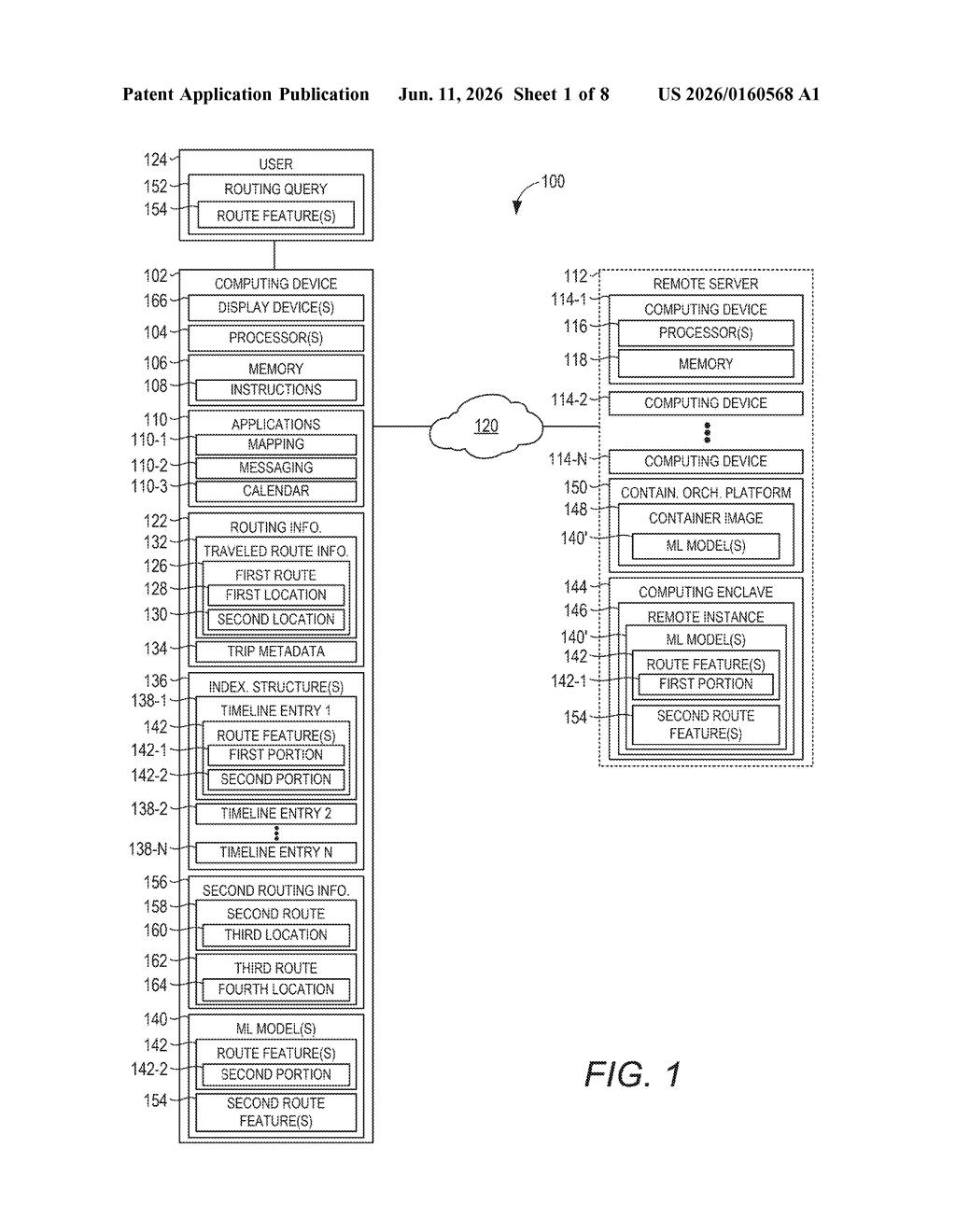
That's what this Google patent describes. Your device would save a structured record of past trips — not just the start and end points, but extra details pulled from apps running during the drive. Those records get stored in a searchable list of timeline entries, one per trip.
When you later ask for directions, your device searches through that history and finds the trip most similar to what you're asking for now. It then uses that old trip's details to help figure out the best route to your new destination. Think of it like your phone having a long-term travel memory it can actually consult.
How Google stores and retrieves your past route data
The patent describes a system where a computing device — most likely a phone — collects two types of information every time you complete a navigation session: traveled route information (the actual path from point A to point B) and trip metadata drawn from apps running during the trip, including the mapping application itself.
All of that gets packaged into a timeline entry — essentially a structured record of the trip — and stored inside an indexing structure (a searchable database organized for fast retrieval). Over time, this builds up a personal history of every navigated journey.
When you submit a new routing query, the system performs a similarity search — it compares your current request against all the stored timeline entries and pulls up the one that matches most closely. That match isn't just based on location names; it can factor in the richer metadata attached to each trip.
The retrieved entry then feeds into generating the new route. Specifically, the patent says the destination of your new route can itself be derived from the old timeline entry — meaning the system might infer where you're trying to go based on where you've been before, not just what you typed.
What this means for Google Maps and everyday navigation
For users, this could mean a navigation experience that feels far more personal and context-aware. Instead of treating every trip as a blank slate, Google Maps (or whatever app implements this) could draw on your travel history to anticipate destinations, pre-fill routes, or surface suggestions you didn't even think to ask for.
For Google, the strategic angle is clear: the company has been pushing its AI assistant ambitions hard, and navigation is one of the highest-frequency use cases on Android phones. A system that stores and reasons over your past trips is exactly the kind of persistent, personal memory layer that powers more capable AI agents — the kind Google has been describing publicly as its next platform shift.
This patent is doing quiet but meaningful work. It's not about making turn-by-turn directions marginally better — it's about giving an AI agent a structured, searchable memory of your physical movements. That's a foundational capability for the kind of proactive, context-aware assistant Google wants to build. Worth paying attention to.
There are more where this came from
We read every patent application Big Tech publishes and send you the ones worth knowing. Plain English, free, every week.
Want this weekly breakdown for a company we don't cover? Patentlyze Pro →