Latest AI simulation patents, Page 3
World models and digital twins: AI that predicts physics, builds 3D scenes, and rehearses reality before acting in it. Early, strange, and worth tracking.
- in the Nov 19 release
- 7
- in November so far
- 17
- filings tracked
- 193
- last 90 days
- 75
Recent filings
Newest first · 193 total-
Nvidia · Published Oct 15
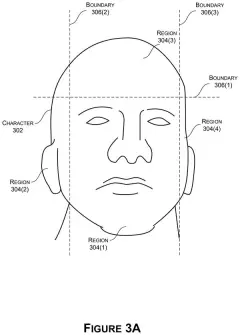
Nvidia Files Patent for Faster 3D Views That Spend Extra Effort Only on Fuzzy Spots
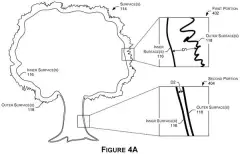
To a computer, your face has two very different textures: smooth skin that needs one quick look, and wispy hair that needs many. A new Nvidia patent builds that difference into how 3D scenes get drawn.
-
Sony · Published Oct 15
Sony Files Patent for Turning Ordinary Video Clips Into Detailed 3D Animation
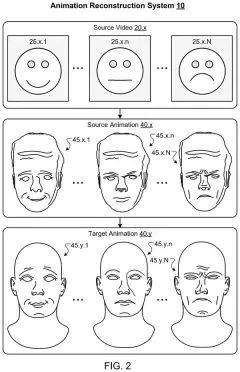
A cartoon face smiling in an ordinary video could end up driving a highly detailed 3D face, with no artist tracing it by hand. That is the pitch of a new Sony patent application.
-
Samsung · Published Oct 8
Samsung Patents an AI Avatar That Matches Its Face and Body Language to Its Words
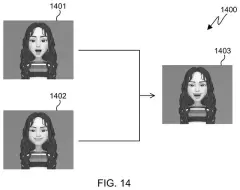
Most AI assistants are a voice or a block of text. Samsung's patent describes an avatar that nods while you talk, smiles when its own words are happy, and keeps its body still whenever its mouth is still.
-
Nvidia · Published Oct 8
Nvidia Patents AI That Gives Plain 3D Models Realistic Surfaces From a Written Description
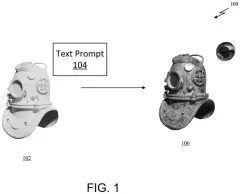
Nvidia's idea is to let an AI film a 360-degree spin around a plain 3D model, then work backward from that video to learn how shiny, rough or metallic each spot on it is.
-
Disney · Published Oct 8
Disney Patents AI That Turns Flat Movie Scenes Into 3D, Down to Strands of Hair
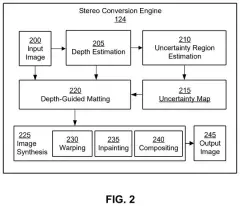
Turning a regular movie into 3D usually goes wrong at the edges: hair, smoke and see-through objects. Disney's patent application has an AI split those fuzzy pixels into separate layers so the 3D version holds up.
-
Nvidia · Published Oct 1
Nvidia Patents a Method to Build 3D Objects From Smaller, Faster Data Files
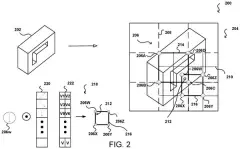
Building a 3D object from scratch is slow and storage-hungry. Nvidia's new patent describes a system that compresses a 3D shape into stacked 2D snapshots, then trains an AI to reconstruct full objects from that compact data.
-
Google · Published Oct 1
Google Patents an AI That Maps 3D Objects by Tracing How Light Rays Miss Them
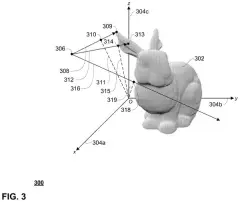
Instead of storing a 3D object as millions of tiny cubes or triangles, Google's new patent trains an AI to reconstruct its shape by asking a simpler question: does this imaginary light ray hit the object, and if not, how close does it get?
-
Adobe · Published Oct 1
Adobe Patents a Way to Turn a Text Description Into a Walkable 3D World
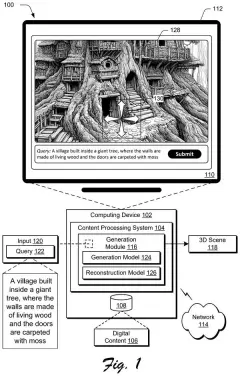
Type a description of a place, and Adobe's patented system would build a fully navigable 3D world around you. No modeling software, no 3D artists required.
-
Microsoft · Published Oct 1
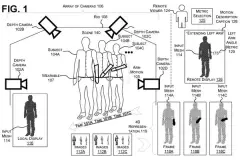
Microsoft Patents AI That Captions Your Body Movements During 3D Video Calls
Microsoft is working on a system that watches how you move during a 3D video call and automatically generates live captions describing your motion, the same way subtitles describe speech. It could turn a videoconference into something closer to a real-time movement analysis session.
-
Nvidia · Published Oct 1
Nvidia Patents a Way to Stop AI Characters From Glitching Mid-Conversation
If you've ever chatted with an AI avatar and watched it stutter or snap awkwardly when it starts responding, Nvidia has filed a patent aimed squarely at that problem.
-
Nvidia · Published Oct 1
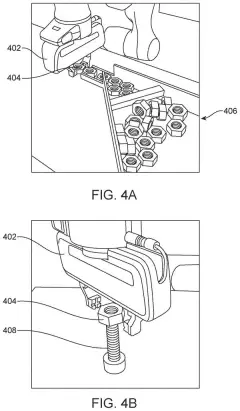
Nvidia Patents a Way to Speed Up Robot Training by Simplifying What It Has to Simulate
Training a robot arm to pick up objects requires simulating thousands of tiny physical collisions, and that math gets expensive fast. Nvidia's new patent describes a way to cut that calculation load without losing the accuracy that makes robots work in the real world.
-
Sony · Published Oct 1
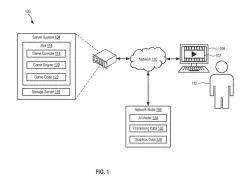
Sony Patents an AI That Delivers Game Graphics Based on What You're Actually Doing
When you're sprinting through a cutscene versus carefully studying a map, you're using the same game asset in completely different ways. Sony wants its cloud gaming servers to notice that difference and adjust what gets sent to your screen accordingly.