
Nvidia
Nvidia · AI / ML · Filed Sep 19, 2025 · USPTO published Oct 8, 2026 · Oct 8 release
Nvidia Patents AI That Gives Plain 3D Models Realistic Surfaces From a Written Description
Nvidia's idea is to let an AI film a 360-degree spin around a plain 3D model, then work backward from that video to learn how shiny, rough or metallic each spot on it is.
- Publication number
- US 2026/0311422 A1(US20260311422A1)
- Applicant
- NVIDIA Corporation
- Filed · Published
- Sep 19, 2025 · Oct 8, 2026
- Inventors
- Carl Jacob Munkberg, Jon Niklas Theodor Hasselgren, Zian Wang, Tianchang Shen, Ruofan Liang
- Status when we published
- Waiting for an examiner
- Document
- 20 claims
- US classification
- 345/426
- Parent application
- Claims priority from a provisional application 63785317 (filed Apr 8, 2025)
What Nvidia's text-to-material patent does
Right now, AI tools can build a convincing-looking 3D object from a text description, but working out what the object is actually made of is still hard. Is that surface polished metal or dull wood? Without knowing, a game or simulation can't light the object correctly when it moves from a dark room into bright sunlight.
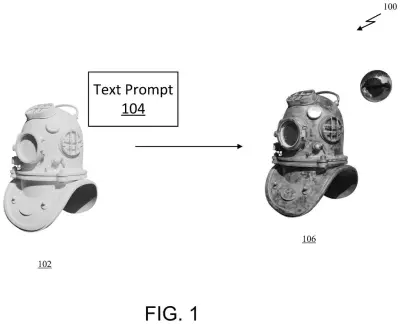
Nvidia's filing describes a two-step fix. You give the system a plain 3D shape, a lighting setup and a written description, such as an aged diving helmet with a copper-brown patina. An AI video model then generates a short clip that circles all the way around the object, showing it with that material.
A second program studies the clip and works backward to find the color, roughness and metal content of every spot on the surface. The result is a set of surface data that common 3D design tools can use.
processing one or more images and a text prompt using a first video diffusion model, of the one or more video diffusion models, to generate a rendered video of an object …
Translation: An AI video model takes a basic shape and a written description to create a spinning video showing what the object should look like.
How a spinning AI video reveals the materials
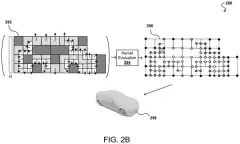
The pipeline starts with three inputs: a 3D mesh (a surface built from many tiny flat patches), a lighting setup stored as an HDR probe (an image recording how bright the light is from every direction), and a written description of the material.
From the shape and lighting, the system makes guide images. Surface normal images show the object's shape from many angles. Three test shadings of a uniform gray object, from matte to fully mirror-like, are packed into one color image. These guides and the text go into a video diffusion model (an AI that builds video by gradually cleaning noise into a picture). It produces a clip, for example 121 frames, that circles 360 degrees around the object.
Then a differentiable renderer (a graphics engine that can run in reverse, adjusting its settings until its pictures match a target) studies the clip. It writes out a material data structure with an entry for each point on the object, holding three values:
- Albedo: the base color without highlights or shadows
- Roughness: how polished the surface is at that spot
- Metallic: whether that spot is metal or something else, like wood
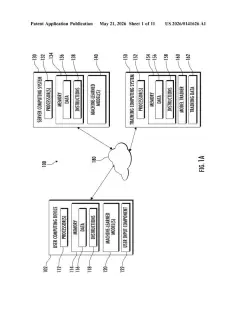
The filing also describes extras: fine-tuning the first model on videos of 360-degree orbits of 3D models, adding a second video model that splits the clip into separate frames for each property as extra guidance, starting from a single photo instead of text, and running the work in a data center and streaming the result to your device.
The material information may indicate physical-based rendering (PBR) characteristics such as an albedo, roughness, and/or metallic characteristic of the points on the object.
Translation: The system figures out exact surface details like color, texture, and shininess so the 3D model looks realistic under any lights.
Why game and robot makers want material data
If this works as described, you would see the effects in places you already look: video games and digital replicas of real places. The filing explains that when an object moves from a dim room into sunlight, how much light it bounces back depends on how reflective it is, and a renderer can't get that right without knowing the material. Material data for every point lets the same object look right under any lighting.
The filing also points to digital twins (virtual copies of real objects or places) and to making practice scenes for training robots and self-driving vehicles, where realistic looks matter. It names artist workflows too, where someone creates or improves materials from a text description or a single image.
Nvidia's 26th filing we've tracked in our text-to-3D character work since May adds to earlier applications like fixing faces outside the mouth and fixing mid-conversation glitches.
Source: US 2026/0311422 A1 at the USPTO (PDF). Full patent text and figures are in the official publication.
Get our take in your Top Stories
Liked this breakdown? Add Patentlyze as a preferred source on Google, and our plain-English take shows up more often in your Top Stories the next time Nvidia patent news breaks.
Add Patentlyze on Google
One click.
There are more where this came from
We read the new patents from Big Tech, carmakers and more and send you the ones worth knowing. Plain English, free, every week.
The drawings · 9 sheets
9 drawing sheets from US 2026/0311422 A1 · click any drawing to enlarge


Show sheet 9

More from Nvidia
All 665 Nvidia patents →
More in AI simulation
All 193 AI simulation patents →
Nvidia
Nvidia Patents a Text-to-3D Pipeline for Simulation-Ready Virtual Characters
Nvidia
Nvidia Patents an AI Plug-In That Translates Video Calls Into Sign Language Avatars
Nvidia
Nvidia Patents a Way to Sharpen AI-Made 3D Characters Part by Part
Google
No comments yet