Latest AI training & infrastructure patents, Page 15
The unglamorous machinery underneath: training methods, inference speedups, model compression, and the scheduling tricks that make AI affordable to run.
- in the Nov 19 release
- 8
- in November so far
- 22
- filings tracked
- 324
- last 90 days
- 123
Recent filings
Newest first · 324 total-
Samsung · Published Jul 23
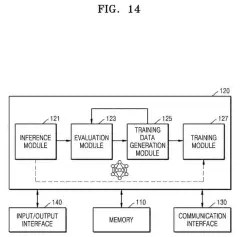
Samsung Patents a System That Teaches AI to Grade Its Own Answers
Samsung is patenting a method where one AI model acts as a teacher, grading the outputs of another AI model to automatically build a dataset that makes the student model better over time.
-
Nvidia · Published Jul 23
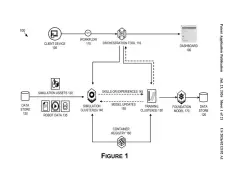
Nvidia Patent Describes Networked Data Centers That Train Robots Faster at Scale
Training a robot to do useful things in the real world takes an enormous amount of trial and error. Nvidia's new patent describes a way to run that trial and error across dozens of data centers at once, in a continuous loop that never really stops.
-
Nvidia · Published Jul 23
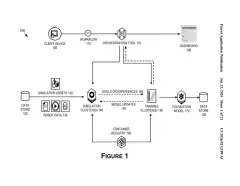
Nvidia Patent Reveals a Self-Improving AI Loop Built for Next-Gen Robots
Nvidia has filed a patent for a training system that cycles two types of AI learning back and forth in a loop, each one feeding the other, so a robot's skills keep compounding over time without human intervention.
-
Samsung · Published Jul 23
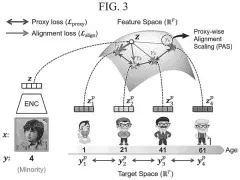
Samsung Patents a Training Method to Fix Lopsided AI Prediction Models
When an AI model is trained mostly on one type of data, its predictions fall apart on everything else. Samsung's new patent targets that exact problem by engineering a more evenly spread training process from the start.
-
Google · Published Jul 23
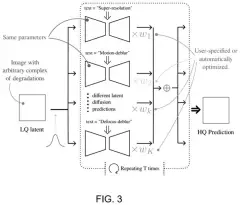
Google Patents an AI That Fixes Several Photo Defects in One Pass
Most AI photo-repair tools are trained to fix one problem at a time. Google's new patent describes a system that tackles blur, noise, and other defects together in a single process, without needing to know upfront exactly which problems a photo has.
-
IBM · Published Jul 23
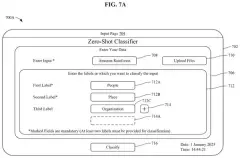
IBM Patents a Method for AI to Generate Its Own Training Data
One of the most expensive parts of building an AI model is gathering thousands of labeled examples for it to learn from. IBM is patenting a way to have the AI generate those examples itself.
-
Samsung · Published Jul 23
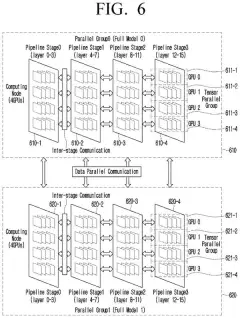
Samsung Patents a System That Figures Out How to Split AI Training Across Chips
Training a large AI model is a bit like moving a house full of furniture with a crew of movers. The question is always: who carries what, and in what order? Samsung's new patent describes a system that works that out automatically.
-
Nvidia · Published Jul 23
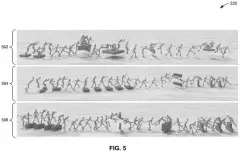
Nvidia Patent Teaches Virtual Characters to Move and Think with Hybrid AI
Getting a video game character to walk, run, and climb stairs without looking like a puppet is genuinely hard. Nvidia's new patent describes a training method that first teaches an AI to copy human movement, then pushes it to figure out those moves on its own.
-
Sony · Published Jul 23
Sony Patents a Method to Train AI on Personal Data Without Uploading It
Sony is filing patents for a system that personalizes an AI model to your body or behavior without the server ever seeing your actual sensor readings. The trick is sending statistics instead of raw data.
-
Intel · Published Jul 23
Intel Patents a Way to Train AI Across Multiple Machines Without Network Code
Training a large AI model usually means wrestling with low-level networking code just to get dozens of machines talking to each other. Intel's patent describes a software layer designed to hide all of that complexity behind a cleaner interface.
-
Samsung · Published Jul 23
Samsung Patents a Way to Train Image AI by Hiding Parts of Photos
Samsung is teaching its image AI to fill in the blanks, by deliberately cutting pieces out of photos during training and making the model figure out what it's missing.
-
Microsoft · Published Jul 23
Microsoft Patent Enables AI Models That Shrink and Expand to Fit Devices
What if an AI model could slim itself down when your device got busy, then puff back up to full capability once things calmed down? That's exactly the idea behind Microsoft's latest patent filing.