Latest camera patents, Page 20
How phones and headsets see: image sensors, lenses, autofocus tricks, and the processing that turns light into photos. We track every camera filing as it publishes.
- in the Nov 19 release
- 10
- in November so far
- 20
- filings tracked
- 279
- last 90 days
- 108
Recent filings
Newest first · 279 total-
Samsung · Published Jun 25
Samsung Patents a System to Keep Camera Lenses Stable During Autofocus
Auto-focus sounds instant, but inside your phone there's a tiny lens physically moving back and forth thousands of times a day. Samsung wants to make sure that movement stays perfectly straight every single time.
-
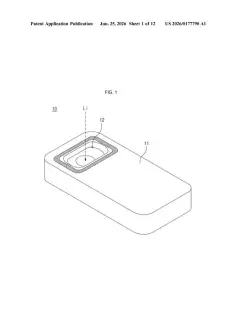
Samsung · Published Jun 25
Samsung Patents a Detachable Lens Cap That Keeps Unwanted Light Out of VR Headsets
Light leaking around the edges of a headset lens is one of those small but annoying problems that pulls you out of an immersive experience. Samsung's new patent tackles it with a snap-on cap that adds a second lens layer right at the source.
-
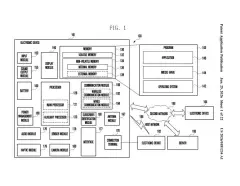
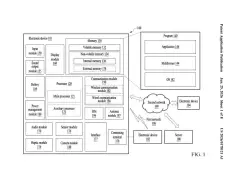
Samsung · Published Jun 25
Samsung Patents a Camera That Stabilizes Shots by Moving Only Half Its Lenses
Samsung is rethinking how a phone camera fights blur by splitting its lens stack in two, moving only part of it when you shake the phone.
-
Apple · Published Jun 18
Apple Patents a Camera-Based System for Swapping Smart Home Controllers
Setting up a new smart home hub usually means wrestling with apps, resetting devices, and re-pairing everything from scratch. Apple's latest patent describes a system that could handle all of that by simply looking at the room.
-
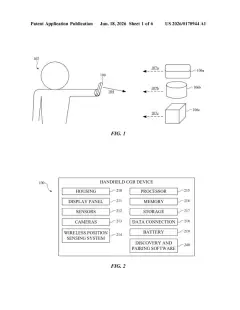
Google · Published Jun 18
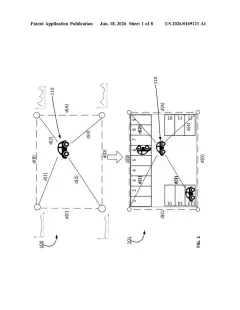
Google Patents a Parking System That Finds Open Spots Using Sound and Vibration
Google has filed a patent for a parking detection system that doesn't need cameras or per-space sensors — instead, it listens. A network of long-range acoustic and vibration sensors triangulates where every car is and builds a real-time map of which spots are open.
-
Nvidia · Published Jun 18
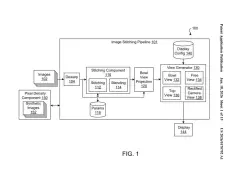
Nvidia Patents a Way to Test Camera Stitching Before Real Sensors Are Used
When you stitch together video from multiple cameras, the seams between them are the problem. Nvidia's new patent tries to fix those seams before a real camera even rolls.
-
Samsung · Published Jun 18
Samsung Patents a Camera Fix That Corrects Uneven Brightness When the Lens Moves
Every smartphone camera has a hidden calibration table that corrects uneven brightness across the frame — but that table assumes the lens is sitting perfectly still. Samsung's new patent fixes what happens when it isn't.
-
Samsung · Published Jun 18
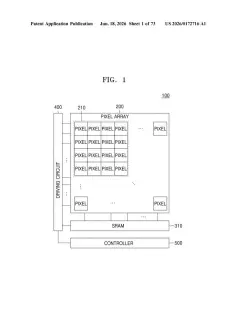
Samsung Patents a More Efficient Way to Count Light in Single-Photon Camera Sensors
Samsung is patenting a new way to tally incoming light at the single-photon level — one digit at a time — which could make high-speed, low-light image sensors faster and less power-hungry to build.
-
Samsung · Published Jun 18
Samsung Patents a Dual Light-Blocking Shield Camera Design to Cut Lens Glare
Lens flare and stray light are silent photo killers — and Samsung is filing patents on a physical fix built right into the camera module itself.
-
Samsung · Published Jun 18
Samsung Patents a Dual-Camera System for Reconstructing Richer Photo Colors
Every digital photo you take is actually missing most of its color data — your phone's sensor guesses the rest. Samsung's new patent describes a way to use two cameras at once to make those guesses far more accurate.
-
Samsung · Published Jun 18
Samsung Patents a Robot That Chooses Its Own Best Vantage Point to Map a Room
Most home robots build their maps from a single camera angle — and if that view is cluttered or featureless, the robot gets lost. Samsung's new patent teaches a robot to scan a room at multiple heights simultaneously and pick whichever slice gives it the clearest picture.
-
Sony · Published Jun 18
Sony Patents LED Wall Tech That Fixes Colors Before a Camera Even Shoots
When a film crew shoots actors in front of a giant LED wall, the camera lens can make the background look subtly warped. Sony's new patent describes a system that fixes that distortion automatically, based on exactly which camera and lens are being used.