Latest display patents, Page 46
Screens are one of tech's fiercest battlegrounds: folding panels, pixel circuits, brightness tricks, and the seams where two displays meet. We read every display filing and translate it into plain English.
- in the Nov 19 release
- 10
- in November so far
- 44
- filings tracked
- 746
- last 90 days
- 228
Recent filings
Newest first · 746 total-
Qualcomm · Published Jun 18
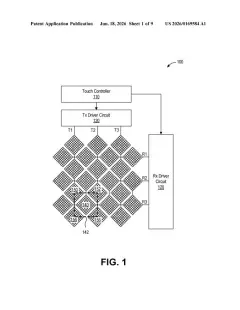
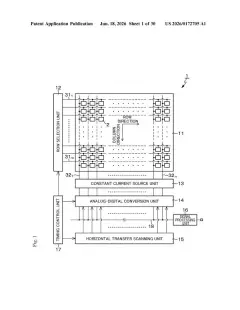
Qualcomm Patents a Touchscreen That Scans Your Finger Faster Than the Rest of the Screen
Your phone's touchscreen scans its entire surface at the same rate, whether your finger is moving or not. Qualcomm wants to change that — scanning where your finger is more often, and everywhere else less often.
-
Sony · Published Jun 18
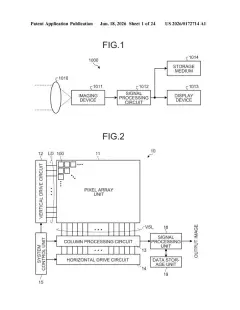
Sony Patents a Dual-Sensitivity Camera Sensor That Captures Bright and Dark Detail at Once
One of the hardest problems in photography is capturing a scene where some parts are blinding-bright and others are nearly pitch-dark — all at the same time. Sony's latest sensor patent tackles that by building two different light detectors into every single pixel.
-
Sony · Published Jun 18
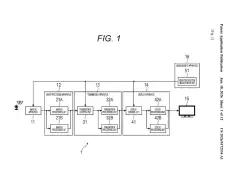
Sony Patents a 3D Display That Works Harder Where Your Eyes Actually Are
Sony is patenting a way to make glasses-free 3D displays cheaper to run — by doing the heavy computing only where the viewer is actually standing, and dialing back the work everywhere else.
-
Sony · Published Jun 18
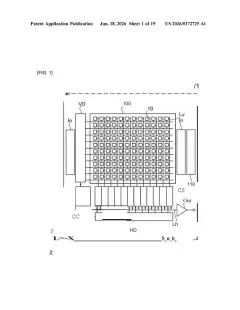
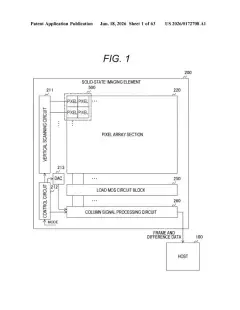
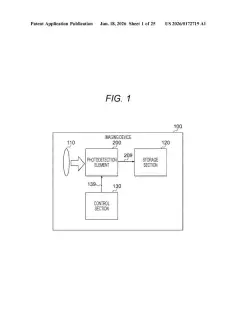
Sony Patents a Camera Chip That Switches Power Levels to Control Light Capture
Sony has filed a patent for a solid-state image sensor that can switch between two different operating voltages — a design that gives engineers more direct control over how each pixel collects and moves electric charge.
-
Sony · Published Jun 18
Sony Patents a Camera Chip That Combines Two Light Captures Before Saving a Photo
Sony's latest patent describes an image sensor that quietly blends two separate pixel readings together inside the chip itself — before the data ever reaches the processor. It's a small architectural choice with potentially meaningful consequences for image quality.
-
Sony · Published Jun 18
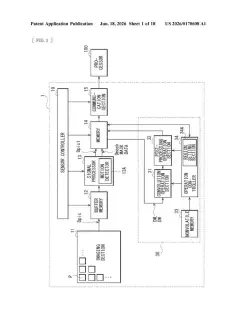
Sony Patents an Image Processor That Ignores the Parts of a Picture It Doesn’t Need
Most image processors crunch every pixel in a frame, whether it's relevant or not. Sony's new patent describes a chip that skips the parts it's been told to ignore — saving time and power in the process.
-
AMD · Published Jun 18
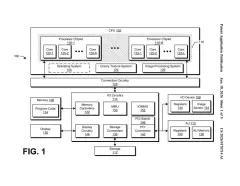
AMD Patents a System That Learns Film Grain From Photos and Copies It Exactly
Film grain is one of those things that's easy to feel but surprisingly hard to fake. AMD has filed a patent for a system that studies real grain from reference images and teaches itself to reproduce it — mathematically.
-
Disney · Published Jun 18
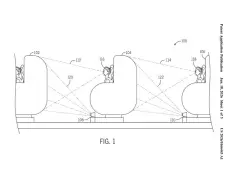
Disney Patents a System That Projects Live Video onto Moving Ride Cars
Disney has patented a way to turn the ride vehicle itself into a screen — projecting content directly onto moving cars and adjusting the image in real time as the car moves, turns, and changes position relative to other vehicles on the track.
-
Sony · Published Jun 18
Sony's New Patent Lets Camera Pixels Share Storage to Capture More Light
Sony is patenting a way to link neighboring pixel circuits in a camera sensor so they can pool their charge-storage capacity — a technique that could improve how well a sensor handles very bright or very dim scenes without losing detail.
-
Sony · Published Jun 18
Sony Patents a Way to Stop Camera Pixels from Interfering with Each Other
Every time a digital camera converts light into data, it creates electrical noise that can corrupt nearby pixels. Sony's new patent describes a way to keep two different types of pixels from interfering with each other on the same sensor chip.
-
Sony · Published Jun 18
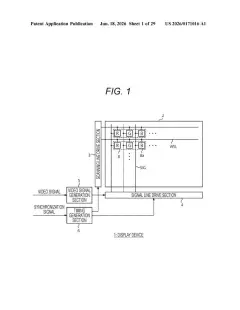
Sony's New Patent Stops Electrical Noise from Making OLED Screens Flicker
Every OLED screen has a dirty little secret: the wires that carry image data also accidentally push and pull on the pixels they pass by, causing tiny brightness variations the human eye can sometimes detect. Sony's new patent describes a circuit designed to cancel that interference before it ever shows up on screen.
-
Samsung · Published Jun 18
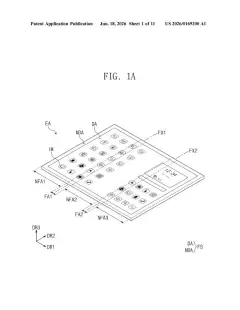
Samsung's New Patent Gives Each Fold Its Own Protective Layer to Stop Cracking
Folding a screen once is hard enough — folding it twice, without the surface cracking or creasing unevenly, is an entirely different engineering problem. Samsung Display's latest patent tackles that by giving each fold its own chemically distinct protective layer.