Latest enterprise AI patents, Page 32
AI for the back office: data pipelines, workflow automation, code tools, and systems that keep business software running itself.
- in the Nov 19 release
- 24
- in November so far
- 58
- filings tracked
- 437
- last 90 days
- 222
Recent filings
Newest first · 437 total-
Samsung · Published Jun 11
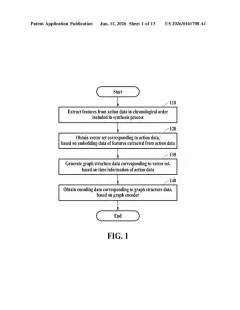
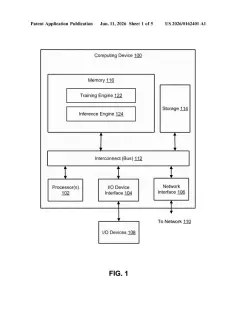
Samsung Files Patent for Turning Time-Ordered Actions Into Graph Data
Samsung has patented a method for taking a sequence of actions — logged in time order — and restructuring them as a graph, a web-like map of connections that can then be compressed into a form machines can analyze. It's abstract infrastructure, but graph-based data structures are increasingly the backbone of AI reasoning systems.
-
Samsung · Published Jun 11
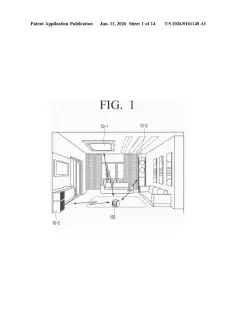
Samsung Patents an AI That Automatically Groups Your Home Devices Around You
Samsung is patenting a system that watches where you are in your home and what your devices are doing — then silently organizes them into logical groups so a single command can reach exactly the right ones.
-
Samsung · Published Jun 11
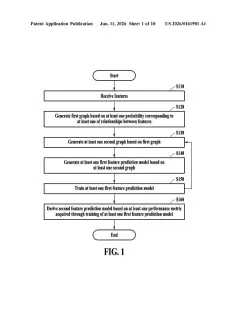
Samsung Patents Technology That Learns How Variables Influence Each Other to Forecast Outcomes
Before Samsung's new patent tries to predict anything, it first draws a map of how different pieces of data are connected — and then uses that map to build its prediction model, rather than learning everything from scratch.
-
Samsung · Published Jun 11
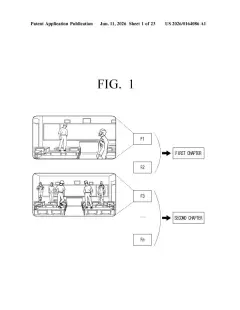
Samsung Patents Technology That Organizes Video Chapters Around Each Viewer's Interests
Samsung wants your TV to know which parts of a video matter to you — and automatically organize the whole thing into chapters before you even press play.
-
Adobe · Published Jun 11
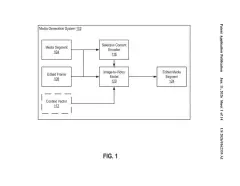
Adobe Patents a System That Spreads Your Video Edits Across Every Frame
Editing a video usually means touching every single frame — Adobe's new patent describes a way to do that work once, then let AI fill in the rest of the clip automatically.
-
Qualcomm · Published Jun 11
Qualcomm Patents an AI System That Shows Its Work
Most AI tools give you an answer without explaining their thinking. Qualcomm is patenting a system where the AI essentially narrates its own reasoning process as it goes — not just the final result, but the intermediate steps it took to get there.
-
Intel · Published Jun 11
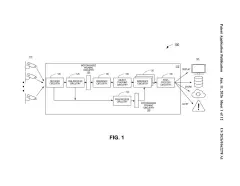
Intel Patents a Way to Make AI Video Analysis Skip the Parts That Aren't Moving
When an AI watches video, it wastes enormous computing power analyzing parts of the frame that haven't changed at all. Intel has patented a way to automatically skip those still parts — cutting the workload without missing what matters.
-
AMD · Published Jun 11
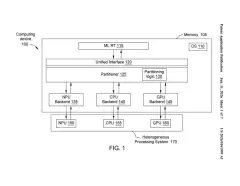
Xilinx Patents a System That Routes AI Workloads Better Than You Can
What if the chip system running your AI model knew better than you did about where to put each piece of it — and could quietly overrule your instructions to get better results? That's exactly what Xilinx is patenting.
-
Disney · Published Jun 11
Disney Patents an AI System That Automatically Flags Changes in Physical Spaces
Disney is patenting a way to use AI to automatically notice when something in a real physical space has moved, changed, or gone missing — the kind of job that currently requires a human to walk around with a checklist.
-
Nvidia · Published Jun 4
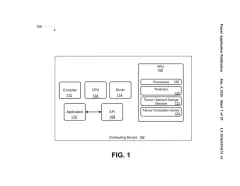
Nvidia Patents a Way to Run an AI's Math in Fewer Steps
Every time an AI model crunches through its math, it fires off dozens of individual operations one after another. Nvidia's new patent describes a single API call that can kick off a whole chain of those operations at once — less overhead, cleaner code.
-
Nvidia · Published Jun 4
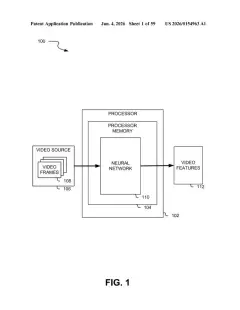
Nvidia Patents a Neural Network That Reconstructs Video Frames Without Redoing the Work
Nvidia's new patent describes a neural network that looks at a fully-processed reference frame and uses it to reconstruct nearby frames — without starting from scratch each time. It's a smarter way to handle video that hasn't changed much.
-
Microsoft · Published Jun 4
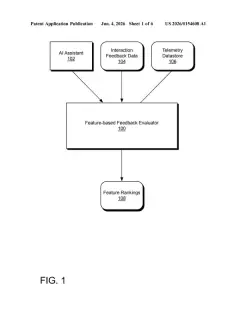
Microsoft Patents a Way to Turn Vague AI Ratings Into Precise Diagnostic Scores
When users say an AI answer was 'not helpful,' that's almost useless data for engineers trying to fix it. Microsoft's new patent describes a pipeline that converts those fuzzy thumbs-up/thumbs-down signals into structured, ranked diagnostics showing exactly which factors made a response good or bad.