
Samsung Patents Technology That Organizes Video Chapters Around Each Viewer's Interests
Samsung wants your TV to know which parts of a video matter to you — and automatically organize the whole thing into chapters before you even press play.
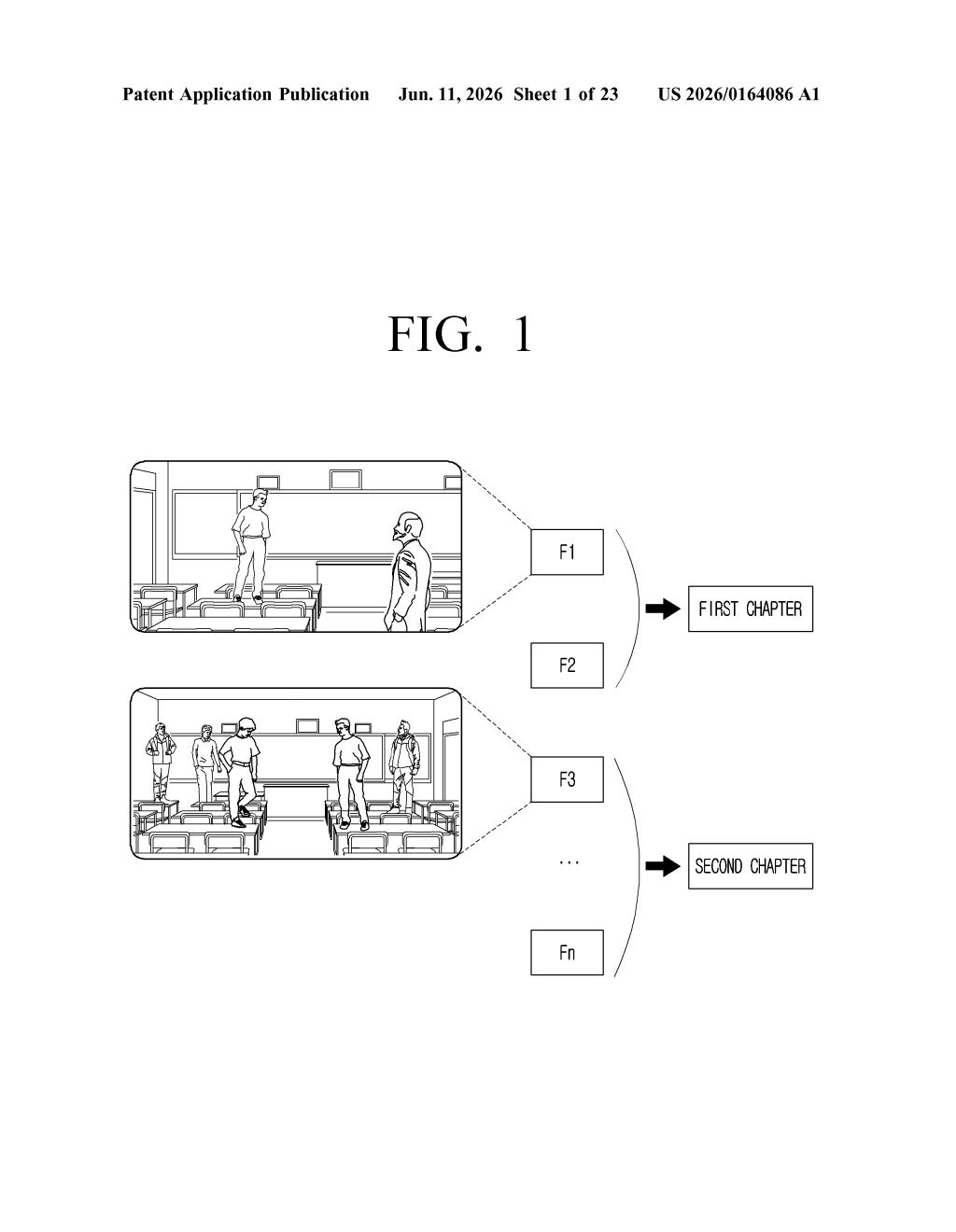
What Samsung's personalized video chapters actually do
Imagine watching a three-hour concert film and being able to jump straight to your favorite artist's set without scrubbing through the whole thing. Or pulling up a long documentary and seeing it pre-split into named sections that match exactly what you care about. That's the idea behind this Samsung filing.
When you trigger the chapter feature, the device pulls up a profile tied to your account and a prompt — basically a set of instructions about your preferences — and uses both alongside the video's actual image and audio content to generate a personalized chapter list. The result is a menu of labeled segments, each with a preview frame, organized around themes the system has been told to look for.
This isn't just auto-detecting scene cuts. The system is supposed to tailor the chapters to you specifically, meaning two people watching the same video could see a completely different chapter breakdown depending on their profiles.
How the system builds chapters from your profile and prompts
The patent describes an electronic device — likely a TV or set-top box — that can analyze video content and produce a chapter list on demand. The key twist is that the output isn't a one-size-fits-all breakdown: it's shaped by a user profile and a prompt that the system retrieves when you activate the feature.
Here's the basic flow:
- You tap a button to activate the chapter function on a piece of content.
- The device fetches your profile (stored preferences, viewing history, account data) and a corresponding prompt (a set of instructions that tells the AI how to interpret and segment the content for someone like you).
- The system analyzes both the image frames and the audio track of the video — so it's reading visual cues and dialogue or sound simultaneously.
- It returns a chapter list with named segments tied to pre-set themes, plus a representative still frame for each chapter so you can see what you're jumping into.
The phrase "pre-set theme" suggests the system works against defined categories — things like "action sequences," "interviews," or "musical performances" — rather than freeform AI narration. The prompt mechanism is what makes it user-specific: different prompts steer the same underlying model toward different kinds of chapters for different viewers.
What this means for Samsung TVs and streaming apps
Samsung makes some of the world's best-selling smart TVs, and the battleground for those devices has shifted from picture quality to software. A feature that lets you skip directly to the parts of a video that matter to you — without needing a streaming platform to pre-build those chapters — could be a meaningful differentiator, especially for locally stored content, YouTube videos, or live recordings that don't come with chapter metadata baked in.
The broader implication is that personalized navigation could become a standard TV feature rather than a platform-by-platform add-on. If Samsung bakes this into its Tizen OS, it would work across content sources, not just inside one app — which is exactly the kind of OS-level advantage hardware makers are chasing right now.
This is a genuinely useful idea, and the personalization angle is what makes it more than a routine scene-detection patent. Whether Samsung can make the profile-and-prompt system feel natural rather than clunky in a living-room context is the real question — but the underlying problem it's solving (long videos are hard to navigate) is real and widespread.
There are more where this came from
We read every patent application Big Tech publishes and send you the ones worth knowing. Plain English, free, every week.
Want this weekly breakdown for a company we don't cover? Patentlyze Pro →