
Sony Patents a Way to Weave Real-World Voices Into Your Game's 3D Audio
What if someone talking in the room with you could appear as a directional voice inside your game's 3D audio mix — positioned exactly where a quiet in-game source just went silent? That's the idea behind this Sony patent.
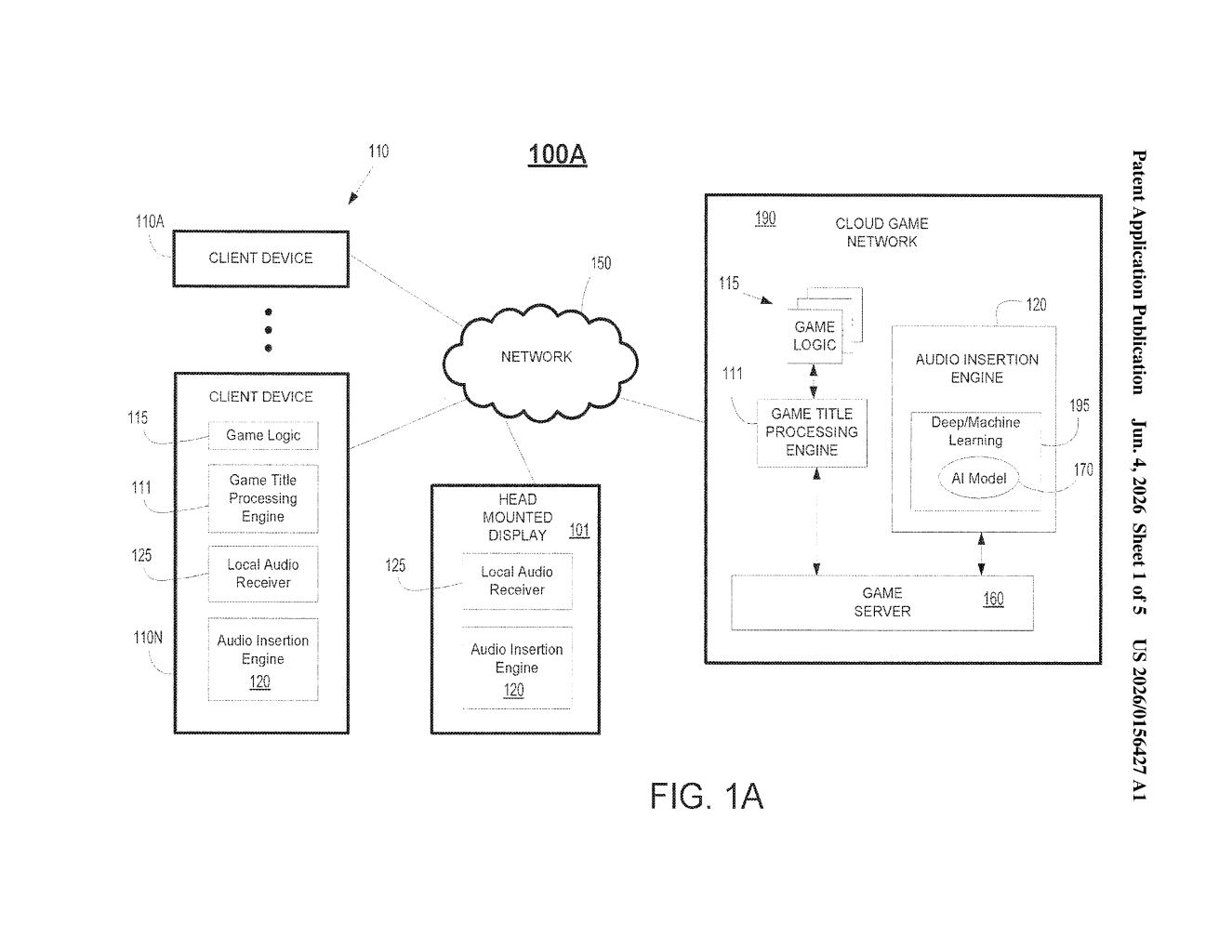
How Sony fits real conversations into your game's sound field
Imagine you're deep in a game, wearing headphones with spatial audio on, and your roommate asks if you want pizza. Right now, their voice cuts across everything — a flat, directionless interruption that pulls you out of the moment.
Sony's patent describes a system that listens for quiet gaps in your game's 3D audio — moments when a specific in-game sound source goes silent — and slips real-world voices into that opening. Your roommate's words would appear to come from a specific spot in the 3D audio space, just like any other in-game sound.
The effect is that real conversations blend more naturally into the audio environment instead of clashing with it. You'd still hear what's being said, but it wouldn't feel like a jarring interruption — it would feel like part of the space around you.
How the system detects silence and hijacks a source location
The patent describes a method for managing a 3D audio space — the kind used in spatial audio headsets where different sounds appear to come from distinct locations around you. Each sound source in the game is assigned a fixed position in that space.
The key mechanic is inactivity detection: the system continuously monitors each audio source and identifies when one goes quiet (a period of inactivity). At that moment, it captures audio from a nearby communicator — a microphone picking up someone physically in the same room as the player — and routes that real-world voice through the now-vacant 3D position.
The practical result:
- Real-world voices inherit a spatial position rather than playing as flat, directionless audio
- The insertion only happens during silence, so it doesn't compete with active game audio
- The position in the 3D space is borrowed from whichever source just went quiet, keeping the mix coherent
This is fundamentally a multiplexing strategy — using the same spatial audio channel for two different inputs, time-sliced around gaps. The patent doesn't specify a particular headset or game engine, so the approach is hardware-agnostic at the filing level.
What this means for couch co-op and PlayStation headsets
For PlayStation players who use spatial audio headsets like the Pulse 3D or Pulse Explore, this could address a genuine friction point: staying present in an immersive game while remaining aware of the physical room around you. Today, those two experiences fight each other. This patent proposes a way to make them coexist without constantly pausing or removing headphones.
It also hints at Sony's broader interest in mixed-reality audio — blending physical and virtual sound environments rather than treating them as separate modes. Whether this lands in a future headset firmware update, a game engine API, or a console OS feature is an open question, but the underlying problem it solves is real and widely felt by anyone who games with headphones in a shared space.
This is a genuinely practical idea solving a problem every headphone-wearing couch gamer knows: the world outside your game still exists and keeps interrupting. The silent-gap insertion approach is clever precisely because it's low-overhead — it doesn't fight the audio mix, it borrows from it. Whether Sony ships this or it sits in a patent drawer, the concept is worth paying attention to.
There are more where this came from
We read every patent application Big Tech publishes and send you the ones worth knowing. Plain English, free, every week.
Want this weekly breakdown for a company we don't cover? Patentlyze Pro →