
Sony Patents a Vertex-Pairing System to Fix 3D Mesh Encoding Seams
When you compress a 3D model by slicing it into patches, the edges where those patches meet can fall apart at decode time — creating visible seams or geometry errors. Sony's new patent attacks that problem directly by tracking which vertices on different patches were originally the same point in 3D space.
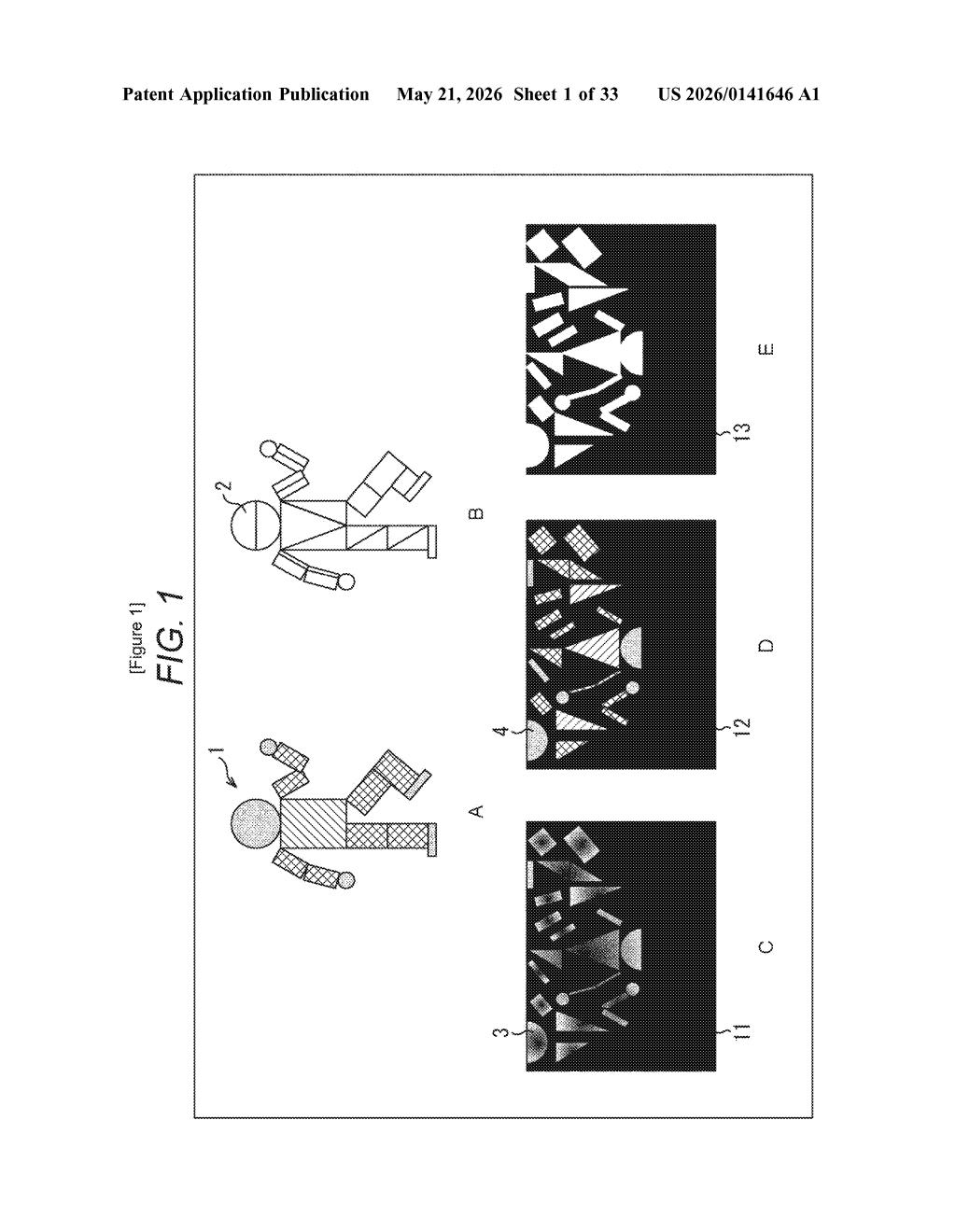
What Sony's 3D mesh patch-pairing system actually does
Imagine trying to wrap a globe with postage stamps. To get flat stamps onto a curved surface, you have to cut the surface into irregular pieces. That's roughly what happens when engineers compress 3D objects — they slice the mesh (the web of triangles describing a shape) into flat "patches" that can be stored as images. The problem is that when you put those patches back together, the edges don't always line up cleanly.
Sony's patent describes a system that remembers which vertices (corner points of the triangles) from different patches were originally sitting at the same physical location on the 3D object. That "pair information" gets encoded alongside the geometry data.
At decode time, the decoder uses that pairing data to stitch the patches back together by forming new polygons that bridge the gap between them. The result: a reconstructed 3D object that doesn't have the cracks and quality loss that normally appear at patch boundaries.
How Sony's decoder stitches split mesh patches back together
The patent covers both an encoder and a decoder for 3D mesh data compressed into geometry images — a technique used in standards like V-PCC (Video-based Point Cloud Compression) and related volumetric video formats.
On the encoding side, when a 3D mesh is divided into patches and those patches are laid flat as 2D images, some vertices that were originally coincident (sitting at the exact same 3D coordinate) end up in different patches. The encoder detects these shared-position vertices and generates pair information — essentially a lookup table that says "vertex A in patch 1 and vertex B in patch 2 are the same point."
On the decoding side, the circuitry:
- Decodes the geometry image containing the separately arranged patches
- Decodes the encoded pair information for each cross-patch vertex relationship
- Forms new polygons that span across the boundary of the two patches, using one vertex from each — effectively welding the seam shut
The key insight is that without this pairing data, a decoder has no reliable way to know which boundary vertices should be merged, so it either leaves gaps or makes incorrect connections. By making the pairing explicit at encode time, the decoder can make geometrically correct decisions.
What this means for compressed 3D content and volumetric video
Volumetric video and 3D asset streaming are increasingly important for gaming, AR/VR, and digital production pipelines — and all of them rely on compressed mesh formats. Seam artifacts at patch boundaries are a known, persistent headache in these pipelines: they show up as visible cracks in rendered objects or cause downstream simulation and rendering errors. Sony's approach embeds the fix in the codec itself rather than leaving it to post-processing heuristics.
Sony has active interests in this space through PlayStation, Sony Pictures, and its broader imaging and sensing divisions. A cleaner mesh codec would matter for real-time 3D content on PlayStation VR2 or professional production tools. This patent is a continuation of a PCT filing from 2021, meaning the underlying idea has been in development for several years and is already granted (US 12,541,925).
This is solid, unglamorous codec engineering — the kind of work that ships quietly inside a standard and saves rendering teams hours of manual seam-fixing. It's not a flashy AI patent, but if you work in 3D content pipelines, this specific problem is genuinely annoying and the solution here is clean. Worth a read if you're in the volumetric video or game-dev space.
Get our take in your Top Stories
Liked this breakdown? Add Patentlyze as a preferred source on Google, and our plain-English take shows up more often in your Top Stories the next time Sony patent news breaks.
There are more where this came from
We read every patent application Big Tech publishes and send you the ones worth knowing. Plain English, free, every week.
Want this weekly breakdown for a company we don't cover? Patentlyze Pro →