
Sony's New Patent Stops AI Cameras from Analyzing Parts of a Photo That Don't Matter
Instead of running AI analysis on an entire image, Sony's latest patent describes a system that zooms in on just the relevant portion of a frame first, then feeds only that cropped slice to the AI. It's a small architectural choice that has real consequences for speed and power consumption in camera-equipped devices.
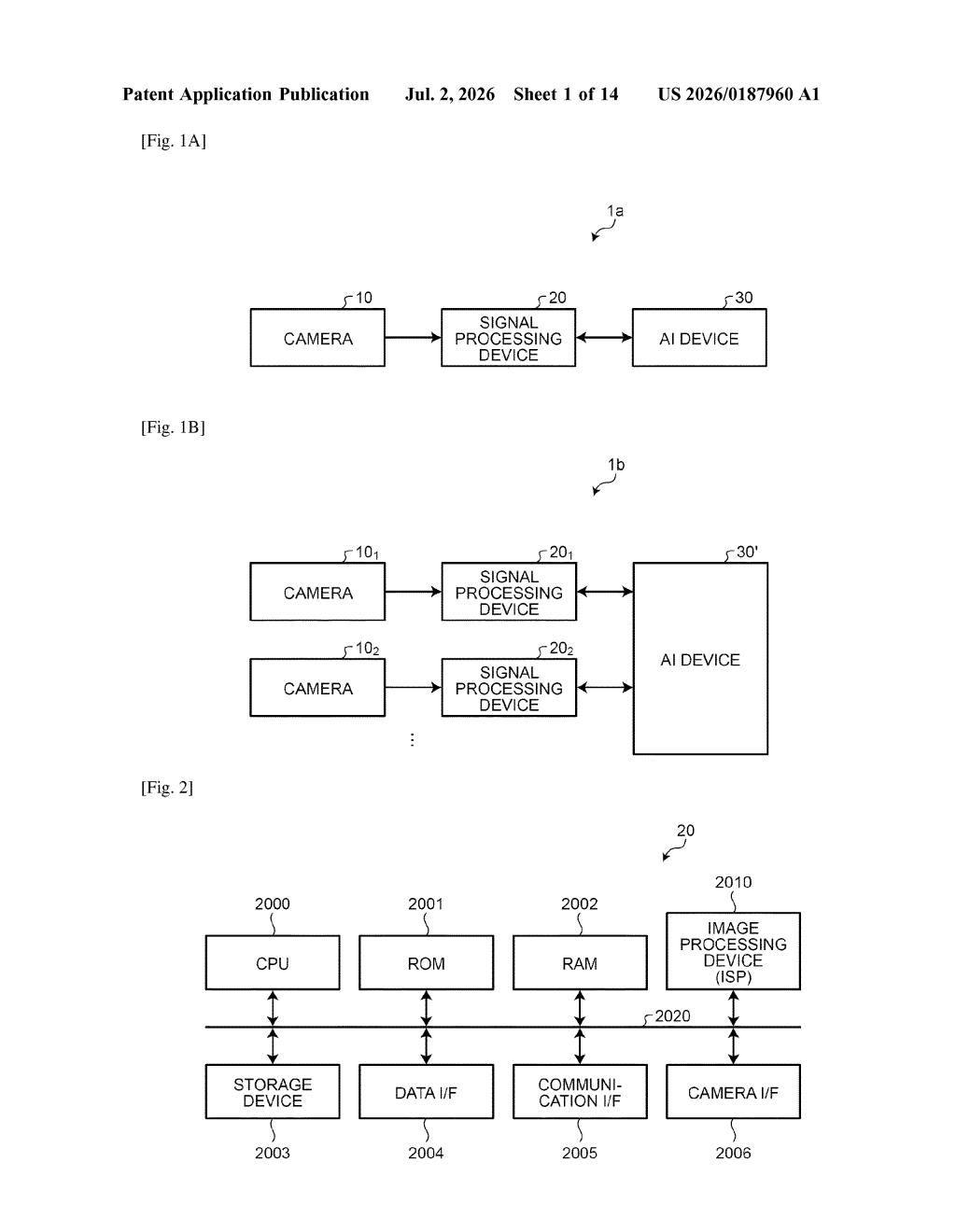
What Sony's region-focused AI camera system actually does
Imagine a security camera scanning a parking lot. Right now, many AI systems look at the whole image every time, even the empty sky and pavement that never change. Sony's patent describes a smarter workflow: tell the camera to focus on a specific zone (say, the entrance gate), and only that zone gets handed to the AI for analysis.
The system calls that zone a region of interest, or ROI. It crops that area out of the full image, prepares it in a format the AI can read quickly, and then asks the AI: is the thing we care about here or not?
This approach can save processing power because the AI is doing less work on each frame. It also means the AI's answer arrives faster, which matters any time a camera needs to react in real time, like a doorbell camera, a factory quality-control scanner, or a driver-facing safety system.
How Sony isolates and flattens a frame slice for the AI engine
The patent describes a three-step pipeline built into the circuitry of an image sensor system.
- Set a region of interest (ROI): The system designates a rectangular sub-area within the full image frame. Everything outside that box is ignored for AI purposes.
- Flatten the ROI image data: "Flattening" here means converting the cropped pixel data into a one-dimensional array (essentially a long list of numbers) that a neural network can consume directly. This avoids the overhead of processing a full 2D image grid.
- Apply a trained AI engine: The flattened data is passed to an on-device AI model that checks whether a specific feature, such as an object, a pattern, or an anomaly, is present in that sub-area.
The "trained AI engine" is a pre-built neural network, a mathematical model that has already learned to recognize whatever the system is looking for. By receiving a smaller, pre-formatted input, the model can return a yes-or-no answer much more quickly than if it had to process an entire high-resolution frame.
The patent also mentions a control system and a controllable image sensor as separate components, suggesting the ROI can be set or adjusted externally, for example by software telling the sensor where to look before each frame is captured.
What this means for embedded AI cameras in devices and sensors
On-device AI in cameras is already common, but it burns through processing cycles and battery when it analyzes full frames at high frame rates. By restricting the AI's view to a pre-defined region, Sony's approach could make AI inference fast enough and power-efficient enough to run on tiny embedded sensors, such as those inside smart doorbells, industrial inspection rigs, or even medical imaging tools that need continuous real-time monitoring.
For Sony specifically, this fits squarely into its image sensor business, where it supplies chips to a wide range of device makers. A sensor that can do selective AI inference on-chip, without offloading work to a phone's main processor or a cloud server, is a meaningful selling point in a competitive market.
This is a focused, practical engineering patent rather than a flashy AI concept. The region-of-interest trick is not new in computer vision, but baking it directly into the image sensor's circuitry, alongside the AI engine, is a meaningful step toward fully self-contained smart sensors. Sony's sensor supply chain gives this real legs.
Get our take in your Top Stories
Liked this breakdown? Add Patentlyze as a preferred source on Google, and our plain-English take shows up more often in your Top Stories the next time Sony patent news breaks.
There are more where this came from
We read every patent application Big Tech publishes and send you the ones worth knowing. Plain English, free, every week.
Want this weekly breakdown for a company we don't cover? Patentlyze Pro →