Sony
Sony · AI / ML · Filed Feb 27, 2026 · USPTO published Jul 9, 2026 · Jul 9 release
Sony's New Patent Stops AI-Upscaled Games from Flickering Between Frames
Upscaling a single game frame is one problem. Making a hundred consecutive frames look like they belong together is a harder one. Sony's new patent tackles exactly that.
- Publication number
- US 2026/0192191 A1(US20260192191A1)
- Applicant
- Sony Interactive Entertainment Inc.
- Filed · Published
- Feb 27, 2026 · Jul 9, 2026
- Inventors
- Hirotaka Asayama, Ryota Ito, Shoichi Ikenoue
- Status when we published
- Waiting for an examiner
- Document
- 20 claims
- US classification
- 463/30
- Parent application
- Continuation of PCT/JP2024/030167 (filed Aug 26, 2024)(PCTJP2024030167)
How Sony's frame memory keeps upscaled games looking stable
Imagine watching a video that looks sharp on any given freeze-frame but flickers or shimmers when it's playing. That's a real headache with AI image upscaling: the system improves each frame individually but forgets what the last one looked like, so edges and fine details can jump around from moment to moment.
Sony's patent describes a system that keeps a kind of running memory of previous frames. Before it upscales the current frame, it checks notes about what came before, using that history to build a richer, more consistent version of the image. Each pixel in the output gets more information than the raw incoming frame alone could provide.
The goal is to hold two things at once that normally fight each other: spatial accuracy (making each individual frame look sharp) and time-series stability (making the sequence of frames feel smooth and coherent). Sony calls this combination out explicitly as the problem the system solves.
How accumulated feature info feeds each new upscaled frame
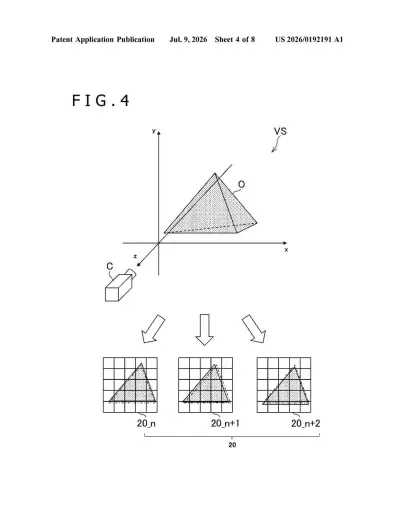
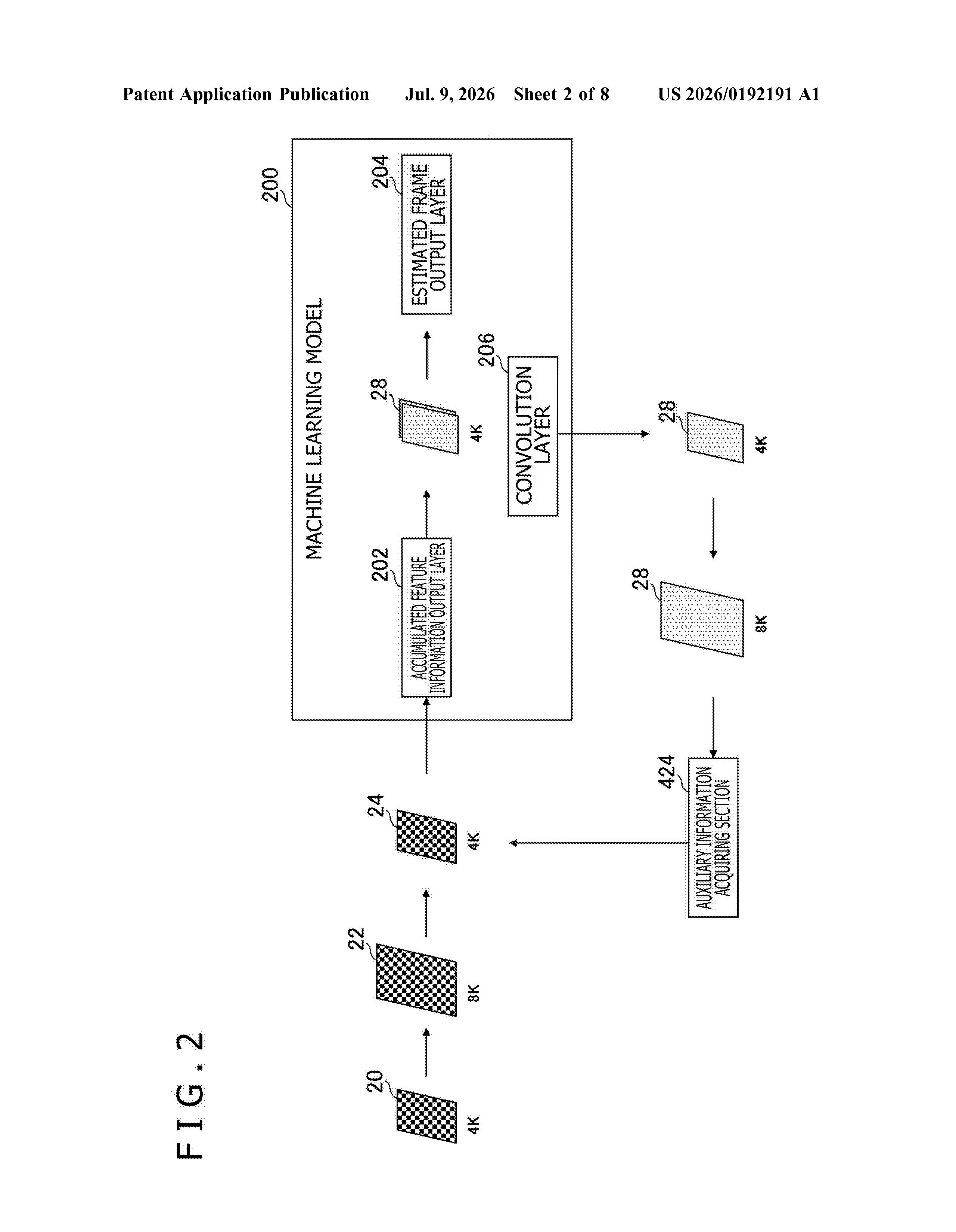
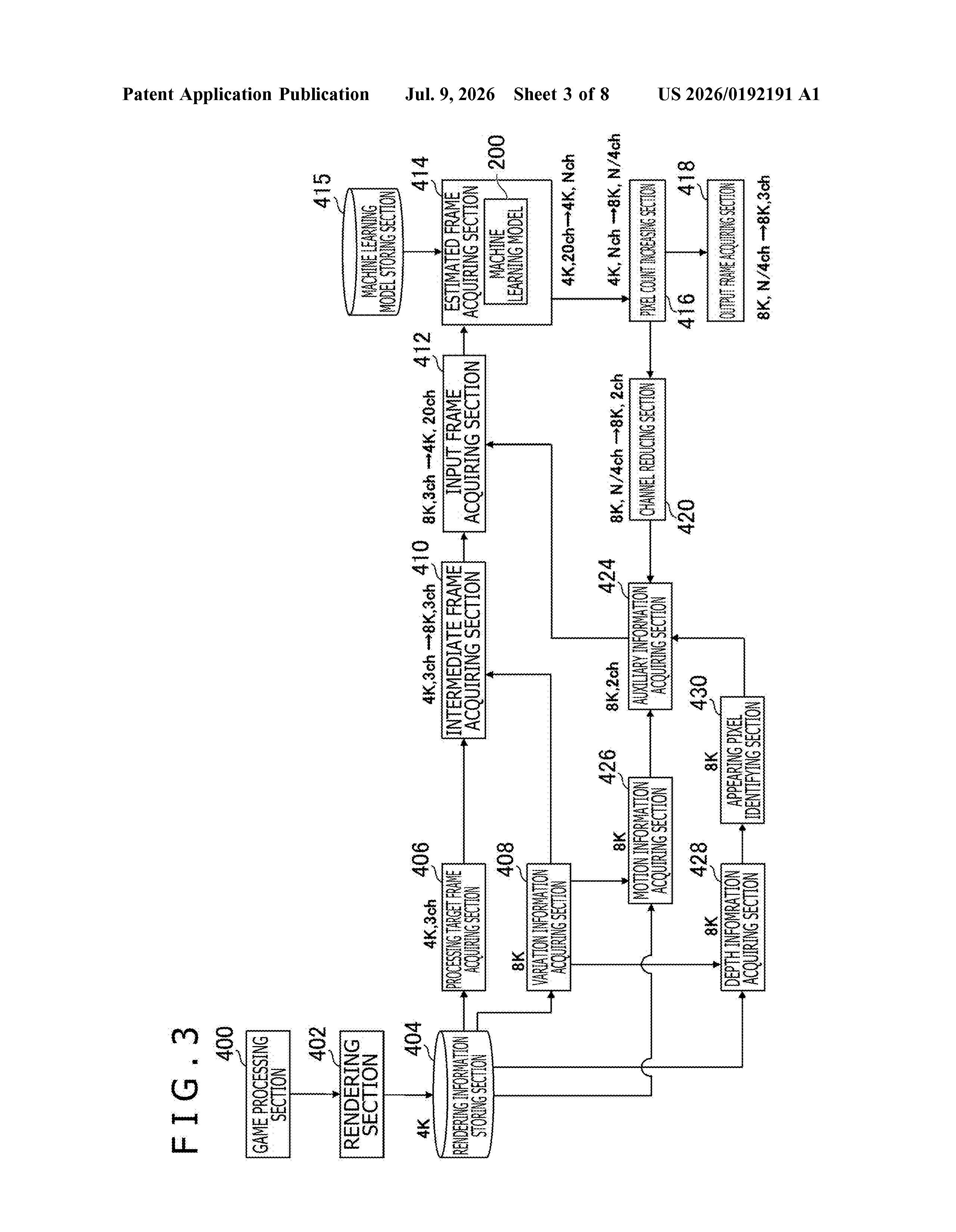
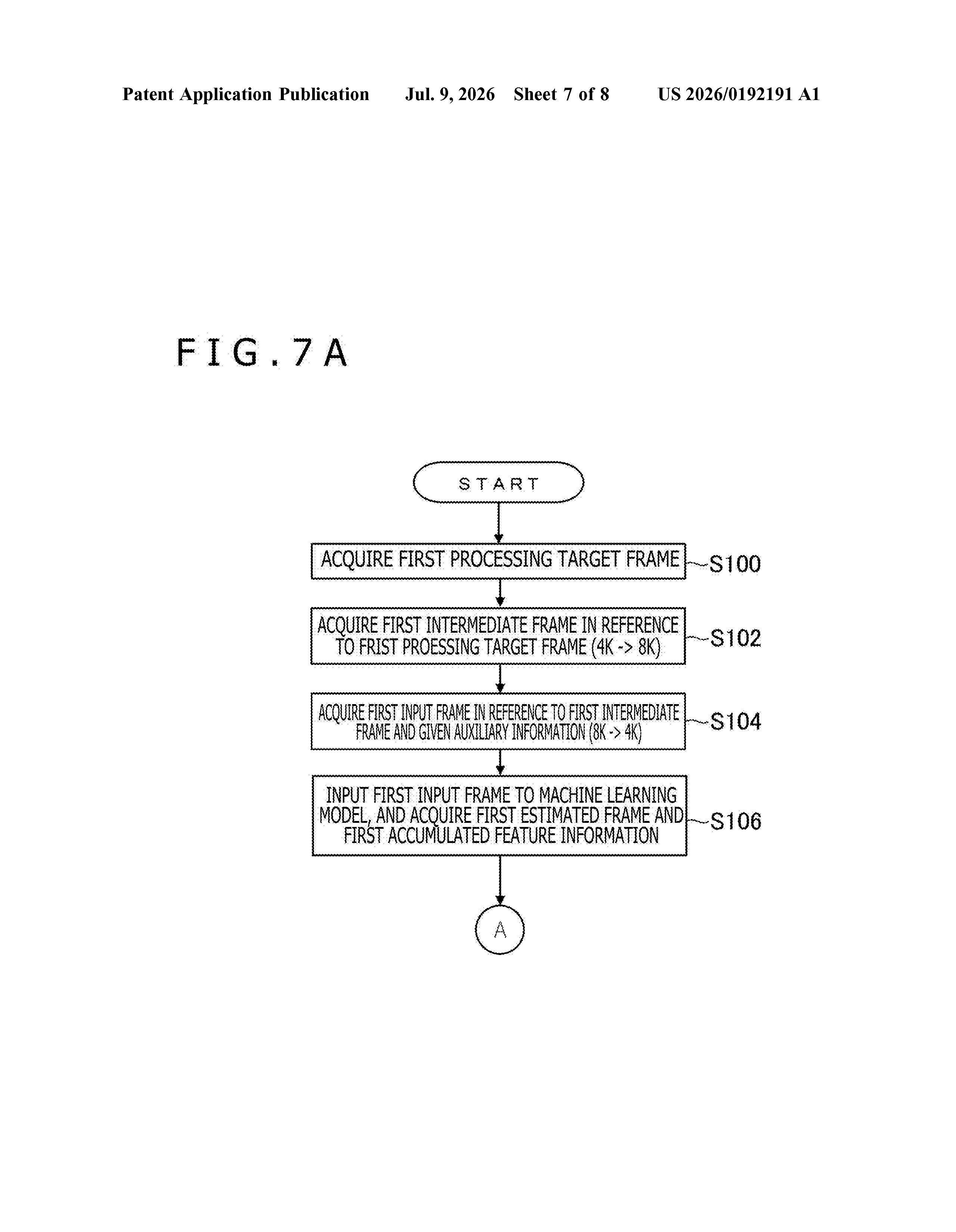
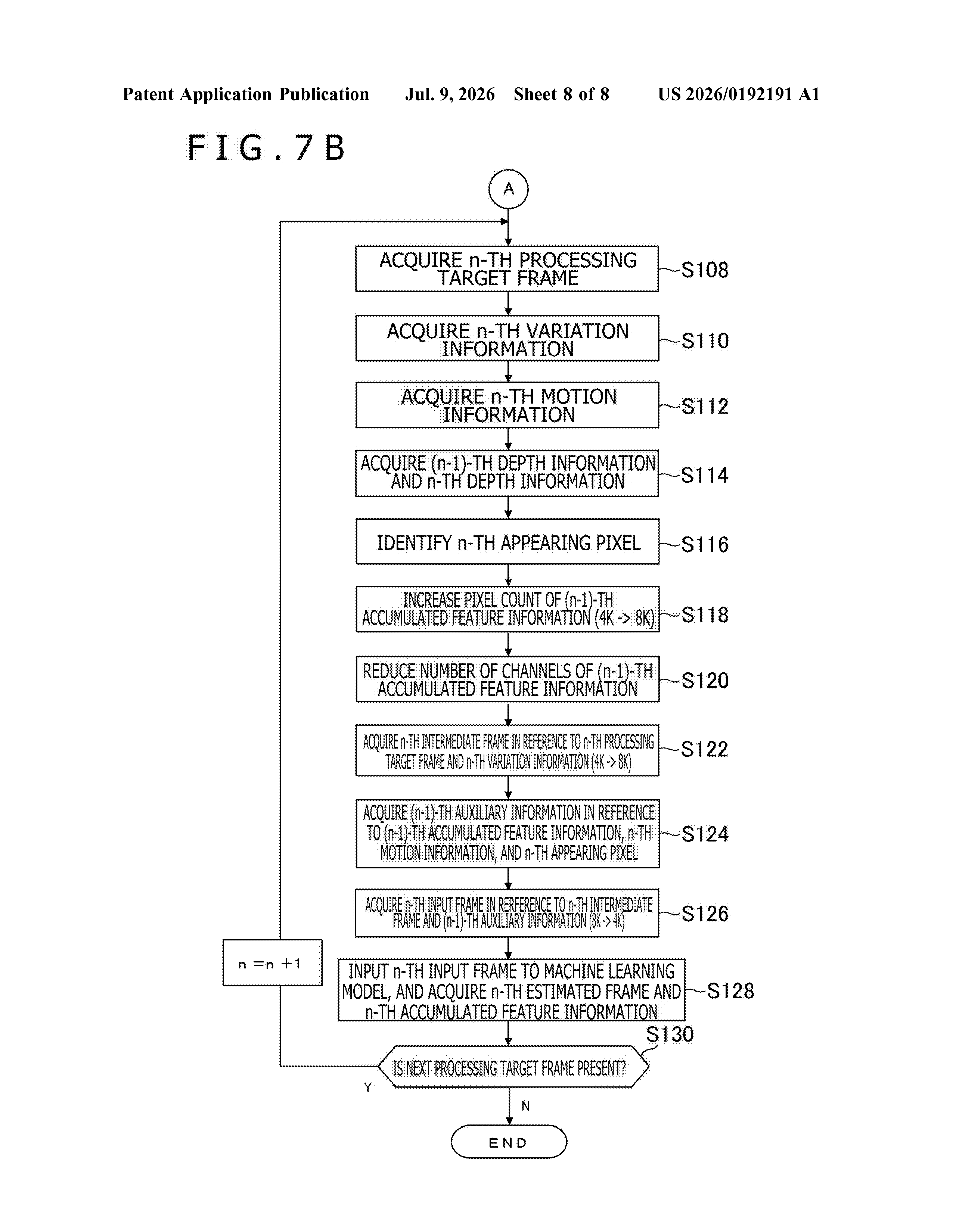
The system processes video frames one at a time through a machine learning model (a neural network trained to upscale or enhance images). But it doesn't treat each frame in isolation.
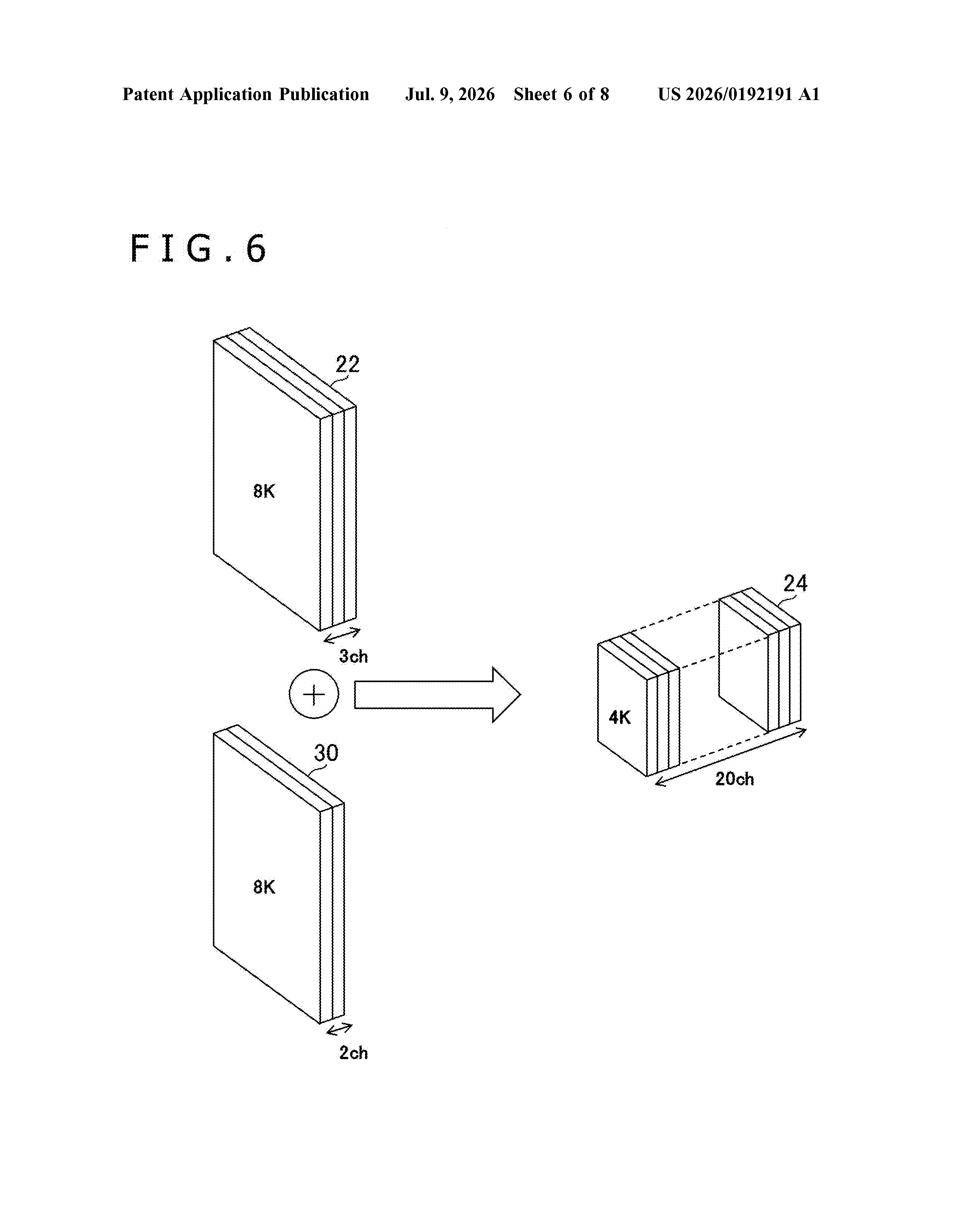
As the model works through each frame, it outputs not just an enhanced image but also something Sony calls accumulated feature information: a compact summary of the visual patterns it noticed across all the frames it has seen so far. Think of it as the model's evolving memory of the scene.
When the system is about to process the next frame, it first generates auxiliary information from that accumulated memory. It then combines this auxiliary information with the raw incoming frame to build a richer input, one where every pixel carries more context than the original frame alone provides. That enriched input is what actually gets fed into the model to produce the final enhanced frame.
- Processing target frame: the raw, lower-detail frame coming in
- Accumulated feature information: the model's memory of all previous frames
- Auxiliary information: guidance derived from that memory, applied to the current frame
- Input frame: the enriched version handed to the model for final upscaling
The claim specifies that the final input frame has more information per pixel than the raw processing target, which is the key distinction from simpler single-frame approaches.
What this means for PlayStation graphics and AI upscaling
AI upscaling is already shipping in gaming hardware from multiple manufacturers, and Sony's PlayStation platform is a direct competitor in that space. The specific problem this patent targets, temporal instability (the flickering or shimmering that makes upscaled graphics feel cheap), is one of the most common complaints about current upscaling tech. A system that carries forward scene memory between frames could produce results that feel closer to native high-resolution rendering.
For you as a player, this would mean upscaled games that look stable in motion, not just in screenshots. That's a meaningful quality-of-life gap in current systems. Whether this approach appears in a future PlayStation console, a game engine tool, or streaming infrastructure is an open question, but the direction is clear.
Source: US 2026/0192191 A1 at the USPTO (PDF). Full patent text and figures are in the official publication.
Get our take in your Top Stories
Liked this breakdown? Add Patentlyze as a preferred source on Google, and our plain-English take shows up more often in your Top Stories the next time Sony patent news breaks.
Add Patentlyze on Google
One click.
There are more where this came from
We read the new patents from Big Tech, carmakers and more and send you the ones worth knowing. Plain English, free, every week.
The drawings · 8 sheets
8 drawing sheets from US 2026/0192191 A1 · click any drawing to enlarge
More from Sony
All 722 Sony patents →
More in AI image & video
All 226 AI image & video patents →
Samsung
Samsung Patents a Training Trick That Teaches AI to Restore Photos From the Background Out
Google
Google's New Patent Teaches AI Images to Keep Their Story Straight
Adobe
Adobe Patents a System That Cuts Out Multiple Photo Objects at Once
Google