
Sony Patents a Spatial Audio System That Moves Your Caller Closer as Your Relationship Deepens
Sony is patenting a way to make remote calls feel more like real conversations — by placing each caller's voice at a specific point in 3D space around you, and automatically moving closer friends and family literally closer to your ear.
What Sony's intimacy-based caller positioning actually does
Imagine you're on a group call and everyone's voice is coming from the same flat, centerless point in your headphones. You can't tell who's near, who's far, who matters. Sony's new patent is trying to fix exactly that.
The idea is to give each person in a call a spatial position — a fixed spot in the 3D space around you where their voice seems to come from. So your boss might be slightly to your right, your best friend a little to your left and closer. That closeness isn't random: the patent says positions can be set based on your degree of intimacy with the caller. The closer your relationship, the closer their voice appears in space.
You'd still just be wearing headphones or earbuds, but the audio processing would make it feel like some people are right next to you and others are further away. It's a subtle but potentially meaningful change to how online conversations feel — less like a phone call, more like being in the same room.
How Sony maps relationship closeness to 3D audio distance
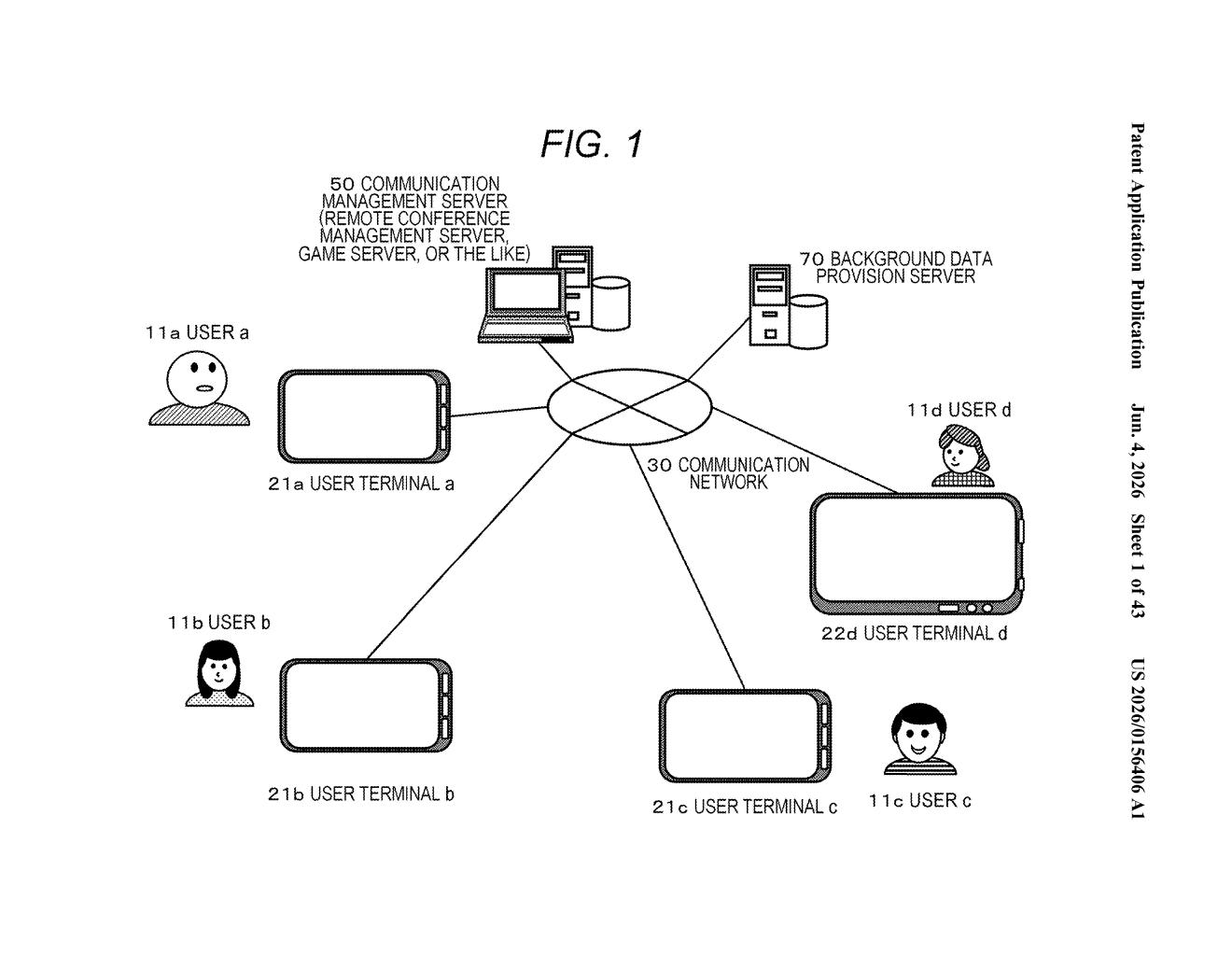
The patent describes an information processing apparatus that receives incoming voice from remote callers over a network and applies two types of audio processing before playing it back: sound direction control and volume control.
- Sound direction control uses spatial audio techniques (think binaural rendering — the same trick that makes headphone audio feel like it's coming from outside your head) to place each caller's voice at a specific point in a virtual 3D space around a defined "self-position."
- User position assignment determines where in that space each caller is placed. This can be a fixed preset, or it can be dynamically driven by a calculated degree of intimacy — essentially a relationship score.
- Proximity scaling: the higher the intimacy score, the closer the caller's virtual position is to your own. Lower intimacy means their voice appears further away in the spatial field.
The patent doesn't fully specify how the "degree of intimacy" is calculated — it could be contact frequency, an explicit user setting, or data drawn from a social graph. The core claim is the mapping itself: relationship closeness → spatial closeness in audio. Volume is also adjusted in tandem, since sounds naturally get quieter with distance.
What this means for spatial audio in calls and social apps
Spatial audio for calls has been a slow-burn feature for years — Apple, Meta, and others have experimented with it for group meetings and social VR. What's distinct here is the social graph angle: rather than just giving everyone a fixed seat at a virtual table, Sony's approach would make the emotional or relational weight of a connection audible. Your closest contacts would literally feel nearer.
For Sony, this fits neatly into its broader headphone and PlayStation ecosystem — both spaces where spatial audio is already a selling point. If this kind of processing appeared in future versions of the WH-1000XM series or in PlayStation party chat, it could meaningfully change how multi-person calls and social gaming feel to users who already own spatial-audio-capable hardware.
This is a genuinely interesting idea — using spatial audio not just as a gimmick but as a way to encode social context into the listening experience. The intimacy-to-proximity mapping is clever and human-centered. The big open question is how 'degree of intimacy' gets computed in practice, and whether users would want a system making those judgment calls automatically. If Sony can nail the UX, this has real potential in headphones and social gaming.
There are more where this came from
We read every patent application Big Tech publishes and send you the ones worth knowing. Plain English, free, every week.
Want this weekly breakdown for a company we don't cover? Patentlyze Pro →