
Adobe Patents Technology That Converts Digital Clay Models Into Accurate Physical Objects
Getting a sculpted 3D shape ready for printing or animation usually means fighting ugly gaps and jagged edges in the final mesh. Adobe's new patent describes a method that tracks where a surface's sharpest features live, so the computer can reconstruct them cleanly every time.
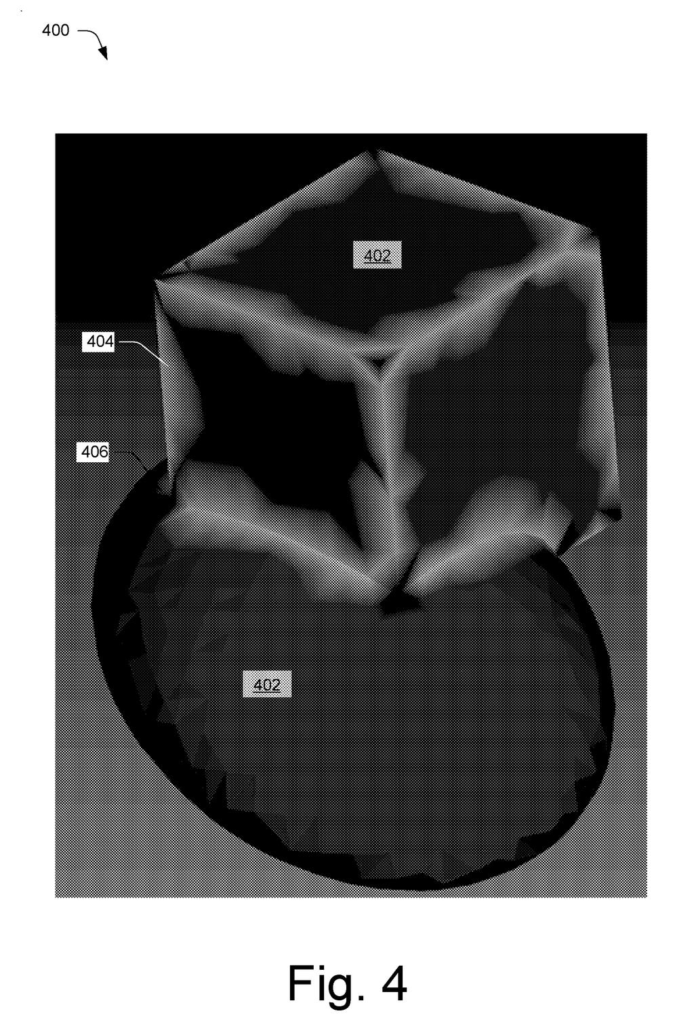
What Adobe's grid-based 3D sculpting method actually does
Every time a 3D artist sculpts a character's face or a product designer carves a part on screen, the software has to convert that sculpt into a network of triangles the rest of the pipeline can use. That conversion step is where things go wrong: surfaces develop holes, edges get rounded off, and sharp corners turn mushy.
Adobe's patent tackles this by recording two things at once. As the artist works, the software tracks distance values across a fine invisible grid that wraps the entire shape, and it also pins down the exact position of every important feature point, whether it sits on a flat face, a sharp edge, or a tight corner. When it's time to produce the final mesh, those feature points act like anchors so the algorithm knows exactly where to put each triangle.
The result is a mesh described as "watertight" and "manifold," which in plain terms means no holes, no flipped surfaces, and no geometry a 3D printer would choke on. For artists, that's fewer manual cleanup hours and more time actually sculpting.
… determining, by the processing device, feature points within grid cells of the voxel grid, each feature point having a position and a state value indicating whether each feature point is on a face, an edge, or a corner of the 3D object …
Translation: The system figures out where the flat sides, sharp edges, and corners of your virtual sculpture belong.
How dual contouring locks down edges and corners in a voxel grid
The patent describes a pipeline built around a voxel grid (think of it as a three-dimensional spreadsheet of tiny cubes) that encloses the object being sculpted. Each corner of each cube gets a signed distance value, a number that says how far that point is from the nearest surface and whether it's inside or outside the object. Positive means outside, negative means inside, zero means you're on the surface itself.
Inside each cube, the system also stores a feature point: a single location that captures the most geometrically important spot in that cell. Crucially, every feature point carries a state value labeling it as a face point, an edge point, or a corner point. That label tells the reconstruction algorithm how much freedom it has when placing the final surface there.
The final step is dual marching cubes, a variant of the classic "marching cubes" algorithm that has been around since the 1980s. Standard marching cubes is fast but smooths over sharp features. The dual version used here reads those labeled feature points as hard constraints, so a corner stays a corner instead of blurring into a rounded bump.
The output is a manifold mesh, meaning every edge is shared by exactly two triangles and the surface is fully closed. That's the standard format required by 3D printers, game engines, and visual-effects pipelines.
The processing device also determines and stores the position and state of feature points within grid cells. The feature points indicate a geometric feature of the 3D object within a corresponding grid cell.
Translation: It maps out the specific shapes and contours hidden inside the digital workspace.
What this means for 3D artists and printable geometry
For professional 3D artists, the mesh-cleanup phase is one of the least glamorous parts of the job, and it eats real time. A method that produces a clean, watertight result straight out of the sculpting step could meaningfully shrink the gap between creative work and production-ready assets, whether the destination is a 3D printer, a game engine, or a film VFX pipeline.
Adobe's interest here fits its broader push into 3D tools across Substance, Firefly, and its Creative Cloud ecosystem. Sharp-edge preservation is a known weak point of voxel-based sculpting, and this patent addresses it at the algorithmic level rather than through post-process patching. Covering exactly this kind of geometry and 3D-tooling work is part of what the latest Big Tech patents tracker follows across Adobe's growing design-software portfolio.
That makes this Adobe application the 128th in our Adobe coverage since May, adding to work like the one-click photo selector and the app screen mapper.
The system has to make a discrete judgment call about every single cube in the grid, labeling the geometry inside as a flat face, an edge, or a corner. When the artist's intent is clear, that works. When a surface is ambiguous, sitting right on the boundary between categories, the label the algorithm picks will determine whether the final shape looks right or wrong.
Storage is the other cost. Packing extra data into every cube on top of the basic distance measurements means memory requirements grow fast as resolution increases, and the patent describes no scheme for compressing or thinning that data at scale.
Both costs read as acceptable given what the design delivers: a mesh that closes cleanly every time, with no gaps requiring manual repair before the work can be used elsewhere. For professional users who export frequently, that reliability is worth the overhead.
Get our take in your Top Stories
Liked this breakdown? Add Patentlyze as a preferred source on Google, and our plain-English take shows up more often in your Top Stories the next time Adobe patent news breaks.
There are more where this came from
We read every patent application Big Tech publishes and send you the ones worth knowing. Plain English, free, every week.
The drawings
7 drawing sheets from US 2026/0253358 A1 · click any drawing to enlarge


Want this weekly breakdown for a company we don't cover? Patentlyze Pro →
Be the first to weigh in