
Adobe Patents an AI Orchestrator That Builds Marketing Campaigns Attribute by Attribute
Adobe is patenting a system that doesn't just suggest a marketing campaign — it reasons through each campaign decision in a specific order, using earlier decisions to inform later ones, all driven by AI and your existing business data.
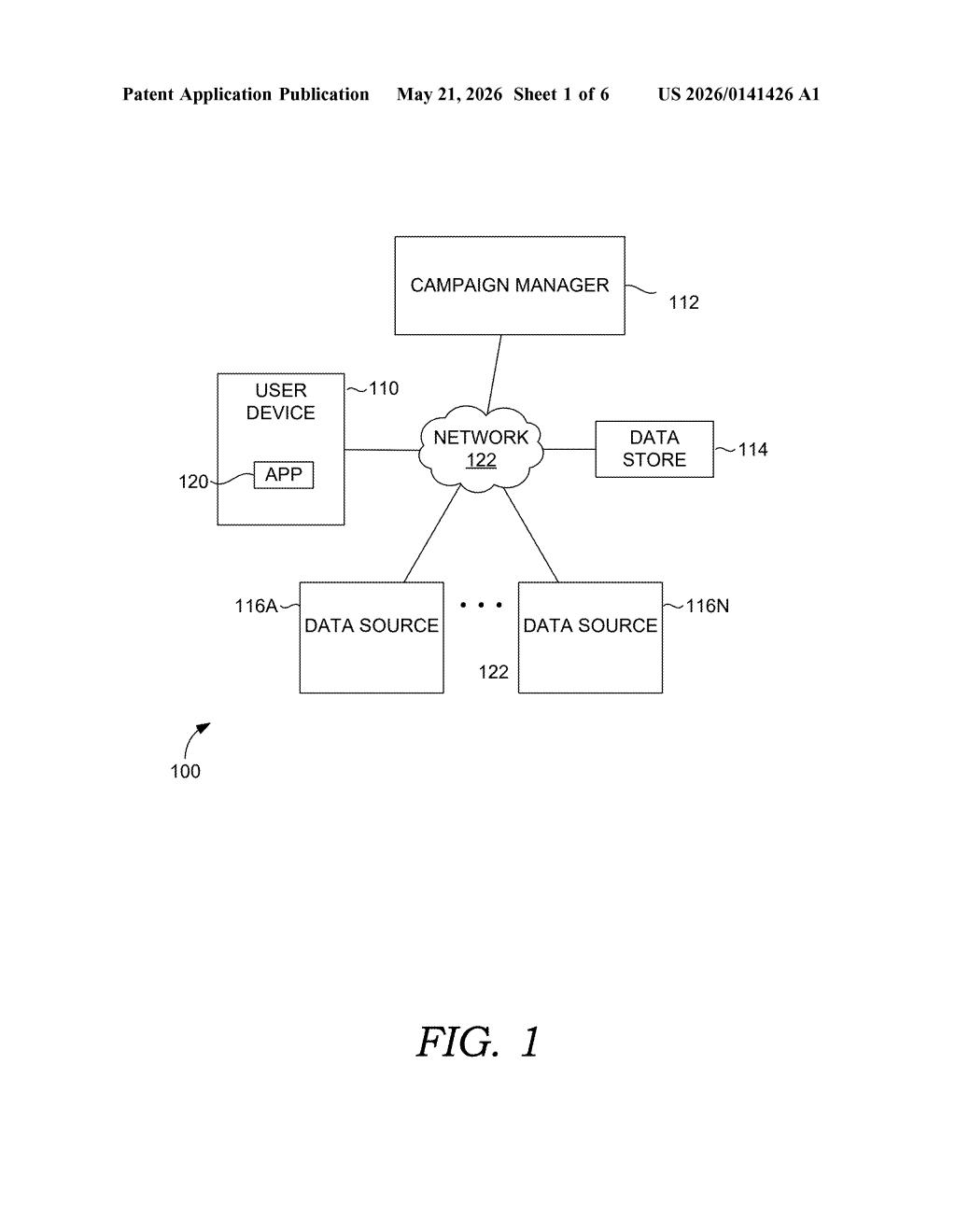
What Adobe's campaign orchestrator actually does
Imagine you're a marketer and you need to spin up a campaign fast. Instead of filling out a dozen fields manually — audience, channel, budget, messaging, timing — you just describe what you want in plain language, and the system figures out the rest.
That's the core idea here. Adobe's patent describes an AI 'orchestrator' that takes your query (say, 'promote our spring sale to lapsed customers'), pulls in data from your existing systems, and then figures out which campaign settings to determine and in what order. The order matters: it first nails down your target audience, then uses that to pick the right channel, then uses both of those to shape the message.
The result is a full campaign recommendation surfaced in a UI — not a blank template, but a populated, reasoned draft. Think of it as a very context-aware AI assistant that's been given access to your CRM and marketing history before it starts answering.
How the AI chains campaign attributes in order
The system centers on what the patent calls a campaign orchestrator — software that mediates between a user's natural-language query and an AI model, structuring the conversation so that outputs feed back into subsequent decisions.
Here's the flow:
- Query intake: A user submits a query (text describing a campaign goal).
- Attribute identification: The orchestrator analyzes the query alongside operational data (live business data — sales history, customer segments, past campaign performance) to decide which campaign attributes are relevant and need to be determined.
- Ordering: It then figures out the right sequence to determine those attributes — so that a foundational attribute like 'target audience' is resolved before dependent attributes like 'ad copy tone' or 'channel mix.'
- Chained AI prompting: Each attribute is determined by constructing a prompt that includes the original query, relevant operational data, and already-resolved attributes, feeding it into an AI model. The first output becomes input to the next prompt — a pattern sometimes called chain-of-thought prompting (breaking a complex task into sequentially reasoned steps).
The final output is a campaign recommendation rendered in a user interface, presenting all determined attributes together as an actionable plan.
What this means for Adobe's marketing cloud tools
Adobe's marketing cloud — including Adobe Experience Cloud and Marketo — already serves enterprise marketing teams. A patent like this fits neatly into the trajectory of those tools: less manual configuration, more AI-driven suggestion. The dependency-aware ordering is the interesting bit — most AI chatbots will just answer questions in isolation, but this system enforces a reasoning graph where decisions compound on each other, which tends to produce more coherent outputs for structured tasks like campaign planning.
For you as a marketing professional, the practical upshot is potentially a tool that can draft a reasonably complete, data-backed campaign brief from a single prompt — skipping the blank-slate problem. Whether Adobe ships this as a discrete feature or folds it into an existing assistant like the one in Marketo is an open question, but the underlying mechanism is clearly aimed at reducing the manual overhead of campaign setup.
This is a solid, strategically coherent patent for Adobe — it's not a moonshot, but it's a precise articulation of how LLM-powered tools should work in enterprise marketing contexts. The chained attribute resolution approach is genuinely more useful than a flat 'generate me a campaign' prompt, and grounding it in operational data rather than general knowledge addresses one of the real weaknesses of AI marketing tools today. Worth watching as Adobe continues to build out AI features in Experience Cloud.
Get our take in your Top Stories
Liked this breakdown? Add Patentlyze as a preferred source on Google, and our plain-English take shows up more often in your Top Stories the next time Adobe patent news breaks.
There are more where this came from
We read every patent application Big Tech publishes and send you the ones worth knowing. Plain English, free, every week.
Want this weekly breakdown for a company we don't cover? Patentlyze Pro →