
Salesforce Patents an Automated AI Compliance Guardrail That Can Block Rogue Agents
As companies deploy AI agents that make real decisions, someone — or something — has to keep them in line. Salesforce is patenting a system where an AI watches other AIs for compliance violations, and can cut them off entirely if they go out of bounds.
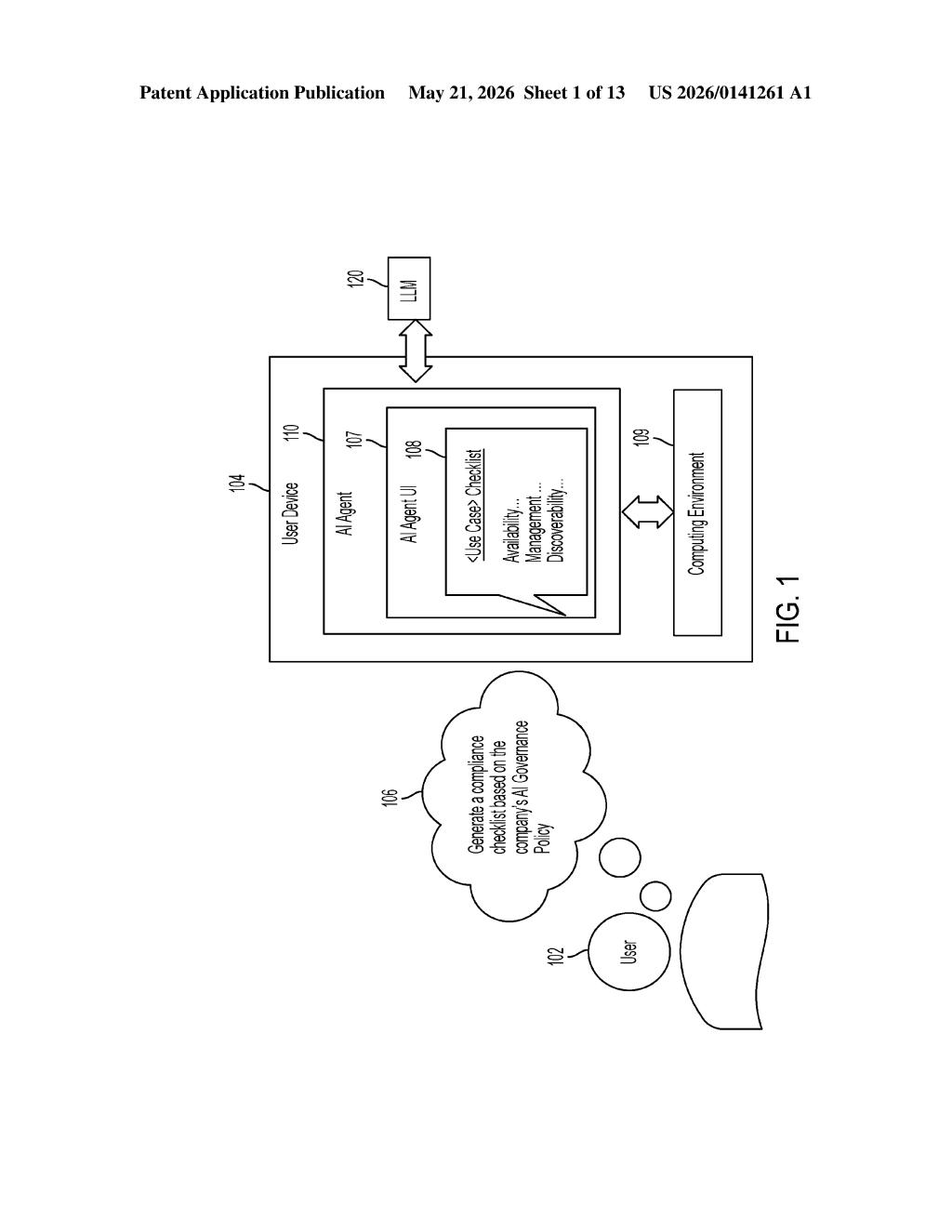
What Salesforce's AI guardrail framework actually does
Imagine your company rolls out an AI assistant that handles customer contracts. How do you know it's staying within legal and policy guardrails — every single hour, across thousands of conversations? Right now, that mostly falls on humans reviewing logs after the fact.
Salesforce's patent describes a framework where a dedicated AI compliance officer monitors other AI agents automatically. It reads through conversation transcripts those agents generate, builds up a structured map of what each AI is doing and how it relates to governance rules, and then continuously checks for violations. You don't have to write custom audit scripts — the system learns the rules from conversations and updates itself.
The most striking part: if an AI agent is found to be breaking compliance rules, the system can block its data traffic entirely — essentially pulling the plug on a misbehaving AI without human intervention. It's a kill-switch baked into the governance layer.
How the two-LLM system builds and queries its governance graph
The system is built around two cooperating LLMs and a knowledge graph (a structured database of concepts and their relationships, like a map of how "contract review," "PII handling," and "regulatory policy" connect to each other).
The first LLM — called the translator LLM — reads raw conversation transcripts from AI agents and converts them into structured updates for that knowledge graph. It's constantly ingesting what AI systems are actually doing and encoding that behavior into a formal ontology (a machine-readable rulebook of concepts and relationships).
The second LLM — the query LLM — takes natural language questions like "Is this AI asset compliant with our data retention policy?" and converts them into executable graph queries that run against the live knowledge graph. The results come back as a targeted subgraph of relevant governance data, which gets folded into an application object model (essentially a live compliance profile) for each AI asset.
From there, the system runs dynamic monitoring — continuously checking each AI agent's compliance profile against governance rules. If a violation is detected, the system can automatically block that agent's data traffic, stopping it from operating until the issue is resolved.
What this means for enterprise AI agent deployments
Enterprise software is in the middle of a shift from AI that assists humans to AI that acts autonomously — scheduling, drafting, approving, transacting. That shift creates a compliance nightmare for legal, security, and governance teams who are used to auditing human decisions, not AI ones. Salesforce, whose Agentforce platform is explicitly betting on autonomous agents, has a direct business need to solve this.
For you as an enterprise IT or compliance leader, this kind of system would mean AI governance stops being a spreadsheet exercise done quarterly and becomes a live, automated layer. The kill-switch capability is especially notable — it suggests Salesforce is thinking about AI agents as infrastructure that needs circuit breakers, not just software that needs policies.
This is one of the more pragmatic AI governance patents to come out of the current agentic-AI wave. Salesforce isn't just filing a vague 'AI oversight' claim — the two-LLM architecture, the knowledge graph update loop, and especially the hard traffic-blocking enforcement mechanism show genuine engineering specificity. Whether it ships cleanly or not, the fact that Salesforce is patenting kill-switch infrastructure for its own agents says a lot about where enterprise AI liability concerns are heading.
Get our take in your Top Stories
Liked this breakdown? Add Patentlyze as a preferred source on Google, and our plain-English take shows up more often in your Top Stories the next time Salesforce patent news breaks.
There are more where this came from
We read every patent application Big Tech publishes and send you the ones worth knowing. Plain English, free, every week.
Want this weekly breakdown for a company we don't cover? Patentlyze Pro →