
Adobe Patents an AI System That Merges Image Content with a Separate Style Source
Adobe is patenting a way to let an AI take the subject matter from one photo and the visual style from another — and merge them into a single coherent image, without you having to write a prompt describing either.
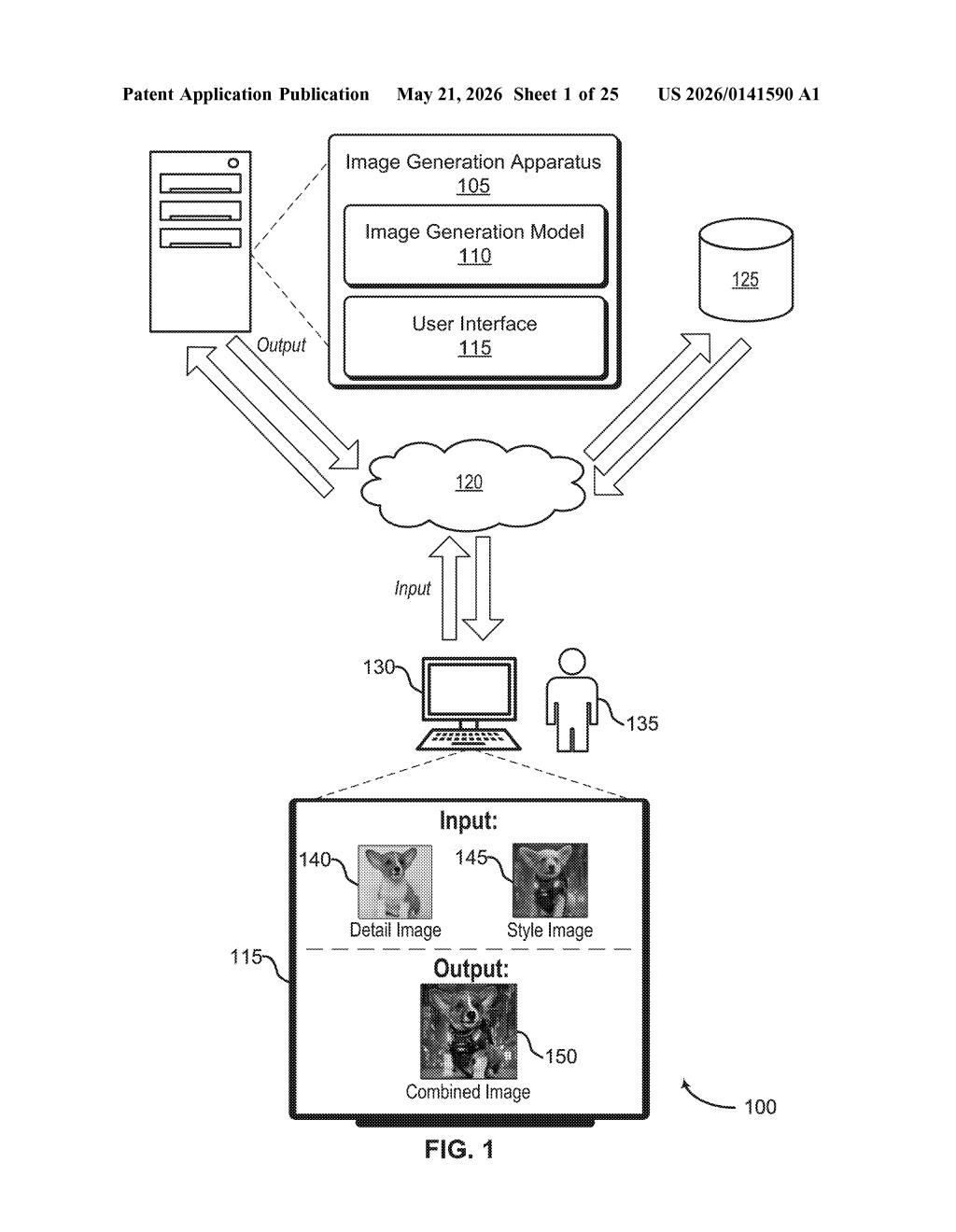
What Adobe's detail-plus-style image blending actually does
Imagine you have a photo of your dog sitting in the backyard, and separately, a painting you love — maybe something with bold brushstrokes and warm amber tones. Adobe's new patent describes a system that can take the content (your dog, the pose, the scene) from the first image and the style (those brushstrokes, that color palette) from the second, and combine them into a brand-new image.
The key idea is that the system doesn't just blend pixels — it encodes what each image means separately before combining them. One chunk of data captures the subject, another captures the aesthetic. An AI image model then uses both chunks together to generate the final result.
This is different from typing a text prompt like "my dog in an impressionist painting style." You're giving the AI two actual images as reference material, which tends to produce much more faithful and controllable results — especially for stylistic details that are hard to describe in words.
How Adobe splits content and style into separate embedding patches
The patent describes a pipeline with three main stages. First, the system takes two inputs: a detail image (the image whose subject or content you want to preserve) and a style image (the image whose visual aesthetic you want to borrow).
Next, the system generates a combined image embedding — think of an embedding as a compact numerical fingerprint that an AI model can read. Crucially, this isn't one blended fingerprint; it's a structured pair. A detail embedding patch captures the specific image element from the content image, and a style embedding patch captures the style element from the style image. Keeping them as separate "patches" within a combined structure preserves the integrity of both signals.
Finally, an image refinement model — most likely a diffusion model (the same family of AI behind tools like Stable Diffusion and Adobe's own Firefly) — takes that combined embedding and generates the output image. The resulting image should faithfully reproduce:
- The subject, composition, or object from the detail image
- The color palette, texture, brushwork, or tone from the style image
The architecture's core insight is separating what is shown from how it looks at the embedding level, rather than trying to disentangle them after the fact.
What this means for Adobe's generative AI creative tools
For creative professionals, the difference between prompt-based style transfer and image-reference-based style transfer is enormous. Prompts are lossy — you can describe "warm impressionist brushstrokes" all day, but a reference image is unambiguous. Adobe's Firefly platform already supports some reference-image workflows, and this patent suggests the company is investing in more precise, architecture-level control over how style and content stay separated during generation.
For you as a user, this could eventually mean dragging two images into a Photoshop or Firefly panel and getting a blended result that's actually faithful to both — rather than a generic AI interpretation of a text description. It also has implications for brand consistency, where a company might lock in a style reference image and apply it across many different content images automatically.
This is solid, targeted AI research rather than a headline grab. Style-content disentanglement is a well-studied problem in generative AI, and Adobe is staking out a specific architectural approach — separate embedding patches — that could give them a real edge in production creative tools. It's worth watching because Adobe has the distribution (Photoshop, Firefly, Creative Cloud) to actually ship this to millions of users, not just demo it.
Get our take in your Top Stories
Liked this breakdown? Add Patentlyze as a preferred source on Google, and our plain-English take shows up more often in your Top Stories the next time Adobe patent news breaks.
There are more where this came from
We read every patent application Big Tech publishes and send you the ones worth knowing. Plain English, free, every week.
Want this weekly breakdown for a company we don't cover? Patentlyze Pro →