
Adobe Patents an AI System That Deconstructs How Light Hits a Scene
Lighting is the hardest part of photo editing to fake — and Adobe's latest patent is aimed squarely at that problem. The filing describes an AI that can look at a photo and pull out a visual map of just one aspect of how light behaves in that scene, like albedo, shading, or specularity, on demand.
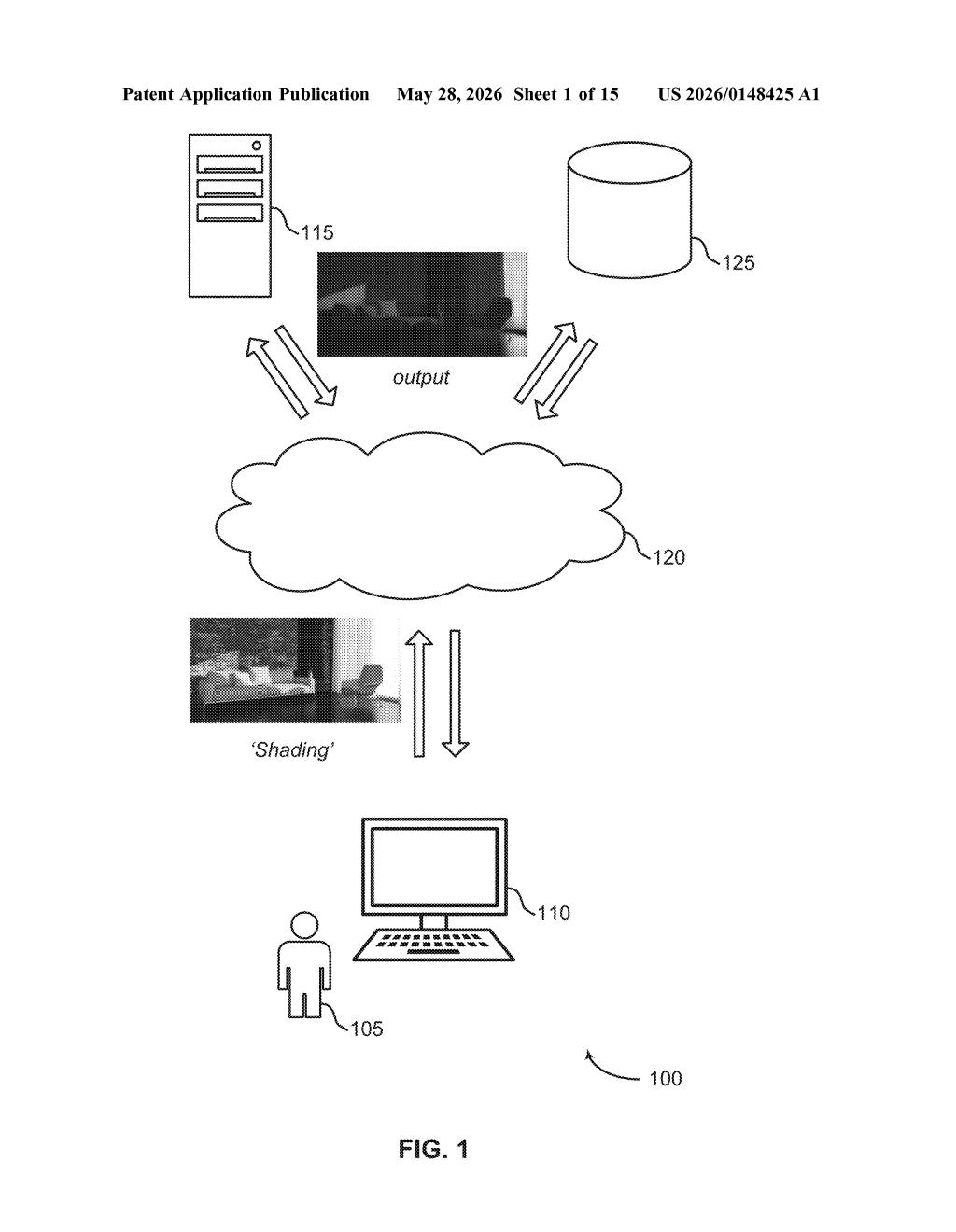
What Adobe's intrinsic-layer AI actually separates
Imagine you take a photo of a coffee mug on a wooden table. The final image is a blend of a lot of different things happening at once: the actual color of the mug's surface, the shadows cast across it, the glossy highlights where light bounces off the glaze, and the texture of the wood underneath. These are all mixed together in a single photo, and separating them out is genuinely hard — even for professional retouchers.
Adobe's patent describes a system where you give an AI model a photo and a text prompt that tells it which of those layers you want to see — something like "show me just the shading" or "give me the albedo map." The AI then produces a clean visual output representing only that layer.
This kind of decomposition is called intrinsic image analysis, and it's been a research topic for decades. Adobe's approach uses a modern latent diffusion model (the same family of AI behind image generators like Stable Diffusion) to do it — potentially making the process faster and more accessible inside tools like Photoshop or Firefly.
How the conditional encoder extracts light modalities
The system takes two inputs: an input image and an input prompt that specifies an "intrinsic modality" — a term for one particular way a scene interacts with light. Common intrinsic modalities include:
- Albedo — the base color of a surface with all lighting removed
- Shading — how light and shadow fall across the scene's geometry
- Specularity — the bright highlights from reflective surfaces
- Normals — a map of which direction each surface is facing
A conditional image encoder processes the input image and produces what the patent calls a condition embedding — a compressed numerical representation that captures information about the requested modality. Think of it as distilling "what does the shading in this image look like?" into a vector the generative model can work with.
That condition embedding, combined with the text prompt, gets fed into a latent diffusion model (an AI image generator that operates in a compressed "latent" space rather than pixel-by-pixel, which makes it faster). The model then synthesizes a clean output image representing just the requested intrinsic layer.
The key innovation is the joint framing: rather than training separate models for each intrinsic layer, the system handles multiple modalities through a single prompt-conditioned pipeline, with the encoder doing the heavy lifting of distinguishing between them.
What this means for AI-powered photo editing tools
For anyone doing compositing, relighting, or material editing in tools like Photoshop or After Effects, being able to extract clean intrinsic layers automatically is a big deal. Right now, getting a usable albedo or shading map from a real photograph typically requires either specialized capture setups or a lot of manual work. If Adobe can make this one-click, it changes what's practical for everyday creative work.
This also slots directly into Adobe Firefly's generative editing direction — if you can cleanly separate lighting from surface color in any photo, you can relight scenes realistically, swap materials, or composite elements in a way that actually looks physically correct. That's a gap that's currently hard to close with purely generative approaches.
This is solid, focused research from Adobe — not a flashy demo concept, but the kind of foundational capability that makes downstream creative tools dramatically more useful. Intrinsic decomposition has been a white whale in computational photography for a long time, and framing it as a prompt-conditioned diffusion task is a genuinely clever approach. If Adobe can ship this reliably on real-world photos, it's meaningful infrastructure for Firefly.
There are more where this came from
We read every patent application Big Tech publishes and send you the ones worth knowing. Plain English, free, every week.
Want this weekly breakdown for a company we don't cover? Patentlyze Pro →