
Nvidia Patents a Way to Teach AI Image Generators One Specific Object Without Wrecking the Rest
You hand an AI image generator a few photos of your dog, and instead of getting a vague dog-shaped blob, you get your actual dog, doing whatever you describe. That's the problem Nvidia is trying to solve here.
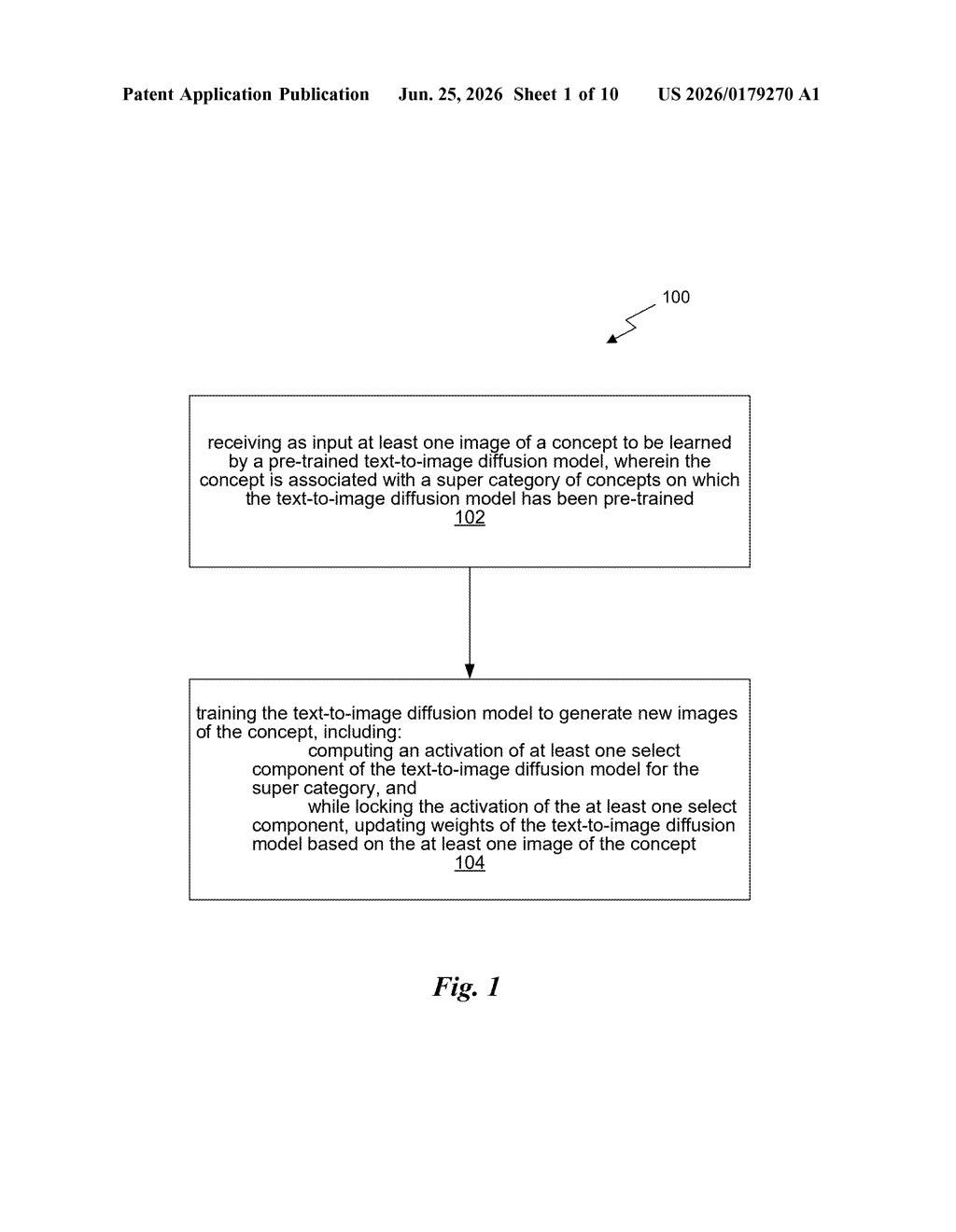
How Nvidia's personalized image generator actually works
Imagine you want an AI image tool to generate pictures of your specific vintage lamp in new settings. You upload a few photos, type a prompt, and the AI spits out something that barely looks like your lamp. That's a real frustration with today's personalized AI image tools: they struggle with fine details.
Nvidia's patent describes a technique that lets the AI model learn one specific concept (your lamp, your logo, your pet) from just a handful of photos, without rewriting the entire model in the process. It does this by locking certain parts of the model in place while only making small, surgical updates to the parts that need to change. That means the model keeps working well for everything else it already knows.
The result, according to the patent, is images that more closely resemble the specific thing you fed it, using far less computing memory than current approaches. You can still use free-text prompts to put that concept into new scenes or give it a new look.
Inside Nvidia's component-locking and rank-one editing approach
The patent centers on two connected techniques applied to text-to-image diffusion models (the class of AI behind tools like Stable Diffusion or Midjourney, which generate images by gradually refining random noise guided by a text prompt).
The first technique is component locking. Inside these models, a mechanism called cross-attention connects words in your text prompt to regions of the image being built. Cross-attention has two parts: keys (which define broad categories, like "dog" or "lamp") and values (which carry richer detail). Nvidia's approach locks the keys to the broad category the new concept belongs to, while letting the values update freely. This keeps the model's general understanding of the world intact while still teaching it something new and specific.
The second technique is rank-one editing, a method borrowed from recent research on editing neural networks with minimal changes. Instead of retraining the whole model, it modifies a single, targeted direction inside the model's weight matrix (think of it as nudging one dial on a mixing board rather than adjusting every slider at once). This drastically reduces the memory cost of the update.
Together, the two techniques let a user provide a few example images of a concept, and the model learns to reproduce that concept faithfully across new prompts and scenes.
What this means for personalized AI image tools
For anyone building or using personalized AI image tools, the cost of customization matters. Full fine-tuning a large model for every user's custom concept is expensive and tends to cause model degradation, where the model forgets or distorts things it previously knew. Nvidia's approach targets that trade-off directly by making customization cheap and contained.
This is also relevant to the growing market for on-device or user-specific AI image generation, where memory and compute are constrained. A method that produces high-fidelity custom concepts with a smaller model update could make personalized image generation practical on hardware that full fine-tuning would overwhelm.
This is genuinely useful research in a space where the gap between 'AI-generated image' and 'AI-generated image of my specific thing' is still frustratingly wide. The component-locking idea is clever and grounded in real engineering trade-offs, not just incremental parameter tweaking. Whether it ships in a product or stays as a research contribution, the underlying problem it addresses is one that users actually feel.
There are more where this came from
We read every patent application Big Tech publishes and send you the ones worth knowing. Plain English, free, every week.
Want this weekly breakdown for a company we don't cover? Patentlyze Pro →