
Sony
Sony · AI / ML · Filed Nov 4, 2024 · USPTO published Jul 2, 2026 · Jul 2 release
Sony Patent Lets Users Tune AI Image Recognition Settings in Real Time
Most AI image recognition systems run one way and one way only. Sony is filing a patent for a system that lets a user dial in how hard the AI works, trading speed for accuracy depending on the situation.
- Publication number
- US 2026/0187999 A1(US20260187999A1)
- Applicant
- SONY GROUP CORPORATION
- Filed · Published
- Nov 4, 2024 · Jul 2, 2026
- Inventors
- SHLOK MOHTA, HISAHIRO SUGANUMA
- Status when we published
- Waiting for an examiner
- Document
- 12 claims
- US classification
- 382/155
- Examiner
- CHEN, XUEMEI G (Art Unit 2661)
- Parent application
- National Stage Entry of PCT/JP2023/014808 (filed Apr 12, 2023)(PCTJP2023014808)
What Sony's adjustable image recognition system actually does
Imagine your phone's camera trying to identify objects in a crowded scene. Right now, you usually have no say in how much computing power it throws at the problem or how accurate it tries to be. Sony's patent describes a system that changes that.
With this approach, a user can adjust settings before the AI looks at an image. Those settings control how the AI prepares the image data and what level of detail it focuses on before making its final call. Think of it like adjusting the zoom and resolution on a camera before you take a shot, except you're adjusting the AI's attention.
The practical idea is to give people a visible way to see the tradeoff: crank up the accuracy, and the system uses more computing resources; dial it back, and things run faster but with less precision. Sony wants that tradeoff to be something a user can actually control and understand.
How the control parameters reshape the AI's processing pipeline
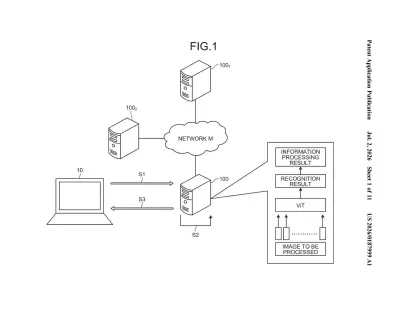
The patent centers on a Vision Transformer, or ViT (a type of AI model that analyzes images by breaking them into small patches and looking at how those patches relate to each other, similar to how a reader scans a page word by word). The system wraps that model in a user-controlled interface.
Here's how the pipeline works:
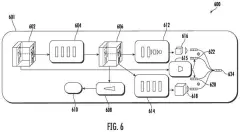
- A user provides an input adjusting what the patent calls a control parameter, essentially a dial that governs how the AI processes an image.
- The system then generates attribute data from the image, a structured description of the image's content shaped by that parameter setting.
- From that attribute data, it creates close observation information, a refined, focused representation the AI uses to make its final identification.
- The ViT performs image recognition based on that refined input.
The key insight is that by changing the control parameter, a user changes how much work each stage does, directly affecting both accuracy and how many computing resources are consumed. The patent specifically calls out the goal of making those two factors visible and understandable to the user, not just hidden inside the model.
What this means for AI cameras and edge vision devices
For most consumer devices today, AI vision models are black boxes. You point the camera, the AI decides, and you have no visibility into why it got something wrong or how to make it work better under different conditions. Sony's approach would surface that tradeoff explicitly, which is useful in contexts like industrial inspection, medical imaging, or professional cameras where resource constraints vary by environment.
This patent also fits a broader industry push to make AI models more configurable at the edge, meaning on the device itself rather than in a distant server. If a device has limited battery or processing power, being able to reduce accuracy gracefully rather than fail outright is a real engineering advantage.
Source: US 2026/0187999 A1 at the USPTO (PDF). Full patent text and figures are in the official publication.
Get our take in your Top Stories
Liked this breakdown? Add Patentlyze as a preferred source on Google, and our plain-English take shows up more often in your Top Stories the next time Sony patent news breaks.
Add Patentlyze on Google
One click.
There are more where this came from
We read the new patents from Big Tech, carmakers and more and send you the ones worth knowing. Plain English, free, every week.
More from Sony
All 722 Sony patents →
More in AI vision
All 352 AI vision patents →
Microsoft
Microsoft Patents a System That Identifies Your Handwriting's Language Before Reading It
Microsoft
Microsoft Patent Teaches Recommendation AI to Recognize When Backup Models Are Needed
Nvidia
Nvidia Patent Covers AI Scheduler That Ranks Requests by Detecting User Mood
Google