
IBM Patent Uses Skeleton Simulation to Flag Risky Workplace Tasks
Before a warehouse worker throws out their back, IBM wants a computer simulation to have already spotted the danger. This patent describes a system that runs your job through a virtual skeleton to find which tasks are wrecking your joints.
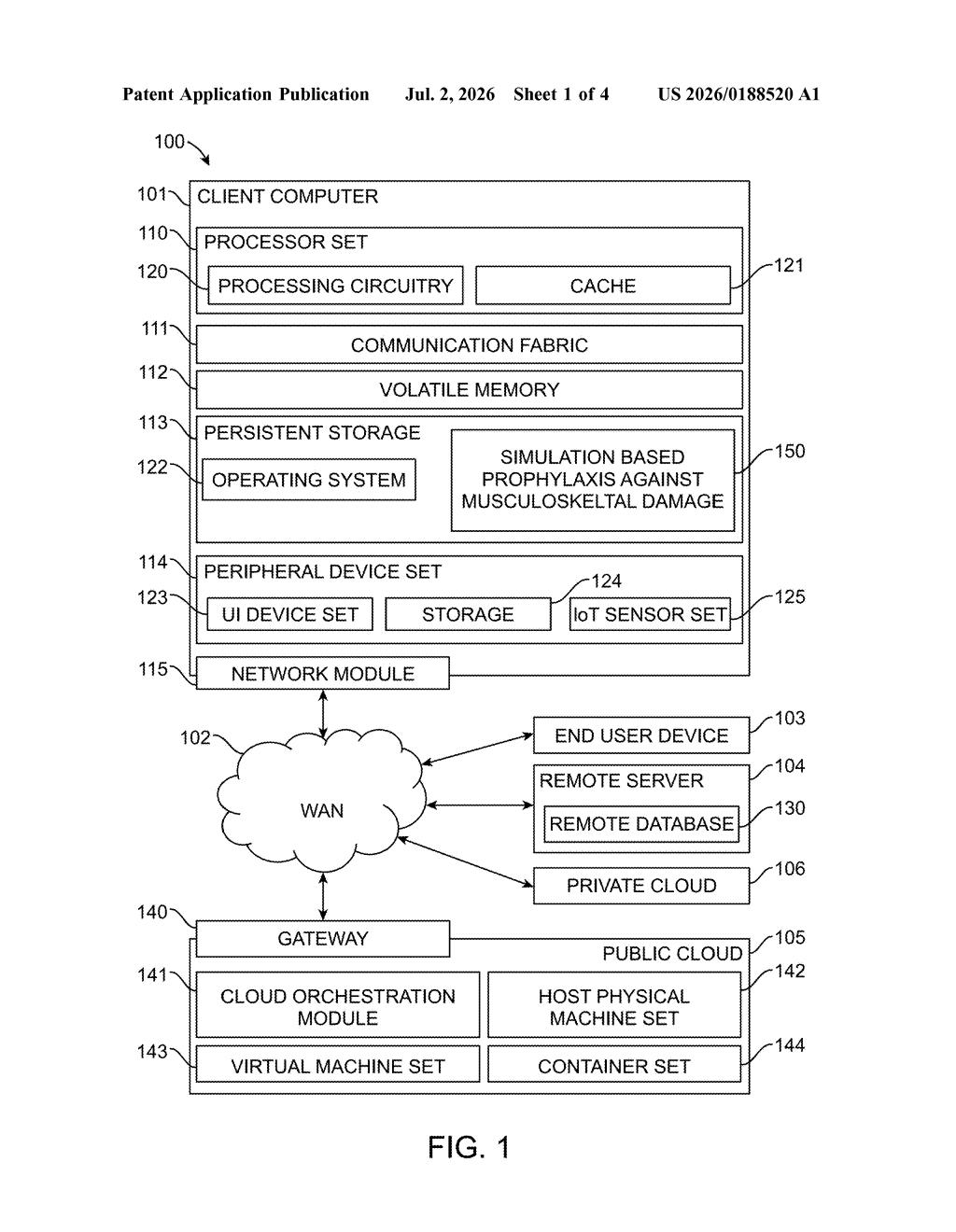
How IBM's virtual skeleton flags injury risk at work
Imagine your employer could run a simulation of your entire workday through a digital skeleton before you ever show up. IBM is patenting exactly that: a system that models the physical stress of a job on human joints and flags when any part of the routine pushes past safe limits.
The system looks at a list of tasks in a workflow, simulates a person performing each one using a virtual skeletal model, and adds up the strain on each joint over time. If any joint takes on more stress or load than recommended safety thresholds allow, the system suggests rearranging or changing those tasks.
Think of it as a digital ergonomics consultant that never sleeps. Instead of waiting for a worker to report pain or file an injury claim, the idea is to catch risky task sequences before anyone gets hurt.
How the skeletal model measures joint load over time
The patent describes a computer-implemented method that takes a defined set of workplace tasks and runs them through a physics-based simulation using a skeletal model: a digital representation of the human body defined by joints (knees, shoulders, wrists, spine, etc.) and the ways those joints can move and rotate.
During the simulation, the system tracks stress at each joint across the entire task sequence. It then aggregates those readings into two key numbers: an aggregate stress (peak force on any single joint) and an aggregate load (cumulative burden over time). Both are compared against predefined safety thresholds, likely drawn from occupational health guidelines.
If either number exceeds its recommended limit, the system automatically recommends a reconfiguration of the task set. That could mean reordering steps, reducing repetition of a motion, or flagging a task for automation. The patent does not specify one fixed output, leaving room for a range of recommendations.
The core pipeline in brief:
- Input: a list of tasks in a workflow
- Process: simulate performance using a joint-based skeletal model
- Measure: aggregate stress and load per joint over time
- Output: a recommended task reconfiguration if limits are breached
What this means for warehouse and factory workers
Musculoskeletal injuries (think repetitive strain, back injuries, torn rotator cuffs) are among the most common and costly workplace injuries in industries like warehousing, manufacturing, and healthcare. Most prevention today relies on after-the-fact ergonomic audits or workers self-reporting pain. A simulation-first approach could let employers redesign workflows before anyone gets hurt, rather than after a workers' compensation claim lands.
For workers, the practical promise is fewer chronic injuries from jobs that seem fine on paper but compound into serious damage over months. For employers and insurers, early intervention in task design is far cheaper than treatment and lost time. IBM is positioning this as an AI-driven occupational safety tool, and it slots neatly into enterprise workflow management systems that large companies already run.
This is a genuinely useful idea applied to a real, underserved problem. Workplace musculoskeletal injuries cost billions annually and most software-based safety tools are reactive at best. The hard part will be making the skeletal simulation accurate enough to matter for real-world tasks, but the core concept is sound and the market is large.
Get our take in your Top Stories
Liked this breakdown? Add Patentlyze as a preferred source on Google, and our plain-English take shows up more often in your Top Stories the next time IBM patent news breaks.
There are more where this came from
We read every patent application Big Tech publishes and send you the ones worth knowing. Plain English, free, every week.
Want this weekly breakdown for a company we don't cover? Patentlyze Pro →