
Salesforce Patents an ML System That Summarizes Survey Feedback Inside Virtual Workspaces
Instead of dumping raw survey responses on you, Salesforce wants a machine-learning model to digest that feedback and surface a synthesized summary — right inside the platform where the survey was sent.
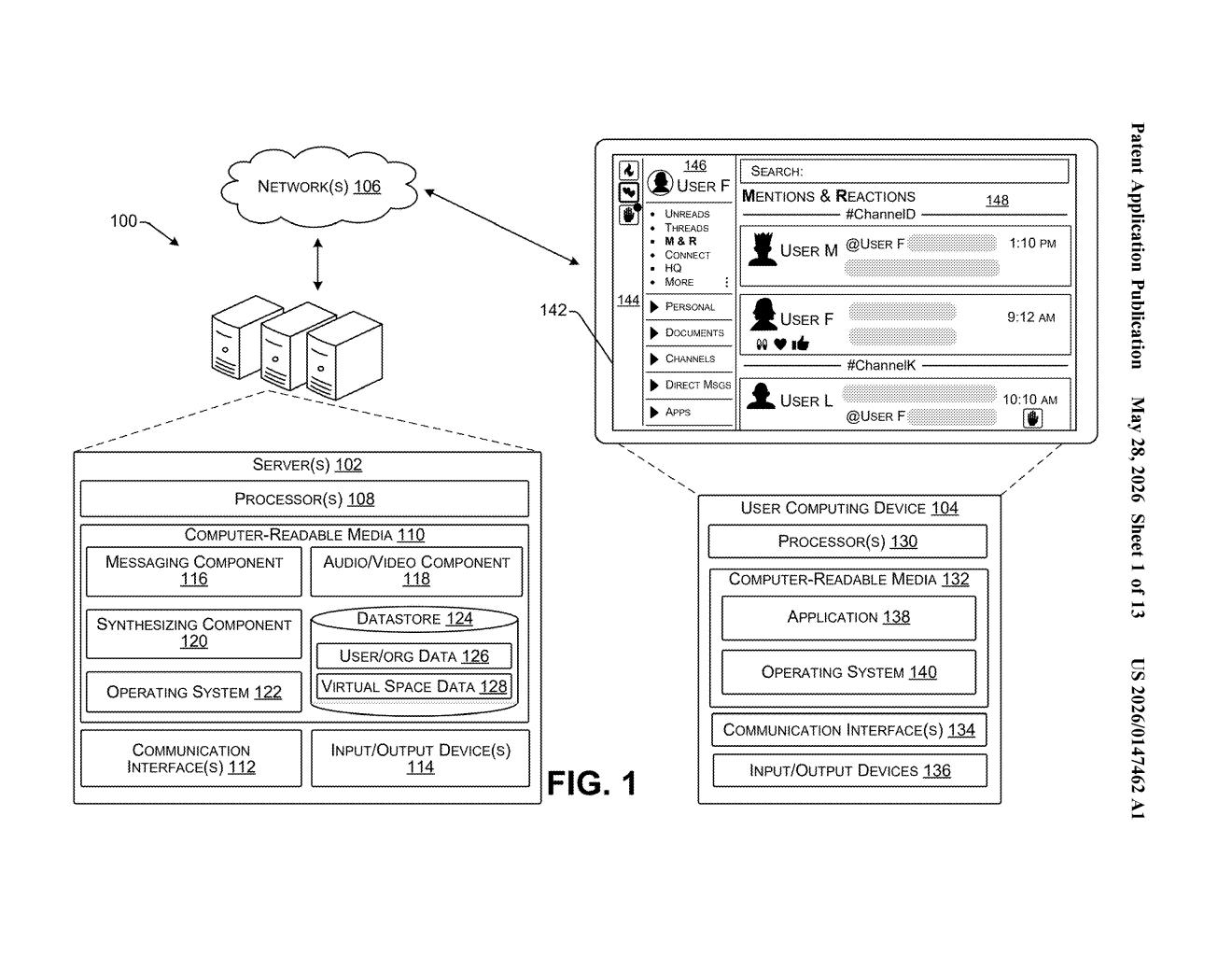
What Salesforce's in-platform survey synthesis actually does
Imagine you send a quick poll to your team in a chat app: "How is onboarding going?" Thirty people respond, and now you're staring at thirty separate text answers with no obvious takeaway. That's the problem Salesforce is trying to solve here.
The patent describes a system where a communication platform — think something like Slack — sends a survey to a group of users, collects their responses, and then feeds all that raw feedback into an ML model. That model doesn't just summarize; it synthesizes the data into a structured, digestible representation of what people said.
The result gets pushed back into the same virtual space where the survey originated, so you never have to leave the platform to make sense of what your colleagues think. It's a closed loop: ask, collect, synthesize, display — all in one place.
How the ML model turns raw responses into synthesized output
The core flow is straightforward. A user profile on the communication platform triggers a request to send a survey to one or more other user profiles. Those recipients respond, and the platform collects what the patent calls "first data" — the raw responses.
When a user then asks the platform to synthesize that feedback, the system inputs the responses into a machine-learning model trained to output synthesized data (i.e., a model specifically fine-tuned or prompted to produce structured, coherent summaries rather than raw text pass-throughs). The model outputs "second data" — the synthesized representation.
That second data is then rendered in the user interface of the requesting user's device, surfaced directly inside the virtual space (the same channel, thread, or workspace where the survey lived).
Key components the patent covers:
- Survey transmission from one user profile to many, inside the platform
- Response collection as structured first data
- ML-based synthesis — a model maps raw responses to a coherent synthesized output
- In-platform display — the synthesized result comes back to the UI without requiring external tools
The patent is a continuation of an earlier filing (US 18/429,299, now granted as Patent No. 12,530,111), meaning this is an expansion of already-granted IP.
What this means for Slack and in-app feedback loops
For Salesforce, this fits neatly into the company's push to embed AI directly into Slack workflows rather than requiring users to copy-paste data into a separate tool. If you've ever exported a Google Form CSV and dropped it into ChatGPT to summarize responses, you already understand the friction this is designed to eliminate.
The practical upside is real: team leads, HR professionals, and product managers who run quick pulse surveys could get instant synthesized insights without context-switching. The risk is the same one that follows any LLM-based summarization — the model can flatten nuance, miss outliers, or produce confident-sounding summaries that misrepresent what respondents actually meant.
This is a sensible, unsexy piece of AI plumbing that solves a genuinely annoying workflow problem. It's not a moonshot — it's the kind of incremental feature that gets quietly shipped in a Q3 Slack update and ends up being used by millions of people every day. The prior grant on the parent application suggests Salesforce's legal team thinks it holds up.
There are more where this came from
We read every patent application Big Tech publishes and send you the ones worth knowing. Plain English, free, every week.
Want this weekly breakdown for a company we don't cover? Patentlyze Pro →