
Apple Files Patent to Stop Phones and Cell Towers From Misreading Each Other's AI
Two phone makers' AI can use the exact same code to mean two different things, and a cell tower trying to learn from both can break down. Apple's patent application proposes a fix as simple as a name tag.
What Apple's phone-to-tower labeling fixes
Ever had two friends use the same nickname for two different places? One says the usual and means the coffee shop, the other means the diner. Now a cell tower has to follow directions from both.
That is roughly the mess Apple describes. Your phone uses AI to squeeze its signal measurements into a short code before sending them to the tower. Each phone maker's AI invents its own codes, so the same code can mean different things from different brands. A tower that learns from all of them at once gets confused.
Apple's fix is a label. Each batch of training data carries an ID for where it came from, attached to the front or back of the code. The tower learns a separate reading for each source, then tells your phone which one to use.
receiving a training dataset from a user equipment (UE), the training dataset comprising a set of inputs for an encoder for channel state information (CSI) feedback, a corresponding set of latent space representations, and a reference to a source of the training dataset; …
Translation: The network node gathers data and source references sent directly from the phone.
How a dataset ID keeps each maker's codes apart
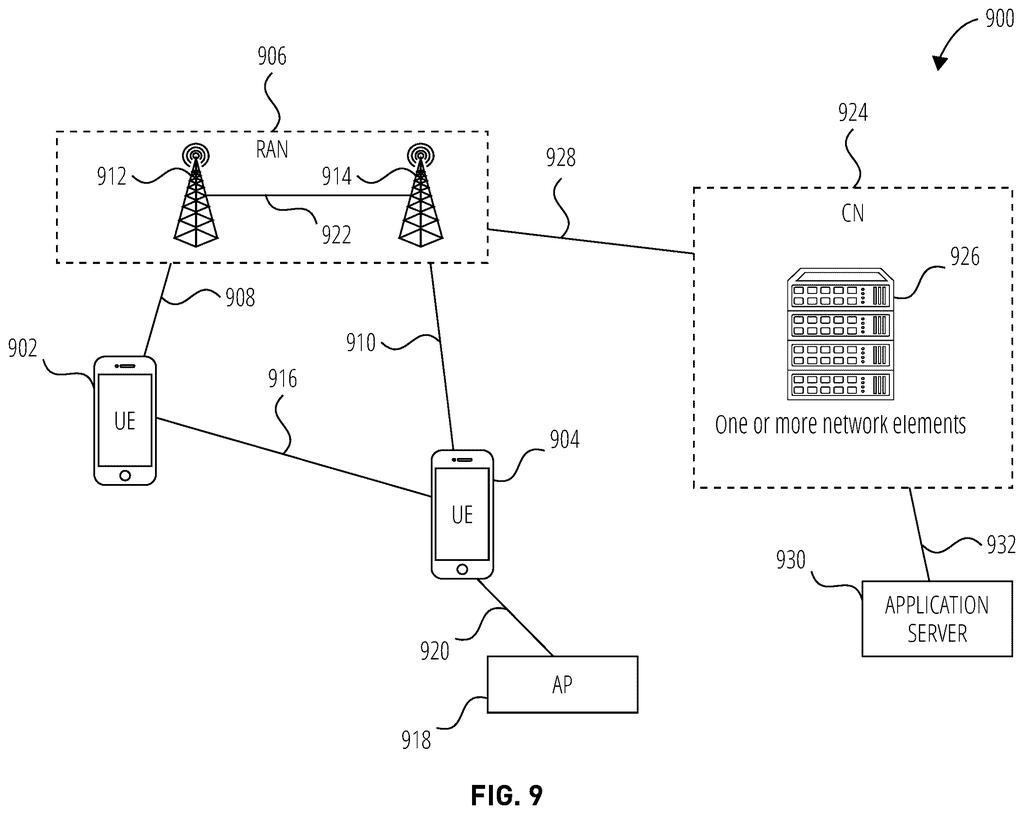
When your phone connects to a tower, it measures the radio link and reports back (this report is called channel state information, or CSI). In the AI version, an encoder on the phone squeezes that report into a short code, which the filing calls a latent space representation. A decoder on the tower rebuilds the report from the code. The filing compares the code to a hash: many different inputs can end up with the same one.
In what the filing calls Type 3 training, the phone side and the network side train their halves separately, and the phone side shares a training dataset with the network. Trouble starts when several phone makers do this. The filing gives an example where two vendors feed antenna readings in reversed order, so one code means one thing for the first vendor and something else for the second. A decoder trained on both breaks down.
The claims cover this fix:
- The tower receives a dataset holding the phone's inputs, the matching codes, and a reference to the source, such as a dataset ID.
- It feeds the codes and the reference into its decoder and trains a decoder model tied to that source. The ID can sit before or after each code, or be built into it.
- Phone-side claims cover building that dataset, and the tower can train a separate decoder for each ID.
Once the system is running, the network sends the phone a decoder model ID, and the phone picks the matching encoder. The filing also describes the reverse setup, where the network trains first.
A user equipment (UE) obtains a decoder model-ID from a network for the CSI feedback, determines an encoder model according to the decoder model-ID or including the decoder model-ID as an input to the AI encoder, and feeds a latent space representation for CSI feedback.
Translation: The phone gets an ID from the network to match its AI encoder with the correct decoder.
Why phones and towers from rival makers need this
Your phone, a tower built by a different company, and an AI on each side all have to agree on what a signal report means. The tower uses these reports to shape its transmission toward your phone, so a misread report is a worse aim. Labeling the training data gives each side a way to keep its own meaning straight.
The filing's own example shows the scale: one phone maker could ship around four models a year over an eight-year span, each possibly with a different AI engine. It calls a single universal model for every tower maker impractical. A labeling scheme lets everyone keep their own models and still talk to each other. It would also need phones and towers to announce their IDs, which the filing says current cellular standards do not provide.
Apple's 567th filing we've tracked since May follows work on squeezing more feeds into USB and cutting headset radio wake-ups.
The price of this fix is bookkeeping. Every phone has to put a label on its data, and a tower may need a separate trained model for each label. The filing itself admits a phone could end up storing a large pile of encoders, one for each network it might meet.
It also depends on both sides announcing who they are, and the filing says today's cellular standards have no built-in way to do that. So the idea only works if the industry agrees to add it, which is slow and political work. A company can file this, but it cannot make rivals adopt it.
Still, the trade looks sensible. The alternative the filing weighs, one universal model that works with everyone, is unrealistic when phone hardware varies this much. A short label and some extra storage is a small cost for keeping the codes from colliding.
Get our take in your Top Stories
Liked this breakdown? Add Patentlyze as a preferred source on Google, and our plain-English take shows up more often in your Top Stories the next time Apple patent news breaks.
There are more where this came from
We read every patent application Big Tech publishes and send you the ones worth knowing. Plain English, free, every week.
The drawings
16 drawing sheets from US 2026/0332216 A1 · click any drawing to enlarge


Show the other 8 sheets


Want this weekly breakdown for a company we don't cover? Patentlyze Pro →
Be the first to weigh in