
Sony Files Patent for Dialing Down Wireless Signals Before Lag Hits Your Game
Sony's patent describes a game console that tries to see a wireless slowdown coming and quiets the signals causing it. It does this by adjusting the wireless transmitters built into your monitor, webcam or even gaming chair.
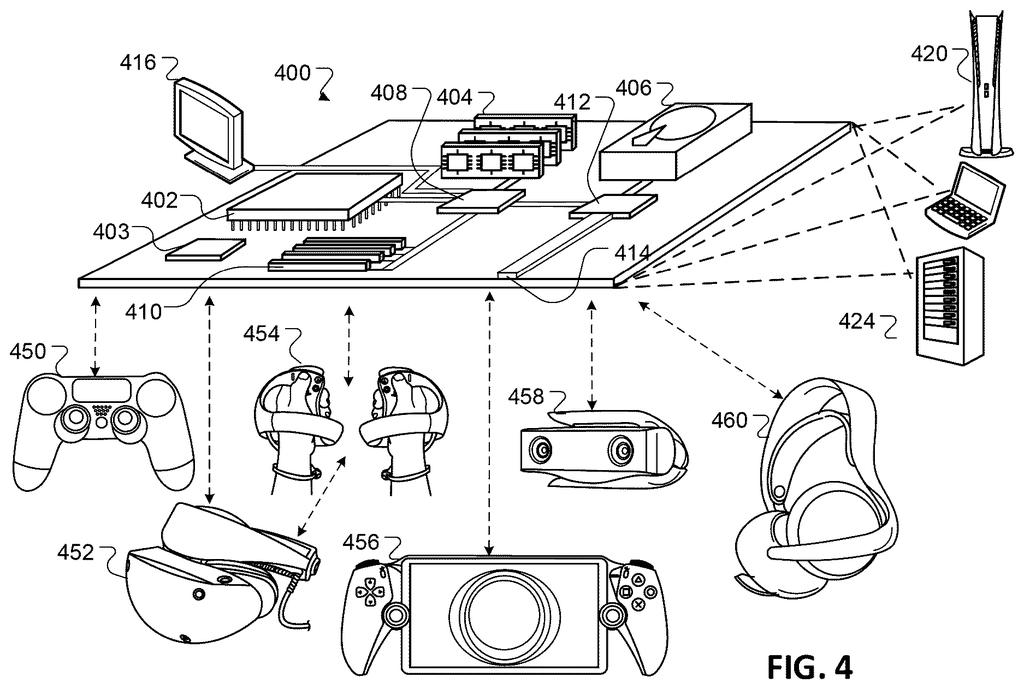
What Sony's signal-trimming gaming setup does
Imagine you're deep in a racing game with a wireless headset, a steering wheel and a VR visor all talking to your console at once. Your neighbor's setup is doing the same thing through the wall. Suddenly your audio stutters and the wheel reacts a beat behind your hands.
Sony's patent describes a way for the console to see that coming. It keeps tabs on how well your gear is connecting, spots signs that the connection is about to get worse, and then tells certain wired accessories, like your monitor, webcam or gaming chair, to turn their wireless transmitters up or down.
The idea is that too many signals shouting at once drown each other out. Quieter, better-aimed signals could keep your controller and headset responsive. The filing even covers neighboring setups, and keeping two players in the same room on an equal footing.
The gaming device determines an expected degradation in the network connectivity of the gaming device network based on the status information and generates a control output for adjusting an output power level of a host.
Translation: The system figures out when the connection will get worse and builds a fix to change power levels.
How the console predicts a wireless slowdown
The filing calls the key players hosts. A host is a device wired to the game console that also has its own antenna for talking wirelessly to nearby accessories. The console itself counts as one, and so can a monitor, a webcam, a dongle or a gaming chair. Wireless accessories (controllers, headsets, VR gear, keyboards) connect through them.
The method the claims describe works in four steps:
- The console collects status information from hosts and accessories, such as latency (delay), packet loss (chunks of data that never arrive) and bandwidth.
- It works out an expected degradation, meaning a predicted drop in connection quality. The description says a trained model (software that learns patterns from past data) can spot interference patterns, even the direction and strength of the source.
- It generates a control output, an instruction telling one or more hosts to change their transmit power, with timing details.
- The host adjusts its power. The instruction can be relayed through another host if the direct path is poor.
The filing also describes switching to a different frequency channel when a connection falls below a threshold, and shaping an antenna's radiation pattern (the direction its signal is sent). A test signal it calls a "canary waveform" can be used to probe for interference. The console can also take in status data from a second console's network nearby, and the model can be trained differently for a home than for an esports arena.
What this means for crowded gaming rooms
If this works as described, the payoff lands on the busiest gaming setups: a console, a VR headset, a wireless headset and a wheel all competing for airwaves, maybe with a neighbor's console doing the same. Your console would trim the signals that cause trouble before you feel the lag. The filing also describes balancing connection quality between players who share a room, and it covers esports arenas as well as living rooms.
The filing's own examples name PlayStation hardware such as the PS5, PS VR2 and PlayStation Portal. It is still an application: the examiner's first review rejected the claims as filed, which is routine and usually followed by amendments. Nothing in it says when, or whether, any of this reaches a product.
Sony's 622nd filing in our Sony coverage since May adds to a run that includes characters in your living room and keeping cloud text sharp.
If this works, you would notice it by noticing nothing. No audio pop in the middle of a boss fight, no wheel that reacts half a beat late. It targets a failure that many players blame on bad Wi-Fi or a cheap headset, when the cause may be their own gear crowding the same airwaves.
The homes that benefit most are the packed ones: a console, a VR headset, a wireless headset and another player's setup on the other side of the wall. The attention to keeping two players in the same room equally connected speaks to anyone who has suspected their side of the couch got the worse signal.
The filing gives no numbers on how much lag it would remove, so the benefit stays a promise on paper. It is a sensible fix for a familiar annoyance, and you would only judge it by whether your game stops stuttering.
Get our take in your Top Stories
Liked this breakdown? Add Patentlyze as a preferred source on Google, and our plain-English take shows up more often in your Top Stories the next time Sony patent news breaks.
There are more where this came from
We read every patent application Big Tech publishes and send you the ones worth knowing. Plain English, free, every week.
The drawings
4 drawing sheets from US 2026/0315915 A1 · click any drawing to enlarge


Want this weekly breakdown for a company we don't cover? Patentlyze Pro →
Be the first to weigh in