
Apple Patent Details How VR Headset Wearers Look to Nearby Observers
When you put on a VR headset, the people in the room with you lose track of your face and body. Apple has filed a patent for a second screen that shows a live representation of you to those around you, with the level of detail depending on who's watching.
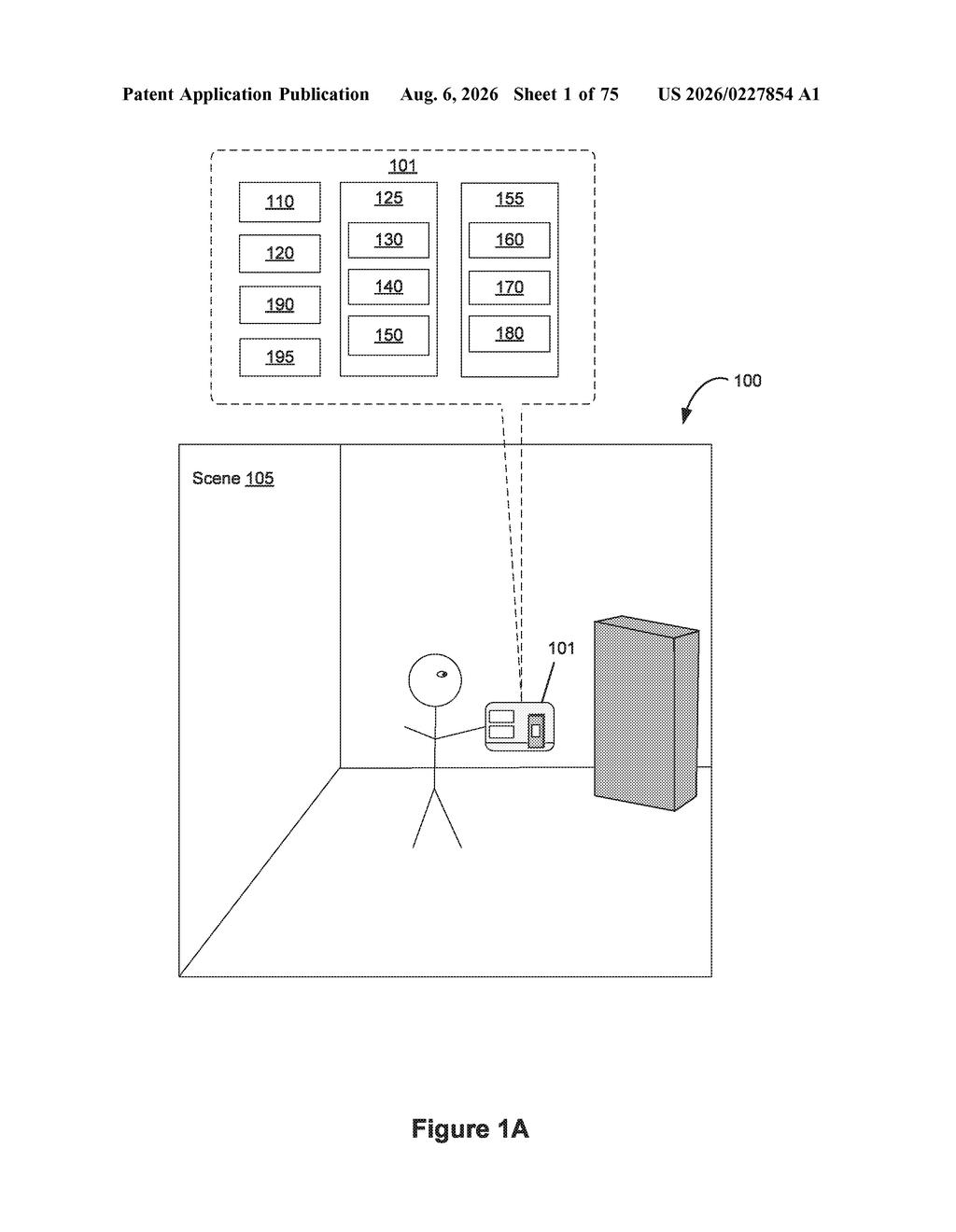
What Apple's dual-display body mirror actually does
Imagine slipping on a VR headset at home. You're fully immersed in a virtual world, but your family in the same room can't see your face or read your expressions. Apple's patent describes a system that uses a second display, separate from the headset itself, to show a live image of your body or face to people nearby.
The interesting twist: how detailed that image is depends on who you are. If the system confirms your identity, it shows a high-fidelity, realistic image. If it can't verify who's wearing the headset, it shows a simpler, lower-detail version. Think of it like a privacy filter that loosens up once the device knows it's you.
The system also updates the image in real time. If you move your hand, tilt your head, or change your expression, the display adjusts to match. The goal seems to be keeping you visible and present to the people around you, even while your eyes are somewhere else entirely.
… displaying, via the second display generation component, a respective visual representation of a portion of a body of a user who is in a position to view the three-dimensional environment via the first display generation component …
Translation: An outward screen shows part of the headset wearer to people nearby.
How the identity check controls display fidelity
The patent describes a setup with two display components working at the same time. The first display generation component is what the headset wearer sees: a three-dimensional virtual environment. The second display generation component is aimed at everyone else in the room, showing a visual representation of the wearer's body.
The key technical detail is an identity-gated fidelity system. Before deciding how realistic to render the body image on the second screen, the system checks whether the user meets "first criteria" that specifically require confirming the user's identity. If identity is confirmed, the output is a high-fidelity (detailed, realistic) representation. If not, the system falls back to a lower-fidelity version, which could be a simplified avatar or a less detailed rendering.
Running alongside that is a real-time appearance tracking loop. The system continuously monitors the physical appearance of the portion of the body being displayed (likely hands, face, or torso captured by the headset's outward-facing cameras). When it detects a change, it updates the second screen's image accordingly. This tracking applies whether the user is verified or not: both the high-fidelity and low-fidelity paths update dynamically.
In short, the patent covers:
- A two-screen architecture: one for the wearer, one for bystanders
- An identity check that gates display quality
- Live body tracking that updates the bystander display in real time
… displaying a second visual representation of the portion of the body having a lower level of fidelity than the first visual representation …
Translation: Unverified users appear as lower-detail representations to outsiders.
What this means for Vision Pro and shared-space AR
The Vision Pro already uses a feature called EyeSight, which projects an image of the wearer's eyes on the outside of the headset. This patent appears to extend that idea significantly, potentially covering more of the body and adding an identity-verification layer that controls how realistic the projection is. That verification angle is new and worth noting: it suggests Apple is thinking about shared-device scenarios, where multiple people in a household might use the same headset.
For you as a user, this is about not disappearing from the room when you put the headset on. For Apple strategically, it shows continued investment in making spatial computing feel socially acceptable in shared spaces, which is one of the tougher problems in getting headsets into everyday homes.
This is a thoughtful social-UX problem that Apple is taking seriously, and the identity-gating detail is genuinely interesting: it hints at multi-user headset scenarios that Apple hasn't talked about publicly. It's not flashy engineering, but it addresses a real friction point that anyone who's watched someone zone out in a headset will immediately recognize.
There are more where this came from
We read every patent application Big Tech publishes and send you the ones worth knowing. Plain English, free, every week.
The drawings
75 drawing sheets from US 2026/0227854 A1 · click any drawing to enlarge


Want this weekly breakdown for a company we don't cover? Patentlyze Pro →
Be the first to weigh in