
Apple Patents AR Headset Sync Technology to Eliminate Virtual Image Timing Delays
When you wear a mixed-reality headset, the camera feeds you a view of the real world through a screen. If that view lags even slightly behind reality, your brain notices, and it feels wrong. Apple has filed a patent aimed squarely at cutting that delay down.
What Apple's camera-to-screen timing fix actually does
Imagine putting on a headset that shows you the real room around you through built-in cameras. Even a tiny delay between what the camera sees and what your eyes see can make the experience feel unnatural, or even cause motion sickness. That delay is called photon-to-photon latency, meaning the time from light entering the camera to light leaving the screen.
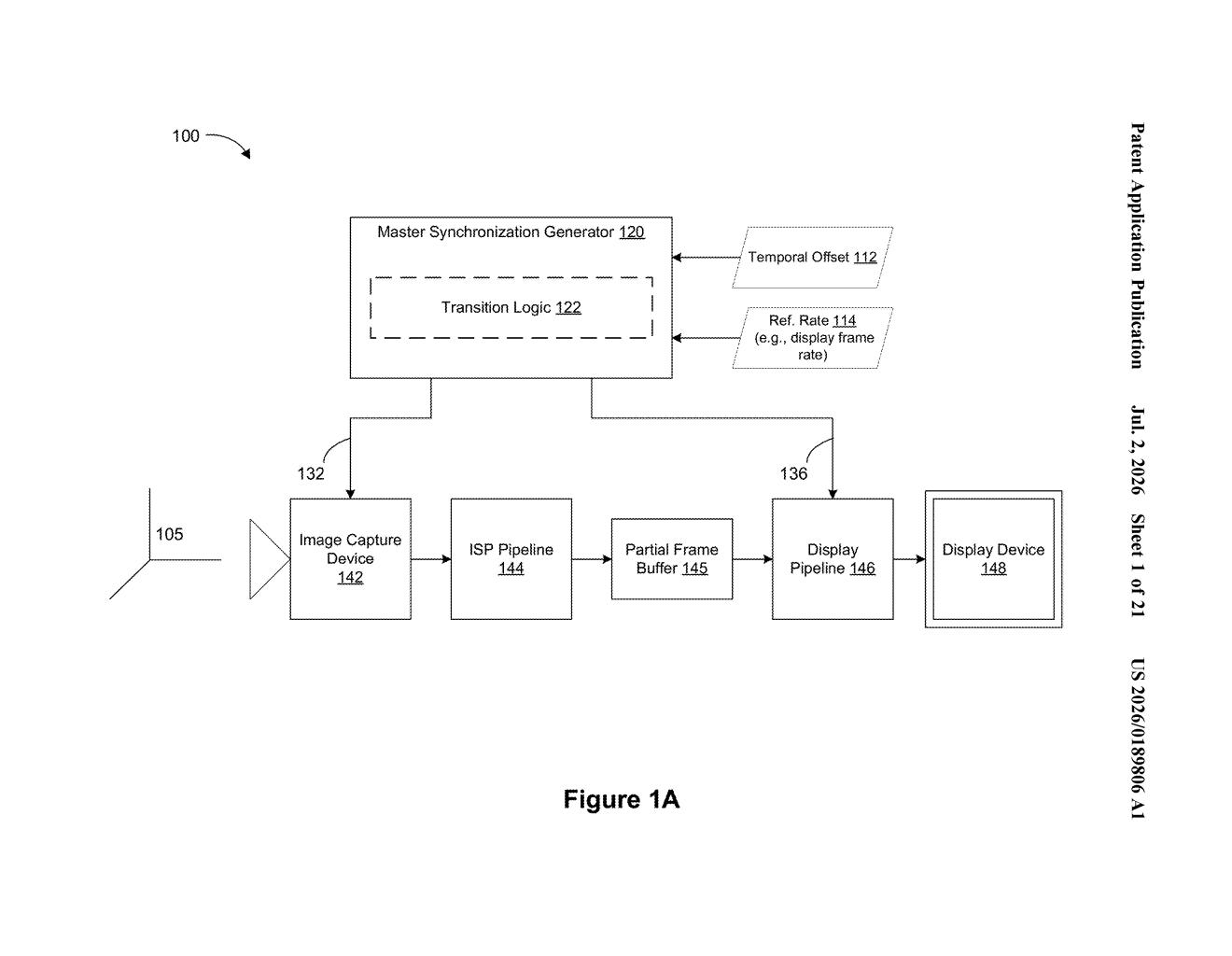
Apple's patent describes special synchronization circuitry that carefully coordinates every step in that pipeline: the camera, the image processor, a small frame buffer, and the display itself. It calculates a precise timing offset so that each component hands off its work at exactly the right moment, rather than each piece running on its own independent clock.
The result is that the whole system stays in tight lockstep. Instead of delays stacking up as an image moves from camera to processor to screen, the circuitry trims that gap down to as little as possible, so what you see through the headset feels closer to looking through a window than watching a video feed.
How the sync signal and temporal offset work together
The patent describes a method for synchronizing what Apple calls a content generation and delivery architecture, which is essentially the full chain from camera to display inside a mixed-reality device.
Here is how that chain breaks down:
- Image capture device: the outward-facing cameras on the headset
- ISP pipeline (Image Signal Processor: the chip that cleans up and processes the raw camera data)
- Partial frame buffer: a small memory store that holds just enough of the image to keep things moving without waiting for a full frame
- Display pipeline and display device: the final stages that put pixels on the screens in front of your eyes
The synchronization circuitry determines a temporal offset (a calculated time shift that accounts for how long the image takes to travel through each stage) and a reference rate (the clock speed of one part of the system used as a timing anchor). It then generates a unified sync signal that adjusts the clocks in the display pipeline to stay aligned with the camera input.
The key insight is that instead of letting each component run on its own internal clock and then trying to reconcile the differences, Apple's approach locks them all to a shared heartbeat, with the temporal offset acting as a correction factor that removes built-up delay before it reaches your eyes.
What this means for Vision Pro's passthrough experience
For Vision Pro and any future Apple mixed-reality device, passthrough quality is central to the whole experience. If the real world appears to lag behind your head movements, the device feels broken. Reducing photon-to-photon latency is one of the hardest engineering problems in AR, and dedicated synchronization hardware suggests Apple is treating it as a first-class concern rather than a software patch.
For you as a user, this kind of work is invisible when it succeeds. You would simply notice that the room around you looks immediate rather than slightly delayed, which is the difference between a headset that feels transparent and one that constantly reminds you there is a camera in the way.
This is unglamorous but genuinely important work. Passthrough latency is one of the main reasons current headsets feel like watching a camera feed rather than seeing the world. A hardware-level sync architecture that attacks the problem at every stage of the pipeline is exactly the right approach, and the specificity of the claim suggests this is real engineering rather than a defensive filing.
Get our take in your Top Stories
Liked this breakdown? Add Patentlyze as a preferred source on Google, and our plain-English take shows up more often in your Top Stories the next time Apple patent news breaks.
There are more where this came from
We read every patent application Big Tech publishes and send you the ones worth knowing. Plain English, free, every week.
Want this weekly breakdown for a company we don't cover? Patentlyze Pro →