
AR Patent Lets Real People Break Through Virtual Content
What happens when someone walks up to talk to you while you're buried in a virtual window? Apple's new patent has a specific answer: the window gets out of the way, but only if the system decides the person matters enough.
How Apple's headset decides when to show real people
Imagine you're wearing a mixed-reality headset and a big virtual spreadsheet is floating right in front of you, covering your view of the room. Someone walks up behind it, but you can't see them because the app is in the way.
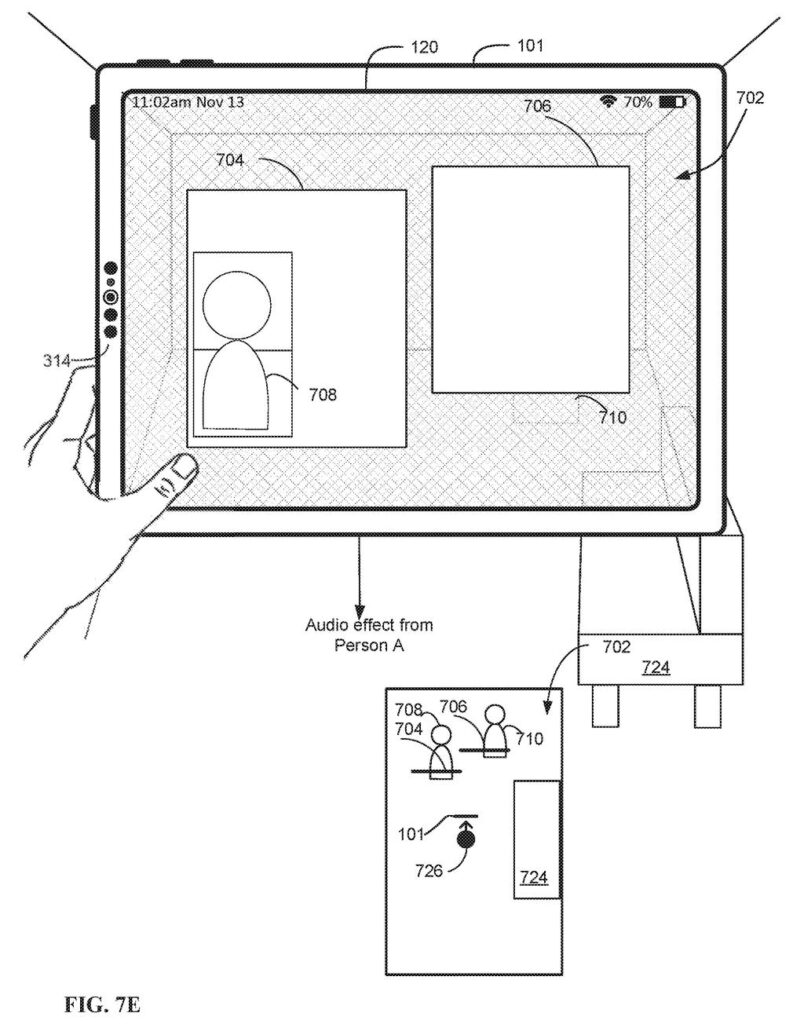
Apple's patent describes a system that watches for exactly that situation. When it spots a real person hidden behind your virtual content, it has two options. If the system decides that person is trying to get your attention or is socially significant, it fades or shrinks the virtual content so the real person visually "breaks through." If it decides the person doesn't meet that bar, it keeps your content in place but shows a small indicator so you at least know someone is there.
The key idea is that the headset isn't just passively showing you the world. It's actively making judgment calls about which real-world moments are important enough to interrupt what you're doing.
How the system scores a person as 'socially salient'
The patent describes a mixed-reality system (think Apple Vision Pro) that continuously monitors the physical environment behind virtual content using sensors and cameras built into the headset.
When it detects a physical object, typically a person, hidden behind a floating virtual window or app, it evaluates that object against "one or more criteria" to decide how socially significant the situation is. The patent calls this a "salient social interaction" check. The criteria aren't spelled out in detail, but the framing suggests things like whether the person is facing you, moving toward you, or attempting to make eye contact.
Based on that judgment, the system picks one of two responses:
- Reveal mode: Virtual content is dimmed, shrunk, or moved so the real person visually "breaks through" and you can see them clearly.
- Indicator mode: Virtual content stays in place, but a small visual cue is shown alongside it, essentially a heads-up that someone is there without fully interrupting your task.
The patent also separately covers reducing overall visual prominence of virtual content more broadly, suggesting the system can dial down the intensity of AR overlays based on context, not just when a person is detected.
What this means for Apple Vision Pro's social future
The social awkwardness of wearing a headset around other people is one of the biggest practical barriers to adoption. If virtual content blinds you to the people in your physical space, the device feels isolating rather than useful. This patent is Apple's formal technical attempt to solve that by building social awareness directly into the rendering pipeline.
For Apple Vision Pro users, this could mean fewer moments of being visibly oblivious to a coworker or family member trying to get your attention. The two-tier response (full reveal vs. Quiet indicator) also suggests Apple is thinking carefully about not making the system so aggressive that every background movement yanks you out of your work.
This is one of the more thoughtful human-factors patents Apple has filed for Vision Pro. The insight that not every person walking past deserves to interrupt your focus, but you should still know they exist, reflects real-world design thinking rather than just raw engineering. Whether the criteria for 'salient social interaction' actually work in practice is the hard problem, but the framework is the right one.
There are more where this came from
We read every patent application Big Tech publishes and send you the ones worth knowing. Plain English, free, every week.
The drawings
31 drawing sheets from US 2026/0212618 A1 · click any drawing to enlarge


Want this weekly breakdown for a company we don't cover? Patentlyze Pro →