
Apple Patents Headsets That Switch Audio Sources Without You Lifting a Finger
Apple has filed a patent for headsets that can drop one audio source and jump to another, automatically, the moment a second device starts sending sound. No button press, no menu, no interruption.
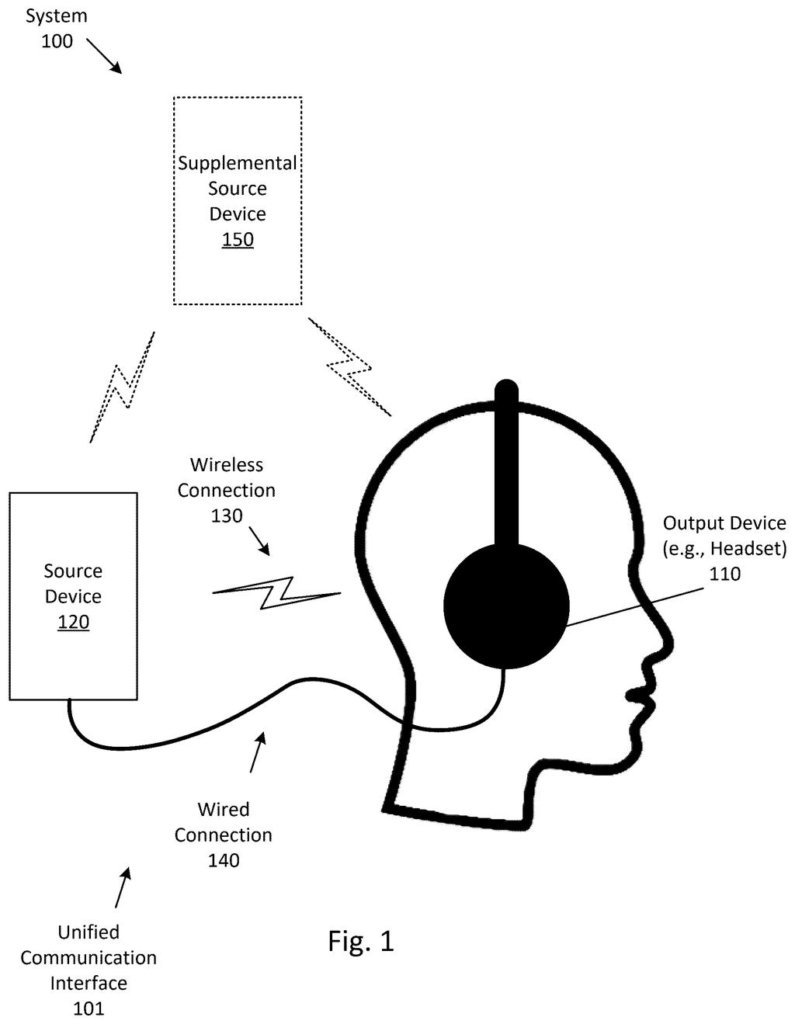
What Apple's auto-switching headset connection actually does
A person sits at a desk wearing headphones, listening to music through a wire plugged into their laptop. Their phone rings in their pocket. Right now, that person has to physically switch something to hear the call. That friction, small as it sounds, is the problem this patent targets.
Apple's filing describes a headset that can hold two connections at once: a wired connection to one device and a wireless connection to a second. If the wireless device starts sending audio, the headset switches to that source on its own, without you touching anything. The moment the call ends or the second device goes quiet, the headset can fall back to the original source.
The concept is straightforward: the headset listens for incoming audio on both channels and decides in real time which one to play. You stay in your music, you take your call, and the headset handles the handoff.
… responsive to receiving the second audio signal and without user intervention, using the second audio signal for audio playback through the at least one speaker of the headset in lieu of the first audio signal.
Translation: The headset automatically switches to the new sound source without you needing to do anything.
How the headset decides which audio signal wins
The patent describes a headset that maintains two simultaneous connections to two different electronic devices. The first connection is a wired connection carrying audio from one device, such as a laptop playing music or a desktop running a video. The second is a wireless connection to a separate device, such as a smartphone or tablet.
The key behavior is the automatic override: when the headset detects an incoming audio signal on the wireless connection, it immediately switches playback to that signal, dropping the wired audio without waiting for any user input. The patent language specifies this happens "without user intervention," meaning the trigger is purely the arrival of the audio data itself.
- Device 1 (wired): a laptop or desktop streaming audio continuously
- Device 2 (wireless): a phone or secondary tablet that sends audio intermittently
- Headset logic: monitors both channels, promotes wireless audio when it appears
The claim does not specify which wireless protocol is used, so this could apply to Bluetooth or other standards. The patent is also agnostic about what kind of audio triggers the switch: a phone call, an app notification, or media playback from the second device would all qualify.
… establishing a first wireless connection between a first electronic device and the headset that is worn on a head of a user; establishing a second wireless connection between a second electronic device and the headset; …
Translation: The headphones stay connected to two different gadgets at the exact same time.
What this means for people juggling work calls and music
For anyone who works with headphones on, the current situation requires constant manual intervention: pause the music, switch the Bluetooth source, answer the call, then reverse the whole process afterward. That is three to five steps every time your phone rings. A headset that handles this automatically turns a repeated annoyance into something you stop thinking about entirely.
The practical payoff is most obvious in office and work-from-home settings, where a person might be tethered to a computer via a wired headset but still needs to take calls on a separate phone. If Apple builds this into a future AirPods model or a wired headset lineup, it would close one of the more persistent complaints about managing audio across multiple Apple devices.
Apple's 25th filing we've tracked since May on device-to-device handoff adds to a set that includes one for tossing video between screens and one for splitting a screen across two devices.
The concrete problem this solves is the moment your phone rings while you are deep in a video call on your laptop, and your headset does nothing useful. You either miss the call, yank out a headphone, or fumble through settings. This patent describes a headset that simply switches over to the phone call on its own, without you touching anything.
That automatic handoff matters most in the situations where your hands are already occupied or your attention is split. A parent cooking dinner, a professional mid-presentation, anyone who cannot stop what they are doing to manage their audio manually would feel the difference immediately.
The one gap worth noting is what happens when both devices are sending audio at the same time. The patent does not spell out which one wins. That ambiguity is small on paper but could produce a confusing experience in practice, and it is the detail users would notice most on a bad day.
There are more where this came from
We read every patent application Big Tech publishes and send you the ones worth knowing. Plain English, free, every week.
The drawings
7 drawing sheets from US 2026/0292055 A1 · click any drawing to enlarge


Want this weekly breakdown for a company we don't cover? Patentlyze Pro →
Be the first to weigh in