
Apple Patents a Curved Glass Cover That's Tougher on Both Sides Differently
Apple is working on a way to chemically treat curved glass covers so that the inside and outside surfaces are hardened in different ways, each tuned to the specific stresses that side of the glass faces.
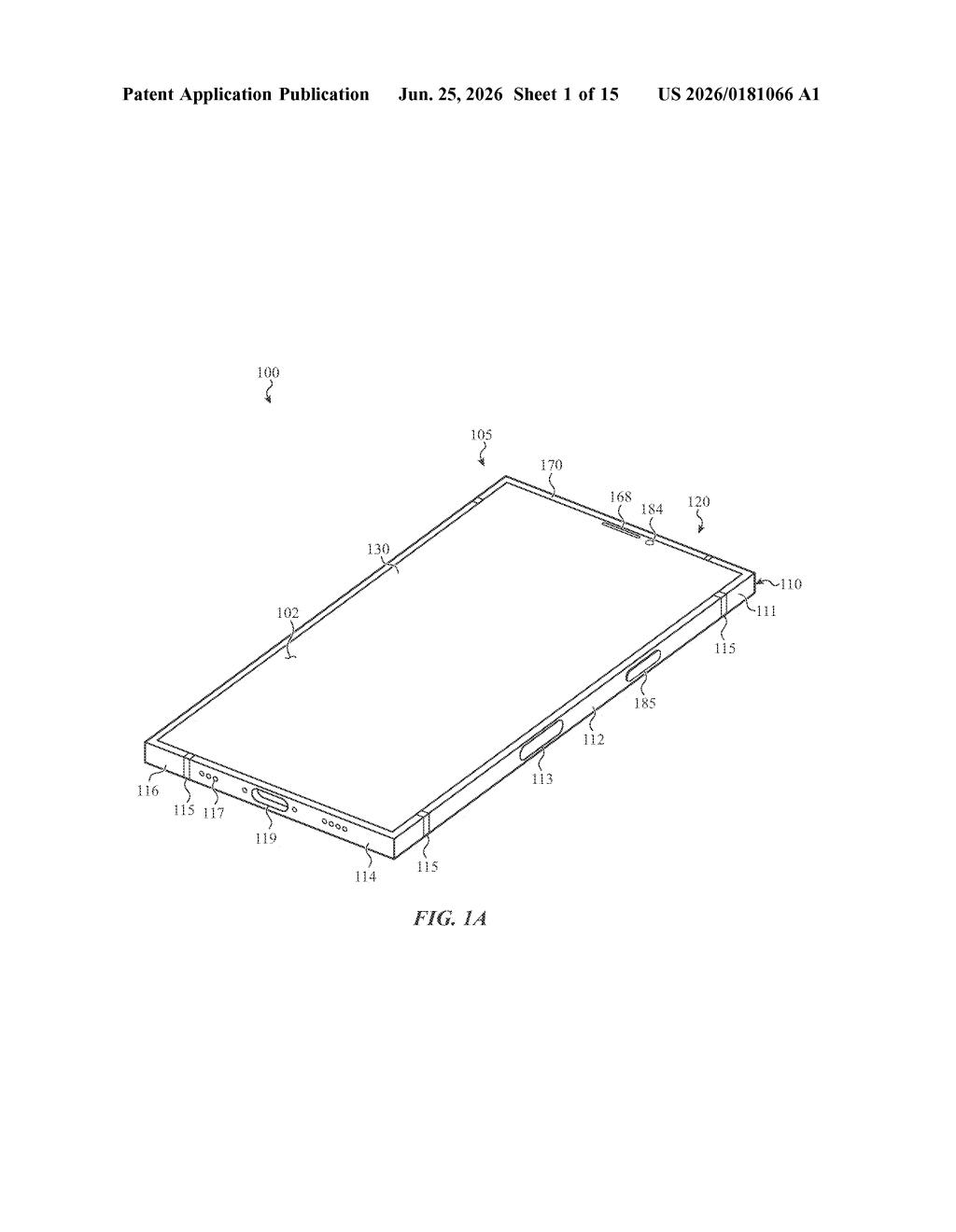
What Apple's two-sided curved glass treatment actually does
Imagine you drop your phone. When it hits the ground, the glass on the outside of the curve takes a direct hit, but the inside surface (facing your screen) actually flexes and bends in the opposite direction. Those are two very different kinds of stress, and flat glass treated the same way on both sides isn't optimized for either.
Apple's patent describes a curved glass cover where the outer surface and the inner surface are chemically strengthened in different ways. The inner concave surface gets a higher peak compression, while the outer convex surface gets a deeper zone of that compression. Think of it like giving each side of the glass its own tailored armor, matched to what that side actually has to survive.
Chemical strengthening is a process where glass is soaked in a hot salt bath and ions are swapped into the surface, creating a layer under compression that resists cracking. What's new here is applying that process in an asymmetric way across a curved piece of glass, rather than treating both sides identically.
How the dual compressive stress profiles work in the glass
The patent covers a cover member made from an ion-exchangeable silicate material (a type of glass that can be chemically strengthened by swapping ions in a salt bath) that has a three-dimensional, contoured shape rather than being flat.
The key technical claim is that this curved cover has two distinct compressive stress profiles:
- The exterior convex surface (the outer side, which faces the world) has a stress profile with a lower peak compression but a greater depth into the glass.
- The interior concave surface (the inner side, which faces the display) has a stress profile with a higher peak compression but a shallower depth.
Compressive stress in glass works as a shield: cracks have a very hard time propagating through a layer that's already being squeezed together. By tuning the depth and intensity of that stress zone differently on each side, Apple can match the protection to the actual mechanical loads each surface encounters when the device is dropped or flexed.
The housing at least partially encloses the display, and a portion of the display sits along the inner surface of this cover, so the cover acts as both the protective glass and the curved front face of the device.
What this means for future curved-screen Apple devices
Curved and contoured displays are a known engineering headache. Standard chemical strengthening processes were developed for flat glass, and applying them to curved pieces without accounting for the geometry can leave one side underprotected. A phone with a curved front glass that cracks too easily at the edges is a real-world problem Apple's repair data almost certainly reflects.
This patent points toward Apple wanting to bring more aggressively curved cover glass to future devices without sacrificing the drop resistance people expect from Ceramic Shield-class materials. Whether that means a curved iPhone display, a watch with a domed cover, or a new form factor entirely, the underlying engineering here is about making curved glass as tough as the flat kind.
This is quiet, foundational materials work, not a flashy feature. But it signals that Apple's materials team is seriously preparing for devices with more pronounced curved glass, and they're not willing to trade drop resistance to get there. Worth watching if you follow Apple's hardware form-factor direction.
There are more where this came from
We read every patent application Big Tech publishes and send you the ones worth knowing. Plain English, free, every week.
Want this weekly breakdown for a company we don't cover? Patentlyze Pro →