
Apple Patents a Two-Screen Layout That Pairs Content With Live Camera Views
Apple is exploring a way to show the same content across two screens simultaneously, while each screen also shows a live camera feed of a different part of your surroundings.
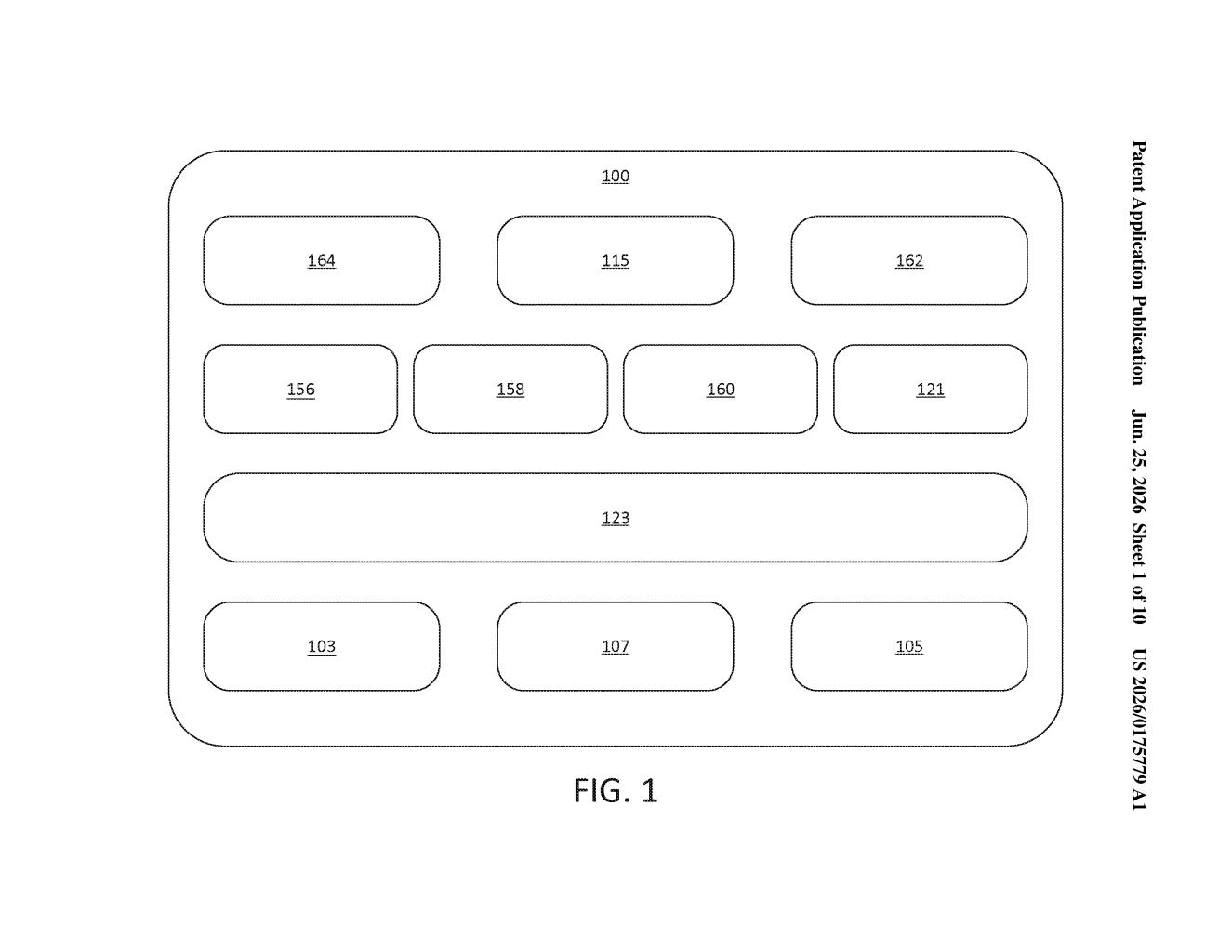
What Apple's split-screen camera display actually does
Imagine you're watching a movie and you also want to keep an eye on what's happening around you. Apple's patent describes a setup where two separate displays each show the same piece of content, but also show a live camera view of the environment, and each display shows a different angle.
So one screen might have a video in the top half and a camera view looking forward at the bottom, while the second screen shows the same video but with a camera view looking to the side. You get the content you want and situational awareness, on both screens at once.
This kind of layout makes most sense for a headset like Apple Vision Pro, where pass-through cameras already show the real world around you. The patent suggests Apple is thinking carefully about how to blend apps and content with real-time views of your surroundings.
How the two displays show different live views at once
The patent describes a system with two display components, each capable of showing two things at the same time: a piece of content and a live camera feed of the environment around you.
When a request to display content comes in, the system splits each screen into regions. On the first display, the content appears in one region and a live camera view (what the patent calls a "first view" of the environment) appears in another. On the second display, the same content appears again, but the camera feed shows a different angle of the environment, a "second view" that is explicitly distinct from the first.
The key technical wrinkle is the dual-perspective live video. Both displays are receiving real-time camera feeds simultaneously, but they are not showing the same feed. This implies the underlying hardware has at least two cameras capturing different directions or fields of view at the same time.
- Two displays, each split into content and camera-feed regions
- Same content mirrored across both displays
- Each display shows a unique live camera perspective of the surroundings
What this means for Apple Vision Pro and spatial computing
For Apple Vision Pro users, this is directly relevant to the core promise of spatial computing: keeping you connected to the real world while you work or watch content. Right now, passthrough video on headsets is either fully on or mixed in at a fixed level. A layout that dedicates specific screen regions to live camera feeds, each from a different angle, gives Apple more precise control over how much and which part of your environment stays visible.
For everyday users, this could show up as a feature that lets you keep an eye on a room, a door, or another person while you're doing something else on your headset. It's a practical safety and awareness feature dressed up in patent language.
This is a narrow but useful patent for Apple's spatial computing roadmap. The dual-view live camera detail is the only genuinely interesting wrinkle here; without it, this would just be a standard picture-in-picture filing. It's not something to get excited about on its own, but it fits neatly into the broader pattern of Apple figuring out how Vision Pro users stay aware of their physical surroundings.
There are more where this came from
We read every patent application Big Tech publishes and send you the ones worth knowing. Plain English, free, every week.
Want this weekly breakdown for a company we don't cover? Patentlyze Pro →