
Apple Patents a Sound-Triggered Drop-In Audio System for Connected Devices
Apple is filing patents for a system that listens for specific sounds — a smoke alarm, a baby crying, a door slam — and automatically pings the right device with a notification, then lets you open a live two-way audio channel back to the room.
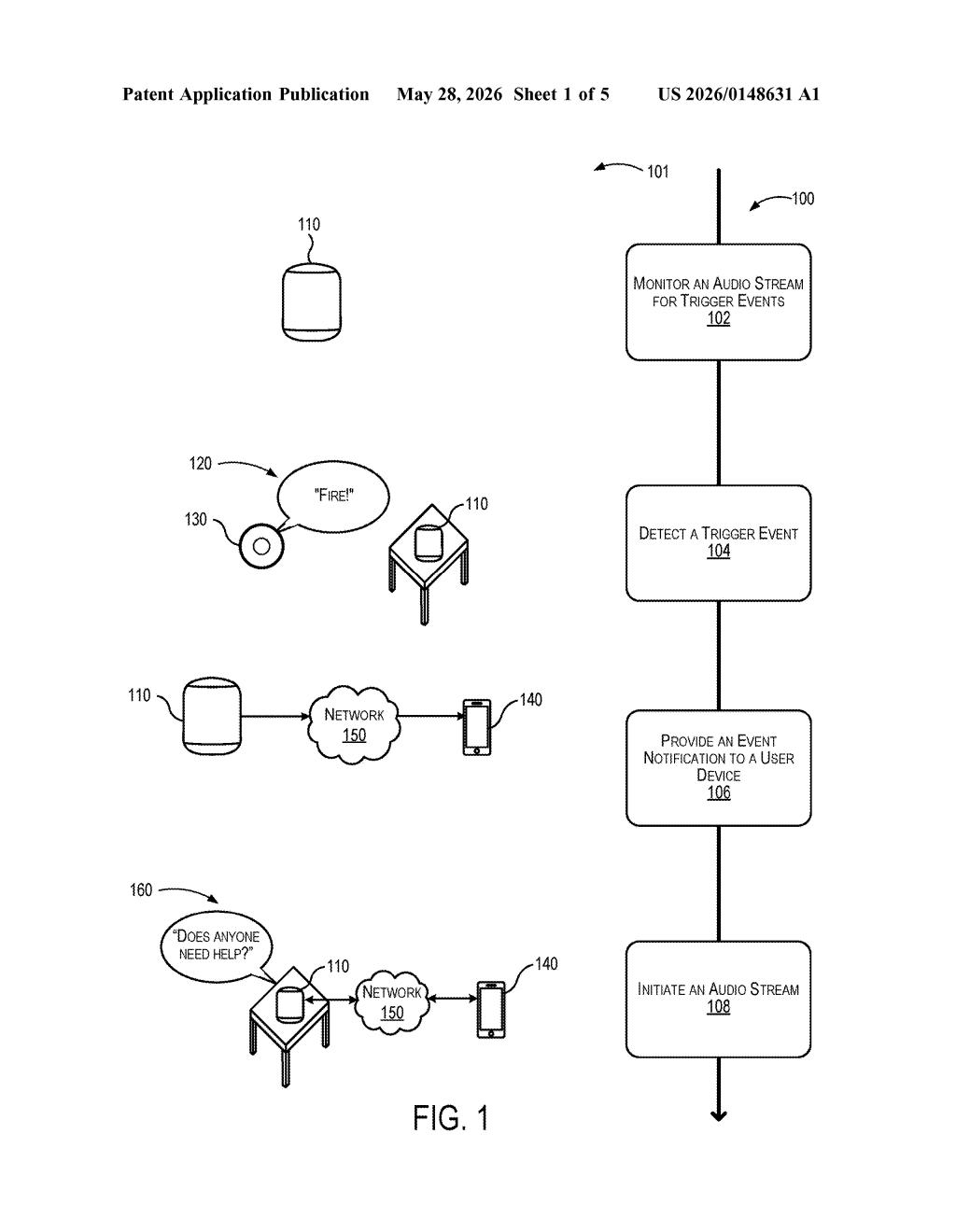
What Apple's sound-triggered drop-in audio actually does
Imagine you're at work and your HomePod or some other Apple device at home picks up the sound of a smoke detector going off. Instead of just logging it, the device immediately sends an alert to your iPhone — and lets you tap to open a live audio channel so you can hear (and speak into) the room in real time.
That's the core idea here. Apple's patent describes a device that continuously monitors an audio stream, identifies specific triggering sounds, and then routes alerts to different devices depending on what kind of event was detected. A baby crying might ping your iPhone. A doorbell might alert your iPad. A loud crash could notify a completely separate third device.
The system also handles the permission flow for that two-way audio: the monitored device can announce that access has been granted before the remote listener drops in, so it's not a silent surveillance tap — there's an alert on both ends.
How Apple's device routes alerts based on event type
At its core, this patent describes a conditional, event-routed audio monitoring system. A first device (think: a HomePod, a smart display, or a future Apple home hub) continuously listens to its environment. When it detects a triggering event — a specific sound class — it evaluates which set of criteria that event satisfies and sends a notification to the appropriate remote device.
The routing logic is the key detail. Different event types map to different destination devices. If a first type of event fires, notification goes to device B. If a second type fires (under a different criteria set), it routes to device C instead. The patent explicitly states these criteria sets are distinct from each other, meaning you could build a matrix of sound categories and recipient devices.
Once notified, the remote user can request permission to open a two-way audio stream — essentially a drop-in call — back to the monitoring device. The monitored device then provides an audible or visual alert that access has been granted before the stream opens. This consent-signaling step is notable; it differentiates the system from a passive always-on mic.
- Audio monitoring for classified trigger events
- Conditional routing — event type determines which device gets the alert
- Permission handshake before two-way audio opens
- Bidirectional audio stream between the hub device and a remote user device
What this means for HomePod and home monitoring
Apple has been slowly building out its home hub ambitions — and this patent fits squarely into that strategy. A device that listens for specific sounds, intelligently routes alerts, and enables instant two-way audio could meaningfully upgrade what a HomePod or an Apple home display can do as a home monitoring hub. You don't have to set up a dedicated baby monitor or a separate intercom system; your Apple device handles the triage.
The conditional routing angle is the part worth watching. Routing different sound events to different family members' devices — say, a baby alert goes to a parent's iPhone while a doorbell goes to a shared family iPad — is a practical feature that current smart home platforms handle clumsily. If Apple builds this into a future home product, it could be a genuine differentiator over Alexa or Google Nest's more uniform notification model.
This is a genuinely useful home-hub patent, not a speculative moonshot. The combination of sound classification, conditional multi-device routing, and a consent-aware drop-in audio model is a coherent, practical feature set. If Apple's rumored home hub display ships with this, it would give the product a strong answer to 'why not just use an Echo?'
There are more where this came from
We read every patent application Big Tech publishes and send you the ones worth knowing. Plain English, free, every week.
Want this weekly breakdown for a company we don't cover? Patentlyze Pro →