
Apple Patents a Workload-Aware CPU Routing System for Its Chips
Apple's chips already separate efficiency cores from performance cores — but this patent adds a finer layer on top, splitting clusters of the *same* core type into separate 'performance islands' based on how demanding a task actually is.
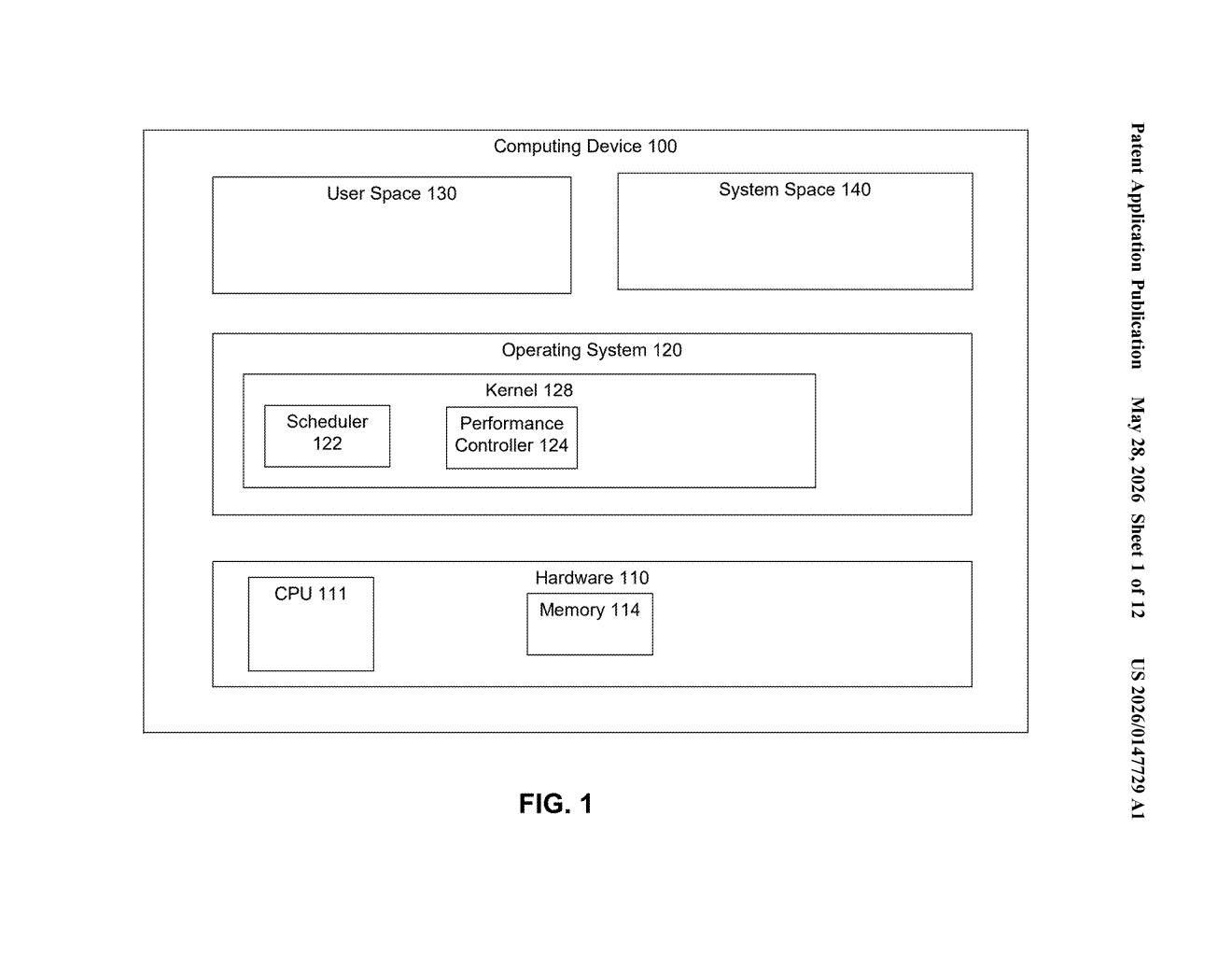
What Apple's 'performance islands' actually do
Imagine your iPhone has two groups of mid-tier CPU cores that look identical on paper. This patent is about teaching the chip's scheduler to treat them differently — routing demanding tasks to one group and lighter tasks to another, based on a live measurement of how hard each task is pushing the system.
Apple calls these groupings performance islands. Each island has a defined range of 'control effort' — essentially a dial that measures how much CPU muscle a thread is asking for. When you open an app or the system kicks off a background task, the scheduler checks the effort score and slots the task into the island whose range fits best.
The practical upside is more precise power management. Instead of running a semi-demanding task on your highest-power cores (wasteful) or your lowest-power cores (too slow), the chip can find the Goldilocks cluster. That's the kind of under-the-hood optimization that Apple leans on to squeeze out better battery life without sacrificing responsiveness.
How the controller assigns threads to CPU clusters
The patent describes an asymmetric multiprocessing (AMP) system — the same basic architecture that underpins Apple Silicon, where different core types (efficiency cores, performance cores) live in the same chip. The new idea is subdividing clusters of cores that share the same core type into distinct performance islands, each mapped to a specific control effort range.
Control effort is a scalar measurement the performance controller computes for each active thread group (a bundle of related tasks). Think of it like a throttle position: 0% is idle, 100% is the core running flat out. The controller watches this number and decides which island the thread group belongs in.
The assignment process works roughly like this:
- The performance controller measures the control effort for an active thread group.
- It compares that value against the effort ranges associated with each performance island.
- It assigns the thread group to the matching island and designates a specific CPU cluster within that island as the preferred cluster for that group.
- A signal is sent to the scheduler identifying the preferred cluster, so the OS can pin threads there.
Critically, two performance islands can contain cores of the same type — it's the effort range mapping, not the core architecture, that differentiates them. This gives Apple's scheduler a finer-grained dispatch mechanism than a simple efficiency/performance binary.
What this means for Apple Silicon efficiency
Apple Silicon's big efficiency gains have always come from matching the right core to the right job. But the current model is fairly coarse: efficiency cores or performance cores, with some frequency scaling in between. Performance islands add a middle layer that could let Apple extract more from the same silicon — better battery life on a MacBook during mixed workloads, smoother sustained performance on an iPhone running demanding apps.
This is also relevant as Apple's chips grow more complex. The M-series chips already have multiple clusters per core type. A software framework that can treat those clusters as distinct scheduling targets — rather than an undifferentiated pool — gives Apple's OS engineers much more control. If this makes it into a future release of the Scheduler in Darwin, you likely won't notice it directly, but you might notice your laptop running cooler during a long video call.
This is genuinely interesting chip-scheduler work, even if it'll never make an Apple keynote slide. The insight — that two clusters of the same core type can and should be treated differently based on workload intensity — is a logical evolution of AMP scheduling, and it fits Apple's pattern of co-designing hardware and OS together to get gains competitors can't easily replicate. Worth paying attention to if you follow Apple Silicon architecture.
There are more where this came from
We read every patent application Big Tech publishes and send you the ones worth knowing. Plain English, free, every week.
Want this weekly breakdown for a company we don't cover? Patentlyze Pro →